
Reviewed · 2-DAY EXPERIENCES
Two Days Trip in Axum and its Surroundings
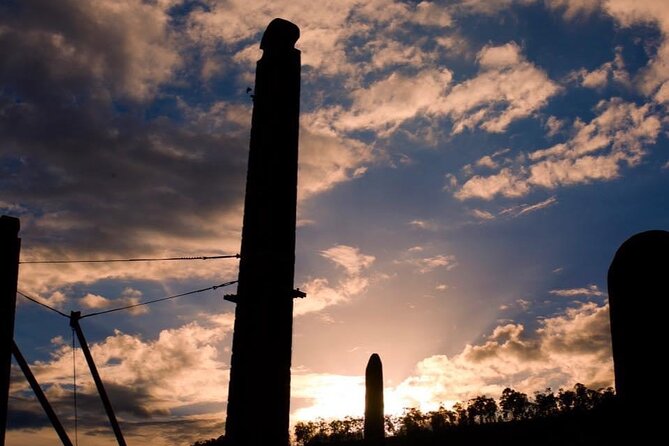
Axum is the kind of place where a single stone can carry a thousand years of questions. On this two-day trip, you’ll see the royal ruins and famous stelae of the Aksumite Kingdom, then head to Gobo Dura, the quarry linked to those huge granite monuments. The story reaches from ancient trade routes to the Ark of the Covenant, with fact, faith, and legend sharing the same ground.
I like the useful mix of major sights and ordinary life. Day one gives you the central archaeological sites, while day two adds a rural quarry, birds, seasonal monkeys, farming, and a walk through old Axum. I also like that the tour includes private transport, airport transfers, entrance fees, bottled water, and a local English or French-speaking guide.
The main consideration is what the $105 price does not cover: food, drinks, or accommodation. The days are long, about nine hours and eight hours, so you’ll want to arrange your hotel and meals in advance. Medical conditions may also make this activity unsuitable, and the exact start time is listed as 11:00 a.m.
Key points at a glance
- Axum’s royal past: Spend the first day in a UNESCO World Heritage Site tied to one of Africa’s oldest empires.
- The Ark of the Covenant tradition: Learn about the Ethiopian belief that Menelik, the son of Solomon and the Queen of Sheba, brought the Ark to Axum.
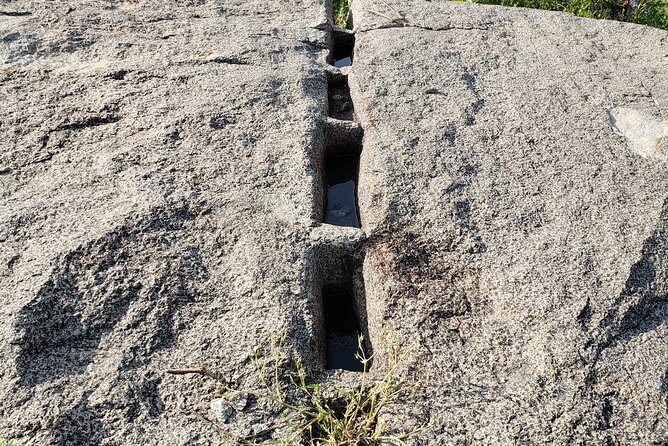
- Gobo Dura quarry: See unfinished stonework and marks connected with the cutting and movement of the great stelae.
- Rural Axum beyond the monuments: Look for birds, seasonal monkeys, vegetation, farming, and everyday village life around Gobo Dura.
- Private transport and small groups: Air-conditioned minivan transport is included, with a maximum of 15 people.
- Local guiding: Guides such as Asgedom Tazeze and Muez Tewelede are associated with clear English, good organization, cultural explanation, and careful assistance.
Why Axum deserves two full days
Axum was the center of the Aksumite Kingdom, a major power connected to maritime trade. Its influence reached beyond northern Ethiopia, and its rulers had contact with the Roman world and later with Byzantium. Around the fourth century, King Ezana converted to Christianity through the work of Frumentius, a turning point that still shapes Axum’s religious identity.
You do not need to be an ancient-history specialist to enjoy the city. The appeal is physical. Large carved stones, old religious sites, royal remains, and working rural areas sit within a manageable two-day program. Your guide helps connect the pieces, which matters in Axum because the written record is limited and church traditions carry much of the story.
The city is also important because history here is not locked away in a museum. Faith remains part of the modern setting. The story of the Ark of the Covenant is accepted as sacred tradition in Ethiopia, while historians may treat parts of it as legend. A good guide should help you understand both sides without forcing you to choose one.
This trip gives you time to do more than rush between famous monuments. The first day focuses on the central ruins. The second moves outward to the stone quarry and then back into the old town, giving you a better sense of how the ancient center relates to the living city.
A few more Ethiopia trips to weigh up
- 2 Days Private Tour in Addis Ababa Ethiopia
★ 5.0 · 36 reviews - 2 Days Wildlife Safari to Awash National Park
★ 4.5 · 21 reviews - 2 Days 1 night tour to Lalibela Rock-hewn churches
★ 5.0 · 12 reviews
Day one: entering the ruins of Aksum
After your arrival, a representative from Gelila Ethiopia Tours meets you and helps you check in at your hotel. The city tour then begins in the UNESCO-listed area, with roughly nine hours set aside for the day.
The ruins are the heart of the experience. Axum was the capital of the Aksumite Kingdom, a state that became a key trading link between Africa, Arabia, and the wider Red Sea world. Its importance came from its position as much as from its rulers. Goods, ideas, and religions passed through this region, and the city grew into a powerful political and religious center.
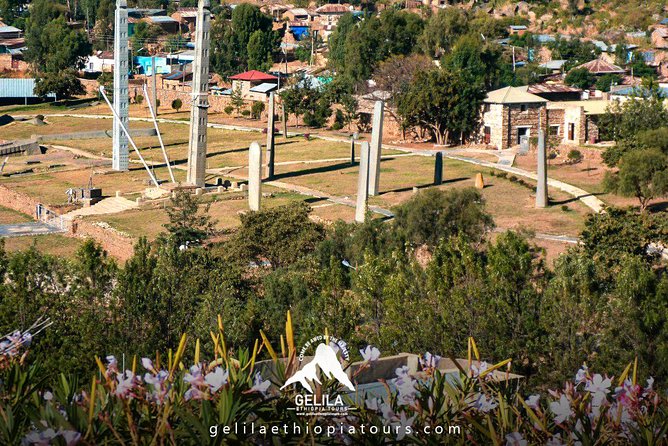
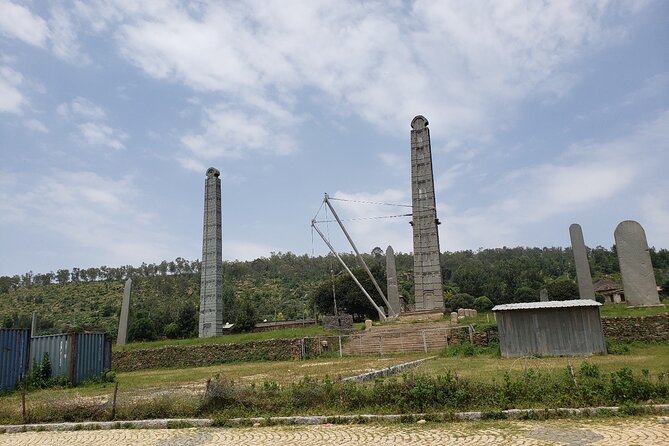
You’ll encounter the famous Axumite stelae, the tall carved stone monuments associated with royal burials and elite society. Their size is difficult to grasp from a photograph. They were cut from granite and shaped with careful decoration, then moved to the city from quarry sites such as Gobo Dura. Day two helps explain the practical work behind these monuments.
The Kebra Nagast, or Book of Kings, places Axum deep in the story of the Queen of Sheba. According to this tradition, she ruled from the city, and her son Menelik was born from her relationship with King Solomon. The same account says Menelik brought the Ark of the Covenant from Jerusalem to Axum, where it remains in a sanctuary.
You should treat this part of the visit as both religious tradition and cultural history. The Ark itself is not presented as an ordinary museum object, and access to sacred areas is limited. The value is in understanding how this story helps define Ethiopian Christianity and Axum’s place within it.
The day’s full schedule is useful if you want a broad introduction, but it may feel dense if you prefer slow sightseeing. Since the tour is private and capped at 15 people, you can ask the guide to clarify what you are seeing. Guides named in connection with Gelila Ethiopia Tours include Asgedom Tazeze and Muez Tewelede. Asgedom is described as professional and well organized, while Muez is noted for clear English, cultural explanation, and thoughtful help during visits to the historic sites.
The Aksumite Kingdom in plain terms
Aksum’s story begins before the Roman-era accounts that mention the kingdom. The city became a marine trading power, linking inland Ethiopia with Red Sea routes. That position brought wealth and helped support large building projects, royal monuments, and a strong court.
The surviving record is not simple. Ancient church sources provide much of the contemporary information, and later traditions add layers of meaning. Your guide can help separate what is documented from what is passed down through religious and local tradition.
Christianity arrived early. Around 356, the ruler was converted through Frumentius, who later became closely associated with the Ethiopian church. Under King Kaleb, Axum also had a political relationship with Byzantium against Persia. These details show that Axum was not an isolated kingdom. It took part in the larger political and religious life of the Red Sea region.
I find this context especially helpful before seeing the monuments. Without it, a stele can seem like a giant piece of carved rock. With it, you can read the site as evidence of state power, trade, engineering, and belief.
Day two: Gobo Dura and the work behind the stelae
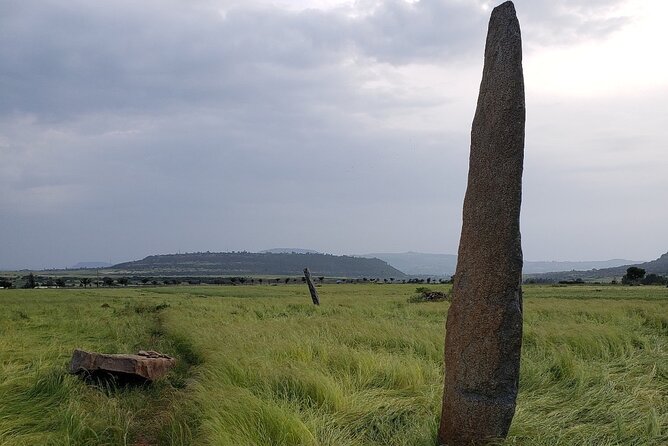
The second morning takes you to Gobo Dura, an important quarry site connected with the Great Stele of Aksum. This is one of the most useful parts of the trip because it shifts attention from the finished monuments to the labor that produced them.
At the quarry, you can see an unfinished stele and marks showing how the stone was cut. The site offers clues about quarrying and transporting enormous blocks to their final position in Axum. The unfinished work is valuable because it reveals process. A completed monument can look almost magical. A half-finished one shows the mistakes, cuts, and planning behind it.
Gobo Dura also gives you a different setting from the central ruins. The program includes time to notice birds, seasonal monkeys, local vegetation, farming, and rural life. Wildlife sightings are not guaranteed, especially since monkeys are noted as seasonal, but the chance to see the area as a living countryside adds useful balance to the ancient sites.
You’ll also visit the Lioness of Gobo Dura, a lioness carved into a large granite stone. This is a distinctive stop and another reminder that the quarry area is not only an industrial site. The carving connects the natural shape of the rock with symbolic art.
The quarry visit may involve walking over uneven outdoor ground, although the exact trail conditions are not provided. Wear practical shoes and bring water. Bottled water is included, but food and drinks beyond that are not, so plan your lunch before the day begins.
Same country, a very different kind of day:
- Full Day Tour of Addis Ababa with Hotel Pickup and Drop-off
★ 5.0 · 430 reviews - Taste of Ethiopia
★ 5.0 · 406 reviews - Day Trip From Addis Ababa See Historical Monastery,Stunning Nature,Animals,Birds
★ 5.0 · 303 reviews - Addis Ababa: Debre Libanos, Blue Nile Gorge, and Cave Tour
★ 4.5 · 256 reviews
Walking through old Axum after lunch
After a lunch break, the itinerary returns to Axum for a gentle walk through the old town. This is a smart counterpoint to the quarry. You move from ancient stone extraction to a city shaped by centuries of continued use.
The old town helps you see change and continuity in the Aksumite center. The ancient kingdom is not simply a vanished civilization placed behind barriers. The modern city grew around religious, historic, and daily spaces, and walking lets you notice those layers at a human pace.
The word gentle is useful here, but the overall day still lasts about eight hours. You may spend less time walking than on a dedicated hiking trip, yet you should be prepared for a full day outdoors and on your feet. The guide can explain local customs and cultural norms, an aspect that previous clients particularly valued when visiting Axum’s religious sites.
Muez Tewelede is specifically associated with very good English and careful attention to visitors’ needs. That matters in a place where etiquette and religious practice are part of the visit. Asgedom Tazeze is also linked with well-organized tours, good transport, and a professional approach.
What the private transport adds
The tour uses private transportation in an air-conditioned minivan. Fuel and the driver’s allowance are included, as are transfers to and from Axum Airport.
That arrangement saves you from sorting out separate local transport between the city sites and Gobo Dura. It also makes the two-day schedule easier to manage, particularly when the first day begins with an airport arrival and hotel check-in.
The group limit is 15 people. That is small enough for a more personal guide experience, though it is not necessarily a one-person or couple-only tour. If you want the best use of the guide, ask questions as you go, especially at the stele field and quarry, where the difference between religious tradition and archaeological evidence deserves explanation.
Several accounts of Gelila Ethiopia Tours also point to vehicles being in good condition and the company handling more than one Ethiopian destination. That does not guarantee a particular vehicle or guide for every departure, but it suggests you should confirm the assigned guide and pickup details after booking.
Is $105 a fair price?
At $105 per person, the price is strongest if you value simplicity. It covers private transportation, fuel, the driver’s allowance, entrance fees and licenses listed in the program, airport transfers, bottled water, and a professional English or French-speaking local guide.
You still pay separately for your hotel, meals, drinks, tips, and airfare. That makes the headline price only part of your real budget. If you already have accommodation in Axum, the package becomes easier to judge because you are mainly paying for transport, guiding, site access, and planning.
For a solo visitor or a small group, private transport and a local guide can be useful in Axum. You avoid piecing together rides and entrance arrangements yourself. For a larger group, the per-person price may compare differently, but the maximum group size is 15.
I would ask before departure exactly which entrance fees are covered and which hotel pickup details apply. The program says pickup is offered and airport transfers are included, but it does not give a hotel category, meal plan, or precise list of every site inside the city tour.
Who will get the most from this trip?
This is a good fit if you want Axum’s main historic sights with a guide who can explain religion, local customs, and the Aksumite period. It also suits you if you prefer a planned route with private transport rather than arranging each stop independently.
The experience should appeal to:
- History-focused visitors who want the ruins, stelae, quarry evidence, and ancient trade context.
- Culturally curious visitors who want to understand the Ark tradition and Ethiopian Christianity respectfully.
- Photographers and walkers who enjoy stone monuments, rural surroundings, carved rock, and old-town streets.
- Short-stay visitors who have only two days in Axum and want a broad introduction.
- People visiting northern Ethiopia as part of a longer trip that may include Gondar, Lalibela, or Addis Ababa.
It may be less suitable if you want a relaxed hotel-based break, a food-centered tour, or a highly flexible schedule with little walking. The days are long, and the program does not include meals or accommodation. The additional information also says the activity is not recommended for people with current or previous medical problems.
Practical planning before you arrive
The listed start time is 11:00 a.m., but the first day also includes airport arrival, meeting the tour representative, and hotel check-in. Confirm how that time relates to your flight before booking.
Bring comfortable walking shoes, sun protection, and enough personal spending money for meals, drinks, and tips. Bottled water is provided throughout the tour, but lunch and other food are not.
Ask which guide will lead your departure. Asgedom Tazeze and Muez Tewelede are names connected with the company, and both are described as professional local guides. English and French guiding are offered, but it is still sensible to confirm your preferred language.
The tour requires good weather and a minimum number of participants. If poor weather cancels the trip, you can choose a different date or receive a full refund. If the minimum group is not reached, the alternatives are another date or experience, or a full refund.
You can cancel for a full refund if you do so at least 24 hours before the local start time. Changes or cancellations made inside that 24-hour window are not accepted for a refund.
Should you book the Axum two-day trip?
Book it if you want an efficient, guided introduction to Axum that includes more than the famous central ruins. The combination of UNESCO sites, the Great Stele connection at Gobo Dura, the Lioness carving, rural life, and an old-town walk gives you a fuller picture than a quick city visit.
The strongest reason to choose it is the guide-led context. Axum’s stories mix archaeology, Christianity, royal memory, and sacred tradition. A good local guide helps you understand those layers without reducing the city to a list of old stones.
Think twice if you need meals and lodging bundled into the price, have health concerns, or prefer short sightseeing days. For everyone else, $105 is a practical starting price for two full days of transport, guiding, access fees, and airport handling, provided you budget separately for the items left out.
FAQ
Where does this two-day trip take place?
The experience is based in Axum, Ethiopia, and includes sites in Axum and its surrounding area, including Gobo Dura.
How long does the experience last?
The trip lasts approximately two days. The first day is scheduled for about nine hours, and the second day for about eight hours.
What time does the tour start?
The listed start time is 11:00 a.m.
Is airport pickup available?
Yes. Pickup is offered, and transfers from and to Axum Airport are included.
Is transportation included?
Yes. The tour includes private transportation in an air-conditioned minivan, along with fuel and the driver’s allowance.
Are entrance fees included?
Yes. The program includes all entrance fees and licenses required for the listed activities.
Are meals and accommodation included?
No. Food, drinks, and accommodation are not included in the price.
What languages can the guide speak?
A professional local guide speaking English or French is included.
What is the maximum group size?
The experience has a maximum of 15 people.
Can I cancel for a full refund?
Yes, if you cancel at least 24 hours before the experience’s local start time. Cancellations made less than 24 hours in advance are not refunded.
Just added around Ethiopia
- Yod Abyssinia Cultural Night: Dinner, Music, and Dance★ 5.0 · 7 reviews
- 2 days Tigray Church★ 5.0 · 3 reviews
- 3 days tour Danakil Depression (Dallol & Erta Ale)★ 4.0 · 5 reviews
- 2 Days Dallol Trip★ 5.0 · 4 reviews
- Trekking in Ethiopia’s Lalibela Wollo Highland 4 Days / 3 Nights★ 5.0 · 6 reviews
- The Rock-Hewn Churches of Lalibela: 3 Days / 2 Nights★ 5.0 · 6 reviews
- Lalibela Backpacker tours★ 5.0 · 6 reviews
- Lalibela churches Guided Tour★ 5.0 · 6 reviews
2-Day Experiences, compared.

2 Days 1 night tour to Lalibela Rock-hewn churches
Read our review →

Browse the lists this tour appears in