
Reviewed · ETHIOPIA HISTORIC ROUTE TOURS
12- Day Historical Route of Ethiopia
The most remarkable part of this 12-day Ethiopian route is its range. In less than two weeks, you move from Addis Ababa and the story of Lucy to Lake Tana, royal Gondar, high Simien peaks, ancient Axum, Tigray’s cliff churches and Lalibela’s stone-cut sanctuaries. I especially like the small maximum group size of four and the mix of included domestic flights with private road travel.
I also like that the schedule reaches places many shorter tours skip, including Yeha, Adwa, Yemrehana Krestos and the Gheralta churches. The trade-off is real: several days involve long drives on rugged roads, and the altitude, uneven church access and camping night require a moderate fitness level.
Key points at a glance

- Lalibela receives two full visits: You see both church clusters, including Bete Emanuel, Bete Gabriel and Bete Rafael.
- Lake Tana adds a calm start: A boat trip reaches Ura Kidane Mihret, with painted religious scenes and old Ge’ez manuscripts.
- The route reaches 3,250 meters: Simien Mountains scenery and Gelada baboons come with altitude and an overnight camping stay.
- Tigray offers rare church visits: Abune Yemata Guh, Abreha We Atsbeha, Degum Selassie and Chirkos show a different side of Ethiopian church architecture.
- Private travel keeps the pace flexible: Transportation is private, and the group is capped at four people.
- Ashu is the named contact at Enat Ethiopia Tours: The operator’s owner is associated with organizing the trip and helping coordinate a smooth journey.
Why this route works for a first visit to Ethiopia

Ethiopia is not a country you understand from one museum or one famous church. Its story stretches across ancient kingdoms, early Christianity, highland farming communities, imperial capitals and dramatic mountain country. This tour gives you a broad introduction without leaving the northern circuit too quickly.
You begin and end in Addis Ababa, with flights to Bahir Dar and back from Lalibela. Between those flights, the route uses a private vehicle for the historic northern highlands. That combination matters. You avoid repeating every long road journey, but you still see the changing scenery between Bahir Dar, Gondar, Axum, Mekele and Lalibela.
The price is $2,597 per person. For a private or very small-group trip with domestic flights, private transport, accommodation, breakfast, most lunches, two dinners, entrance fees and a professional multilingual guide, that can be solid value. You should still confirm the exact hotel standards and meal schedule before booking, since the details supplied mention breakfast eight times, lunch ten times and dinner twice rather than dinner every night.
The tour is best for you if you want history and scenery in equal measure. It is less suitable if you prefer slow travel, long stays in each town or easy roads every day.
More ethiopia historic route tours in Addis Ababa:
- 5 Days North Ethiopia Tours
★ 5.0 · 23 reviews - Northern Ethiopia Historic Route
★ 5.0 · 12 reviews - North Ethiopia Round Trip Tours From Addis Ababa
★ 5.0 · 11 reviews
Addis Ababa begins with Lucy and a high city view
Your first day starts with airport pickup and transfer to your hotel. Addis Ababa sits at about 2,438 meters, so even a city sightseeing day begins at a higher elevation than many visitors expect. The stated average temperature is around 25 C, but high-altitude conditions can still feel cool, especially in the morning and evening.
The National Museum is the essential first stop. Its fossil collection includes Lucy, the famous 3.5-million-year-old hominid remains found in Ethiopia. This is more than a standard museum introduction. It gives you a useful frame for the entire trip, since Ethiopia’s historical story begins long before its churches, castles and royal dynasties.
On the final day, you return to Addis Ababa by air and visit Entoto Mountain. The old capital site gives you broad views over the city and a change of air among eucalyptus trees. The descent through Shiro Meda, known for its traditional clothing market, adds a practical cultural stop rather than another formal monument.
The farewell dinner includes traditional food, drinks, songs and dances before your transfer to Bole International Airport. Since the schedule begins and ends at the airport, ask Enat Ethiopia Tours to confirm your arrival and departure flight details clearly. The stated meeting point is the Skylight Hotel parking area on Africa Avenue, while airport pickup is also offered.
Lake Tana brings boats, island churches and Tisissat Falls
On day two, you fly to Bahir Dar, on the shore of Lake Tana. The lake is Ethiopia’s largest, and the day combines water travel with a visit to Tisissat Falls, whose name means water that smokes in Amharic.
The boat trip is one of the tour’s most appealing changes of pace. After the city and museum in Addis Ababa, you spend time on open water and visit Ura Kidane Mihret on the Zeghie peninsula. The church has colorful paintings of religious scenes, along with illuminated Bibles written in Ge’ez, the old religious language connected to Amharic.
You should keep expectations practical. The day is listed as about eight hours, and a boat trip followed by a waterfall excursion can make for a full schedule. Water levels and local conditions may affect how impressive Tisissat Falls appears. Still, the combination gives you both Ethiopia’s religious art and its natural scenery in one day.
Gondar explains Ethiopia’s royal past
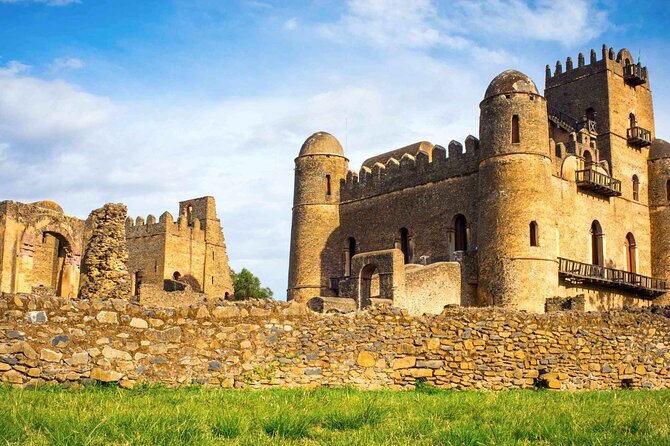
A three to three-and-a-half-hour drive takes you roughly 185 kilometers north to Gondar. This former capital is known for its walled Royal Enclosure and its unusually well-preserved 17th-century castles.
The largest castle is associated with King Fasilides. Its stone construction, round turrets and wooden balconies make it easy to see why Gondar is often described as Ethiopia’s castle city. The Bath of Fasil, outside the main town, is also important. Thousands gather there for Timkat each January, the Ethiopian Orthodox celebration of Epiphany.
Gondar gives the itinerary a useful change in historical period. Addis Ababa introduces modern Ethiopia and human origins, while Bahir Dar focuses on church traditions and the lake. Gondar shifts the focus to royal power, court life and imperial architecture.
The drawback is that the schedule allows only one main day in town, and the drive from Bahir Dar uses a good part of it. You will see the key sites, but you will not have much spare time for unplanned wandering.
A few more Addis Ababa trips to weigh up
- Day Trip From Addis Ababa See Historical Monastery,Stunning Nature,Animals,Birds
★ 5.0 · 303 reviews - Hidden Treasures of Addis Ababa – Food, Culture and History Tour
★ 5.0 · 57 reviews - 5 Days Tour to World Heritage–listed Harrar, Dire Dawa and Awash NATIONAL PARK
★ 4.5 · 10 reviews - DAY TRIP TO THE UNESCO HERITAGE SITE TIYA & Melka Kunture
★ 4.5 · 10 reviews
Simien Mountains add altitude, wildlife and one camping night
Day four takes you toward Debark and then into Simien Mountains National Park, a UNESCO World Heritage Site. The route reaches about 3,250 meters, making this the highest point of the trip and one of the days when fitness and pacing matter most.
The tour includes time around Sankaber and an optional walk of about 90 minutes. The walk is described as mostly flat or downhill, which makes it more approachable than a full mountain hike. You might see Gelada baboons, klipspringers, lammergeyer vultures and bushbuck.
The views are a major reason to include Simien. The mountain terrain is broad and dramatic, and the road itself provides photo stops. But do not treat this as a luxury sightseeing day. You spend the night camping, and the combination of altitude, cool conditions and basic outdoor accommodation may not suit everyone.
If you feel the effects of altitude, tell your guide early rather than trying to keep pace. The trip includes private transport and a guide, so the small group should make it easier to adjust the walking plan. The stated moderate fitness requirement is important, not decorative.
The long road to Axum rewards patient passengers

Day five is one of the hardest on paper. You drive from the Simien area to Axum for a full day, passing through the lower parts of the mountains and the Tekeze River gorge. The views are described as excellent for photography, but the road is rugged and the distance makes this a transit day as much as a sightseeing day.
I would pack snacks, water and a way to occupy yourself during long stretches in the vehicle. The tour includes lunch, but a long road day is easier when you have something small within reach. This is also a good time to keep your camera ready, since the scenery changes from high mountain country to striking gorge views.
Axum was once the center of a powerful kingdom connected to trade routes between the Mediterranean and India. Its influence reached both sides of the Red Sea, helped by the port of Adulis. That context makes the arrival worthwhile, even if you mainly have time to rest after checking into the hotel.
Axum connects empire, Christianity and the Ark tradition

The next day is devoted to Axum, another UNESCO World Heritage Site. The town was the capital of the Kingdom of Axum and an early center of Christianity in Ethiopia.
The old church of St Mary of Zion is especially important. It is described as the first church built in Sub-Saharan Africa, dating to around 330 AD. Axum is also traditionally associated with the resting place of the Ark of the Covenant, a belief that gives the city a strong spiritual importance for Ethiopian Orthodox Christians.
This is a day where your guide’s explanations will add real value. Stones, ruins and church compounds can be difficult to read on your own. A professional guide is included, with service available in English, Spanish, French, German or Italian, though you should request your preferred language when booking.
Yeha and Adwa reveal a less familiar northern Ethiopia
From Axum, you head east to Yeha and Adwa before continuing toward Gheralta. Yeha is presented as Ethiopia’s oldest settlement, possibly dating back nearly 3,000 years. Its large temple, linked to the moon god Ilmuqah, points to early connections across the Red Sea with Yemen.
The temple later became a church, and its ibex carvings remain a memorable detail. This is one of the route’s strongest stops for understanding that Ethiopia’s past was not isolated. Trade, religion and architecture moved across the Red Sea long before modern borders.
Adwa adds a more recent historical layer. The town is set among rugged mountains and is associated with Ethiopia’s victory over a colonial power, an event with major importance in African history. The day therefore moves from ancient religious architecture to national independence and identity.
The road continues to Gheralta, so you should expect another full day rather than a leisurely town visit. This is a route for people who prefer significant sites over long hotel afternoons.
Tigray’s rock churches require effort and curiosity
Days seven and eight are among the most distinctive parts of the trip. Tigray is known for rock-cut churches created before the 16th century, many of which remain in active use by Orthodox Christian communities.
The schedule includes Abreha We Atsbeha, Degum Selassie and the sandstone church of Chirkos at Wukro. Chirkos is noted for cruciform pillars and a barrel-vaulted ceiling. The route also includes Abune Yemata Guh, one of the places where the physical setting is part of the experience.
You should be ready for uneven approaches and church visits that may not feel like standard museum stops. The information provided does not specify the exact walking time or access conditions for every church, so ask your guide about the day’s route before setting out. Comfortable shoes are sensible, and modest clothing is appropriate for active religious sites.
The value here is authenticity and variety. These churches are not simply smaller versions of Lalibela. They show how worship spaces were shaped by local stone, mountain terrain and centuries of religious practice.
Mekele breaks up the route before Lalibela
After the church visits, you continue to Mekele. This town functions mainly as an overnight stop before the long drive south, but it also divides a demanding section of the trip into manageable parts.
Day nine is another full road journey, taking you through striking countryside between the mountains to the west and the beginning of the Danakil Depression to the east. You arrive in Lalibela later in the day.
There is no major sightseeing block listed for this day, and that is worth noting. You are paying for a route that covers a large part of Ethiopia, so some days are necessarily about getting from one important place to the next.
Lalibela is the emotional center of the journey
Lalibela receives two sightseeing days, which is exactly what this route needs. The town is often called the New Jerusalem, and its churches were carved from solid rock under King Lalibela about 800 years ago.
The churches were cut down into the stone on all sides, leaving a block in the center that was then shaped into a building. The result is not just a church with a stone façade. You see structures cut below ground level, with exterior walls, interiors and decorative details shaped from the same rock.
On the first visit, you explore the first church cluster. On the second, you see the remaining churches, including Bete Gabriel and Rafael, Merkorous, Emanuel and Abba Libanos. Bete Emanuel is singled out for its careful carving and Axumite features, including wall indentations, false windows, monkey-head details and forms inspired by Axum’s stone stelae.
A second day gives you time to understand the site rather than rushing through it. Even so, church floors and paths can be uneven, and the schedule is active. Your guide’s role is especially useful here, since the buildings make more sense when their design, religious purpose and relationship to one another are explained.
Yemrehana Krestos offers a quieter architectural contrast
Day eleven takes you to Yemrehana Krestos Church before returning to Lalibela. The church is known for Axumite construction using wood and stone, along with a decorated wooden coffer ceiling filled with hexagons, medallions, figurative designs and geometric patterns.
This visit broadens your understanding of the area. Lalibela is famous for churches cut from the ground, while Yemrehana Krestos shows a different building method and a different visual character. You then return to Lalibela for the remaining church visits.
The day lasts about six hours, shorter than many of the road sections earlier in the trip. That gives you a little more breathing room before the final flight to Addis Ababa.
What the $2,597 price includes
At $2,597 per person, the cost makes the most sense if you value coordination. The tour includes private transportation in an air-conditioned vehicle, domestic flights, accommodation with breakfast, listed lunches, two dinners, entrance fees and a professional guide.
A group maximum of four is a major advantage. You are not managing a large coach group, and a small party usually makes airport transfers, church visits and photo stops easier. The operator also identifies English, Spanish, French, German and Italian guide options.
You should budget separately for dinners not included, personal needs and gratuities. The meal information is not perfectly uniform, so ask for a day-by-day meal breakdown. Also confirm the hotel names, the camping arrangements in Simien and the domestic flight schedule before paying the balance.
Free cancellation is available if you cancel at least 24 hours before the local start time. Changes made inside that window are not accepted, and the operator may offer another date or a full refund if the minimum group size is not reached.
Who should book this Ethiopia route
I would choose this tour if you want a structured first visit with strong historical content, private road transport and the major northern sites in one sweep. It suits couples, families and small groups that appreciate having a guide and driver rather than arranging difficult overland connections themselves.
The route also suits you if you are comfortable with early starts, long drives, high elevations and simple overnight conditions. It is not the right match if you need a relaxed schedule, dislike rough roads or want every night in a polished city hotel.
Ashu, the owner associated with Enat Ethiopia Tours, is the key name to know when arranging the trip. The company’s flexibility and personal coordination are particularly useful on a route with flights, changing roads, church access and several different overnight bases.
Should you book it?
Book it if your priority is seeing Ethiopia’s northern historical core in a single, carefully arranged journey. The strongest parts are the two days in Lalibela, Lake Tana’s church visit, Axum, the Tigray churches and the Simien Mountains.
Think twice if you want a slow cultural holiday. This is a packed route with several full-day drives, and the camping night and altitude add physical demands. At the price, the small group, domestic flights and private transport offer good value, provided you confirm hotel standards, meals and road conditions before booking.
FAQ
How long is the tour?
The tour lasts approximately 12 days, beginning in Addis Ababa and ending with a return to Addis Ababa for departure.
Where does the tour start?
The listed meeting point is the Skylight Hotel parking area on Africa Avenue in Addis Ababa. Airport pickup is offered, and the first day includes arrival transfer to the hotel.
How many people can join the tour?
The activity has a maximum of four travelers.
Are domestic flights included?
Yes. All domestic flights listed as part of the route are included.
What meals are included?
Accommodation with breakfast is included, along with listed breakfasts, ten lunches and two dinners. Dinner is not included every night, so confirm the exact meal schedule before booking.
What level of fitness is needed?
A moderate level of physical fitness is recommended. The route includes an optional 1.5-hour walk in the Simien Mountains, high altitude up to 3,250 meters, rugged roads and visits to rock-cut churches.
Can I cancel for a full refund?
Yes, if you cancel at least 24 hours before the experience start time. Cancellations made less than 24 hours in advance are not refunded, and changes inside that period are not accepted.
Just added around Addis Ababa
- Yod Abyssinia Cultural Night: Dinner, Music, and Dance★ 5.0 · 7 reviews
- Stunning Views Wonchi Crater Lake a Private Day Trip★ 5.0 · 3 reviews
- Locally crafted beer and wine tasting and nightlife in Addis tour★ 5.0 · 6 reviews
- Two days Lake Wenchi and Menagesha Forest★ 5.0 · 3 reviews
- 3-Day Cultural Tour in South Omo Valley★ 5.0 · 4 reviews
- Addis Ababa City Tours Full-Day Tours★ 5.0 · 5 reviews
- Tribes of the Ethiopian Omo Valley – 9 Day Tour★ 5.0 · 5 reviews
- South Omo Valley Tribes 8 Days Tour Package★ 5.0 · 4 reviews
Ethiopia Historic Route Tours, compared.
North Ethiopia Round Trip Tours From Addis Ababa
Read our review →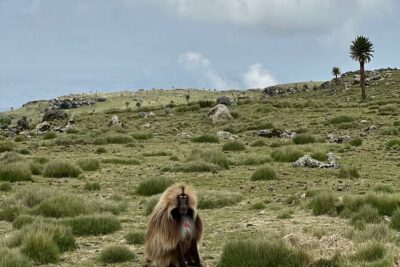
5-Day Northern Ethiopia Tour : 3D Simien Mountains Trek & Axum.
Read our review →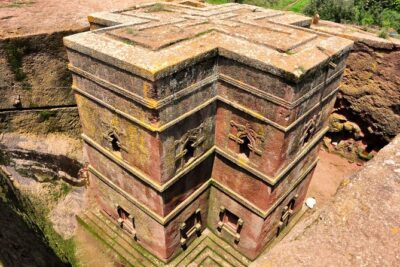
Northern Ethiopia & Trekking Simien Mountains , 10 Days
Read our review →
5 days Exploring North Ethiopia’s Rich History and Culture
Read our review →Browse the lists this tour appears in