
Reviewed · FOOD & DRINK
Hidden Treasures of Addis Ababa – Food, Culture and History Tour
Addis Ababa reveals itself in layers on this full-day outing: noisy Mercato, quiet museum gardens, royal tombs, ancient human remains, and a cool mountain overlook. The day links places that are often visited separately, giving you a useful first look at Ethiopia’s capital.
I like the private transportation and the way food is part of the sightseeing, not an afterthought. I also like the flexible, personal guiding associated with Anteneh, whose clear English and practical help have made this tour especially useful for short stopovers. The main drawback is pace: eight hours and five major stops make for a long, busy day, with traffic and crowded market lanes adding uncertainty.
Key things to know before you book
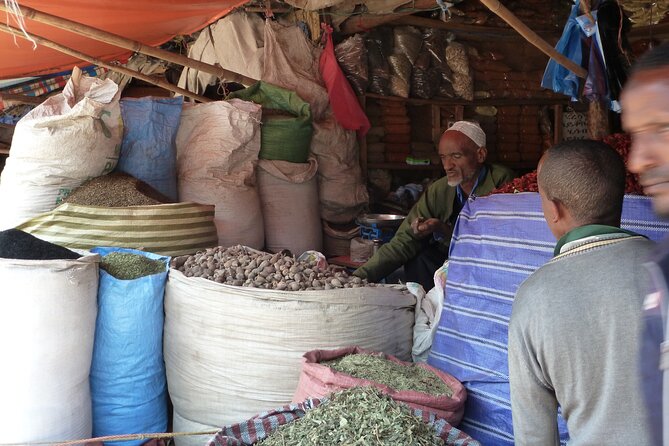
- Mercato comes first: Allow 90 minutes for Africa’s largest open-air market, including traditional crafts, livestock, and a recycling market.
- Food is hands-on: At Zoma Museum, you see traditional Ethiopian food prepared, taste it, and follow it with a coffee ceremony.
- Lucy anchors the museum visit: The National Museum introduces human evolution through Ethiopian discoveries, including the 3.2-million-year-old Lucy.
- Royal history appears in two places: Bata Mariam Church holds the tomb of Menelik II and other royal family members, while Entoto shows the first palace connected with Addis Ababa’s founding.
- The day ends above the city: Mount Entoto provides a sunset view over the Addis Ababa skyline.
- It is a private tour: Only your group takes part, with pickup and drop-off at your hotel or another preferred location.
Why this Addis Ababa day works so well
This tour is built for you if you want more than a string of photo stops. Addis Ababa can feel sprawling, busy, and hard to read on a first visit. The route gives you a guide, a private vehicle, and a full day to connect the city’s present-day commerce with its food, faith, archaeology, and royal past.
The mix is the real strength. You begin among merchants and customers, slow down in an art museum garden, look at royal tombs, meet Lucy, then climb toward the city’s historical starting point. Each stop changes the mood, so the day does not feel like eight hours in one museum or one vehicle.
The tour is also well suited to a long layover. Pickup is offered, and several people who had only part of a day in Addis used the time to see the city before continuing their journey. You still need to allow enough time for airport and traffic plans, but the private format makes the day more adaptable than a fixed large-group excursion.
Anteneh is the guide name most closely associated with this experience. His strengths are reported as clear English, local knowledge, flexibility, and attention to practical needs. That matters at Mercato, where a local escort can help you move through the market with more confidence, and during a short visit, when you need the day to run sensibly.
A few more Addis Ababa trips to weigh up
- Ethiopian Culinary Tour – Market, Food, Coffee Ceremony & more
★ 5.0 · 65 reviews - Addis Ababa City Tours With Cocking Class of Ethiopian Food
★ 5.0 · 20 reviews - Ethiopia coffee cupping class/Ethiopian food injera making
★ 5.0 · 10 reviews
Mercato Market: 90 minutes in the city’s commercial heart

Mercato is not a polished market built for sightseeing. It is a working commercial district, crowded with sellers and shoppers, and its appeal comes from that everyday energy. You can expect a sensory start: narrow routes, busy trade, traditional basketry, pottery, livestock, and a recycling area where discarded materials are turned into useful goods.
The recycling market is a particularly worthwhile detail. It shifts the focus from souvenir shopping to local ingenuity. You see how objects and materials can gain a second life, and you get a better sense of the informal economy that keeps a large city supplied.
The visit lasts about an hour and a half, which is enough for an introduction but not enough to cover every corner. Wear comfortable shoes and keep your belongings secure. The supplied details do not promise a leisurely stroll, and the market’s crowded nature means you should expect a more physical stop than the museums later in the day.
Past excursions with Anteneh have included a rooftop view reached by a rickety ladder and visits to local food and shopping spots. Those details suggest a guide who may add small local viewpoints when conditions and your interests allow, but you should not treat them as guaranteed parts of this specific outing. The confirmed Mercato experience is the market visit itself.
Zoma Museum: food, clay houses, and a coffee ceremony
After Mercato, Zoma Museum offers a welcome change of rhythm. Its permaculture garden includes false banana trees, herbs, and a small urban farm. In a city tour packed with roads and commerce, this quiet green space gives you time to sit, eat, and look at how food can be grown within an urban setting.
The museum’s architecture is part of the stop. Traditional-style, clay-clad houses and artistic structures give Zoma a strong sense of place. You are not simply entering another white-walled gallery. The buildings, garden, and food preparation work together to show a living side of Ethiopian culture.
Lunch is paired with a cooking and tasting session. You watch traditional Ethiopian food being prepared, then get to try it. The supplied information does not specify the exact dishes, so you should not book expecting a particular menu. The value is in seeing the preparation and eating within the setting, rather than only ordering a finished plate at a restaurant.
The coffee ceremony follows. Coffee is roasted and prepared while incense burns on a traditional charcoal stove. This is one of the day’s most memorable cultural moments because it gives you a process to watch, not just a cup to drink. Coffee and tea are included, along with snacks and bottled water, while alcoholic drinks and personal purchases cost extra.
The full Zoma visit takes about two and a half hours. That is generous enough for lunch, the garden, food preparation, tasting, and coffee. It is also the part of the tour most likely to appeal to you if food is your main reason for booking. If you prefer a fast city checklist, the extended stop may feel slow, but that slower pace is exactly what makes the day more human.
Bata Mariam Church and the Mausoleum of Menelik II
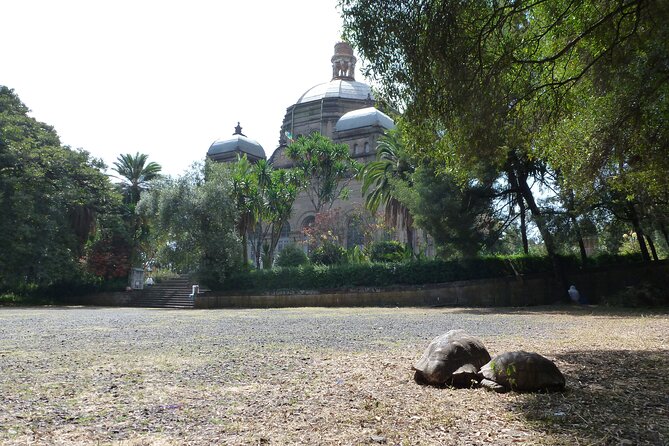
The old Bata Mariam Church, also referred to in the tour information as Bahita Mariam, brings you into Addis Ababa’s royal and religious past. Its quiet compound is inhabited by giant turtles, an unusual detail that gives the visit a lighter touch after the intensity of Mercato.
Underground, you find the tomb of Menelik II, identified here as the founder of Addis Ababa. Other members of the former royal family are also buried there. The site connects the city to the people who shaped its early political life, rather than presenting history as a series of dates detached from real places.
The church is also associated with an original painting attributed to Michelangelo in the tour description. That is a striking claim, and it is worth asking your guide for the site’s own explanation when you visit. The stop is scheduled for about an hour, so expect a focused visit rather than an extended study of every church detail.
This is a good example of why a guide adds value. Tombs, paintings, and royal buildings can be difficult to interpret without context. Anteneh’s role is not just to get you there, but to explain how the site fits into the story of Addis Ababa and Ethiopia.
Same country, a very different kind of day:
- Full Day Tour of Addis Ababa with Hotel Pickup and Drop-off
★ 5.0 · 430 reviews - Taste of Ethiopia
★ 5.0 · 406 reviews - Day Trip From Addis Ababa See Historical Monastery,Stunning Nature,Animals,Birds
★ 5.0 · 303 reviews - Addis Ababa: Debre Libanos, Blue Nile Gorge, and Cave Tour
★ 4.5 · 256 reviews
The National Museum and a meeting with Lucy
The National Museum of Ethiopia turns the day toward archaeology and human evolution. Its best-known resident is Lucy, the 3.2-million-year-old ancestral skeleton found in Ethiopia. Seeing her gives physical weight to a subject that can otherwise feel remote and abstract.
The museum visit lasts about an hour. You learn about human evolution through examples of ancestors found in Ethiopia, with Lucy as the central draw. The schedule does not promise a full museum tour or a specialist archaeology lecture, so think of this as a clear introduction rather than an exhaustive examination of the collection.
I like the placement of the museum after the royal stop. You move from recent political history to the much longer human story beneath it. Addis Ababa becomes more than a capital founded in the modern era. It sits within a country that has played a major role in the study of human origins.
If Lucy is your main reason for visiting the museum, an hour should give you a useful encounter. If you are a serious museum fan, you may wish you had more time. The advantage of this tour is range, not prolonged time at one institution.
Mount Entoto and the final sunset
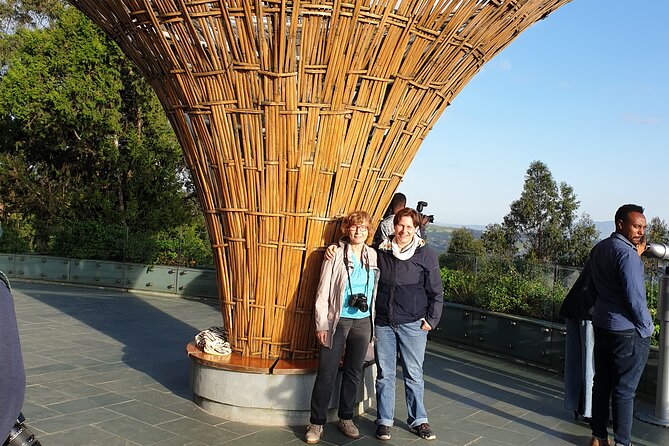
Mount Entoto is the final stop and takes about two hours. At the entrance to Addis Ababa, it brings together the city’s origin story and its best scheduled view. You see the first palace connected with the founder of Addis Ababa, visit a museum displaying Ethiopian history, and look over the skyline as the sun goes down.
The sunset is not a minor photo stop tacked onto the end. After a day at street level, the high viewpoint helps you understand the city’s size and shape. You can look back on the markets, museums, churches, and roads you have crossed, now seen as part of one broad urban picture.
Timing is the one point to watch. The tour lasts about eight hours, but sunset changes by season, and traffic can affect arrival. The exact order or amount of time at each stop may need to shift. A private tour helps, since your group is not tied to the preferences of a coach full of strangers, but it cannot remove Addis Ababa’s traffic.
Mount Entoto may also feel cooler than the city below. The supplied information does not list clothing advice, but a light extra layer is a sensible choice for an evening viewpoint. The tour ends with drop-off at your hotel or preferred location, making this a comfortable final stop rather than a scramble to find your way back.
What the $75 price delivers
At $75 per person, this is not the cheapest way to see Addis Ababa, but the price covers a lot for a private eight-hour day. You get private transportation, pickup and drop-off, admission to the listed stops, snacks, bottled water, and coffee or tea. More importantly, you get one guide coordinating a route that would be awkward to arrange independently in a single day.
The value is strongest for two people or a small group that wants personal attention. Group discounts are offered, which can make the cost more attractive as your party grows. Since only your group participates, you can ask questions, adjust the pace when possible, and discuss adding interests without competing with a large crowd.
Admission is included for Mercato, Zoma Museum, the Mausoleum of Menelik II, the National Museum, and Mount Entoto. Alcohol, souvenirs, and other personal expenses are not included. The food experience is included in the day, but the exact menu is not specified, so ask before booking if you have dietary concerns.
The tour is booked, on average, about seven days ahead. That is useful planning information if you have a tight Ethiopia itinerary. Confirmation comes at booking, and free cancellation is available up to 24 hours before the local start time. Inside that window, the payment is not refunded and changes are not accepted.
Who should book this Addis Ababa tour
I would choose this outing if you are visiting Addis Ababa for the first time, have a long layover, or want one day that covers food, history, and daily life. It also suits you if you prefer a private guide to handling market navigation, museum context, and city transport on your own.
The tour is suitable for most ages, according to the supplied information. Still, Mercato is crowded, and the day includes walking, vehicle time, a church compound, museum visits, and a mountain viewpoint. If you have mobility needs, ask the operator for current details before booking, since the information provided does not describe step-free access at every stop.
Food-focused visitors will get the most from the Zoma portion. History fans have the royal tombs, the museum, and Entoto. First-time visitors gain the broadest benefit because the route gives you a quick but meaningful introduction to how Addis Ababa works and where its story begins.
Should you book it?
Book this tour if you want a well-rounded private introduction to Addis Ababa rather than a single museum or restaurant visit. The strongest features are the range of stops, the cooking and coffee session, the access to Mercato, and the closing view from Mount Entoto.
Skip it if you want a slow day at one site, dislike crowded markets, or need a tightly fixed schedule that cannot bend around traffic. For everyone else, $75 buys an efficient day with food, transport, admissions, and a guide who can add local context. That is a fair deal, especially when your time in the capital is short.
FAQ
How long does the Hidden Treasures of Addis Ababa tour last?
The experience lasts approximately eight hours.
What time does pickup take place?
Pickup is offered between 8:30 AM and 9:30 AM, Monday through Sunday, during the listed operating periods.
Is hotel pickup available?
Yes. Pickup is offered from your hotel or another location you prefer, followed by drop-off there after the tour.
Is this a private tour?
Yes. Only your group participates in the private tour or activity.
What is included in the price?
Private transportation, snacks, bottled water, and coffee or tea are included. Admission to the listed stops is also included.
Are alcoholic drinks included?
No. Alcoholic beverages are not included.
What will I see at Mercato Market?
You will see merchants and customers, traditional basketry, pottery, livestock offered for sale, and a recycling market where items are made from waste.
Will I taste Ethiopian food?
Yes. At Zoma Museum, you see traditional Ethiopian food prepared and have a chance to taste it. A traditional coffee ceremony follows.
Who is Lucy?
Lucy is a 3.2-million-year-old human ancestor displayed at the National Museum of Ethiopia.
Can I cancel for a full refund?
Yes, if you cancel at least 24 hours before the experience starts. Cancellations or changes made within 24 hours are not refunded or accepted.
More Historical Tours in Addis Ababa
- Northern Ethiopia Historic Route
★ 5.0 · 12 reviews - 5 Days Tour to World Heritage–listed Harrar, Dire Dawa and Awash NATIONAL PARK
★ 4.5 · 10 reviews - DAY TRIP TO THE UNESCO HERITAGE SITE TIYA & Melka Kunture
★ 4.5 · 10 reviews - Historical tours – in five days, Addis Ababa, Axum, Laliebla and Gonder
★ 5.0 · 9 reviews
Just added around Addis Ababa
- Yod Abyssinia Cultural Night: Dinner, Music, and Dance★ 5.0 · 7 reviews
- Stunning Views Wonchi Crater Lake a Private Day Trip★ 5.0 · 3 reviews
- Locally crafted beer and wine tasting and nightlife in Addis tour★ 5.0 · 6 reviews
- Two days Lake Wenchi and Menagesha Forest★ 5.0 · 3 reviews
- 3-Day Cultural Tour in South Omo Valley★ 5.0 · 4 reviews
- Addis Ababa City Tours Full-Day Tours★ 5.0 · 5 reviews
- South Omo Valley Tribes 8 Days Tour Package★ 5.0 · 4 reviews
- Day Trip to Tiya UNESCO Site & Melka Kunture Archaeological Site★ 4.5 · 3 reviews
Food & Drink, compared.

Ethiopian Culinary Tour – Market, Food, Coffee Ceremony & more
Read our review →
Addis Ababa City Tours With Cocking Class of Ethiopian Food
Read our review →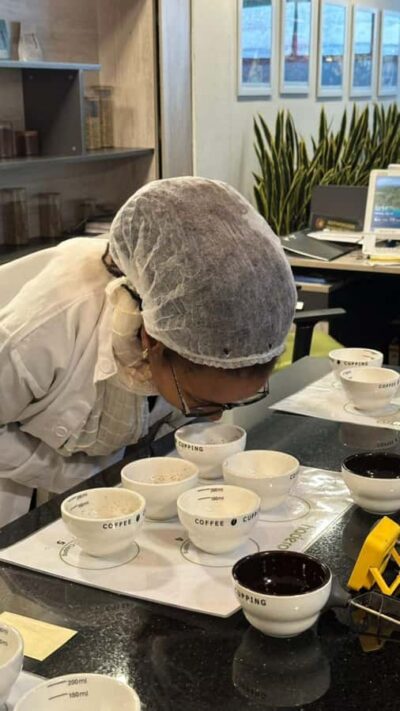
Ethiopia coffee cupping class/Ethiopian food injera making
Read our review →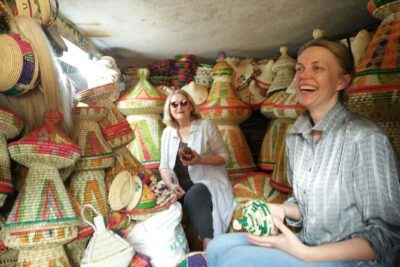
city tour of Addis Ababa ( history ,culture , food and more)
Read our review →

Locally crafted beer and wine tasting and nightlife in Addis tour
Read our review →

Half Day Food Tour Addis Ababa With Airport pickUp And Drop-Off
Read our review →Browse the lists this tour appears in