
Reviewed · OMO VALLEY TRIBAL TOURS
South Omo Valley Tribes 8 Days Tour Package
The great draw here is the human variety of southern Ethiopia. In eight days, you move from Addis Ababa’s museums and markets to Dorze mountain villages, Konso stone compounds, Karo river country, Mursi settlements, and weekly markets where several ethnic groups gather. This is a real road journey, not a polished resort circuit.
I like two things in particular: the trip gives you access to places that are difficult to reach alone, and it mixes village visits with wildlife, lakes, archaeology, and hot springs. Guides such as Haile and Danny are praised for clear communication, cultural knowledge, flexibility, and good humor. The main drawback is the road time. You may cover about 2,200 kilometers, and basic conditions are part of the deal.
Key points of the South Omo journey
- Meet five distinctive communities: Dorze, Konso, Karo, Mursi, and Hamer are the main cultural highlights.
- Private travel gives you flexibility: Only your group takes part, and the route may be adjusted with your guide.
- Expect long drives: The Omo Valley is remote, so several days involve many hours in the vehicle.
- See more than villages: The route includes Tiya, Nechisar National Park, Lake Chamo, Lake Hawassa, Abijatta-Shalla, and Wendo Genet.
- Guides matter here: Haile and Danny are named as especially strong guides, with useful local knowledge and a relaxed approach.
- Basic conditions are normal: Lodging is described as fine, but comfort levels vary, and the region is not highly modernized.
Why this Omo Valley tour is unlike a standard Ethiopia trip
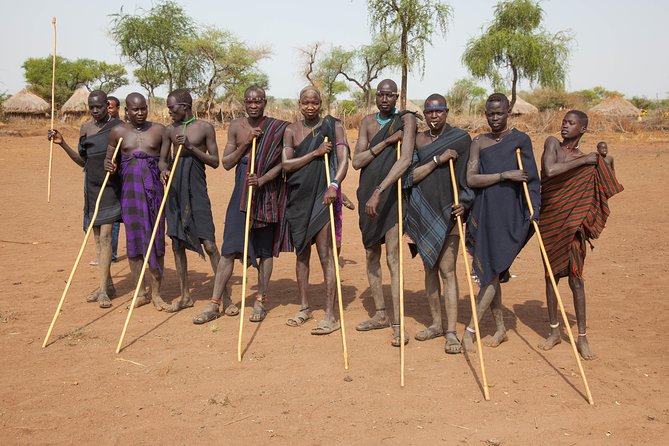
The South Omo Valley is one of the few parts of Ethiopia where a short conversation with a local guide can lead you into very different social worlds within the same journey. The Mursi, Karo, Hamer, Dorze, and Konso communities have their own dress, architecture, farming methods, ceremonies, and market traditions.
That variety is the reason to book this trip. You are not simply checking off a famous viewpoint. You are seeing how people have adapted to mountains, dry lowlands, river floodplains, and difficult roads.
You should also set your expectations correctly. This is an adventure with basic conditions. Road surfaces, hotel standards, and daily comfort can vary. The tour includes an air-conditioned vehicle, meals, bottled water, and local guides, but it is not designed for someone who wants short transfers and high-end lodging every night.
The private format helps. Your group travels alone, and the guide can sometimes adjust the route. That matters in a place where market days, road conditions, weather, and local schedules can affect the day.
More Omo Valley Tribal Tours in Addis Ababa
- 6 Days Omo Valley Tribes Tours From Addis Ababa
★ 5.0 · 33 reviews - 3 Days Omo Valley Tour
★ 5.0 · 24 reviews - Danakil Depression, Lalibela, Omo Valley and Simien Mountains
★ 5.0 · 23 reviews
Day 1: Addis Ababa museums, Lucy, and first bearings
After you land at Bole International Airport, a Finot Tour Ethiopia representative meets you in the arrival hall and helps with the transfer to your hotel. Pickup is offered, and the advertised starting time is 7:00 a.m., so confirm the exact schedule if your arrival falls later in the day.
The cultural introduction begins with Addis Ababa’s museums. At the Ethnological Museum, displays cover the customs, crafts, and daily life of Ethiopia’s many ethnic communities. This is useful preparation for the days ahead, since you will have some background before meeting communities in the south.
The National Museum adds Ethiopia’s archaeological story. Its best-known display is Lucy, the 3.2-million-year-old hominid discovered in Ethiopia’s Afar region. The itinerary also mentions Mercato, Addis Ababa’s famous market, though the daily description places the museum visits at the center of the afternoon. Ask your guide how much time is planned for each stop.
This first day is short and manageable, but it is not only a transfer day. It gives you a framework for understanding the many groups you will encounter later.
Day 2: Tiya and the high Dorze villages
The road south begins early, passing through Butajira and Hosaina toward Arbaminch. This is your first long driving day, with a stop at Tiya, a UNESCO-listed field of carved stone stelae.
Tiya is worth the pause because it breaks up the drive and gives the route an archaeological layer. The stones are decorated with symbols whose meaning is still a subject of study. You will not spend the whole day there, but the stop adds something beyond scenery and tribal visits.
Lunch is planned around Wolayita Sodo before the road continues toward Arbaminch. The route then climbs into the Gughe Mountains to visit a Dorze village. The change in altitude is striking: Arbaminch sits at about 1,400 meters, while the Dorze village is around 2,600 meters.
The Dorze are known for tall, beehive-shaped houses and fine cotton weaving. The village visit also includes traditional food preparation, according to the itinerary. Views toward Lake Abaya and Lake Chamo add a strong visual reward after the long drive.
You should bring a light layer for the mountain stop. The high elevation can feel noticeably cooler than the lowland areas later in the trip.
Day 3: Nechisar National Park and the lakes near Arbaminch
Nechisar National Park is one of the most scenic parts of this route. The park covers about 750 square kilometers and includes sections of Lake Abaya, Lake Chamo, and the hills known as the Bridge of God between the two lakes.
The day includes a boat trip. This gives you a different view of the lake country and may bring you close to aquatic birds and other wildlife. The exact wildlife sightings are not guaranteed, so you should think of the boat ride as a scenic outing rather than a conventional safari.
The broad views over the plains and volcanic hills are the main reward. Lake Abaya is described as the largest of the Rift Valley lakes, while Lake Chamo is another major feature of the area. The park is less visited than many well-known African reserves, which can make the setting feel quiet and open.
After the park and boat trip, you drive onward to Konso for the night. The six-hour description does not include every possible road delay, so allow for a full day. Southern Ethiopia operates on local conditions, and distances that look manageable on a map can take time.
Same country, a very different kind of day:
- Full Day Tour of Addis Ababa with Hotel Pickup and Drop-off
★ 5.0 · 430 reviews - Taste of Ethiopia
★ 5.0 · 406 reviews - Day Trip From Addis Ababa See Historical Monastery,Stunning Nature,Animals,Birds
★ 5.0 · 303 reviews - Addis Ababa: Debre Libanos, Blue Nile Gorge, and Cave Tour
★ 4.5 · 256 reviews
Day 4: Konso stone villages and carved waga figures
Konso gives you one of the strongest cultural visits of the journey. Traditional villages are built on hilltops and protected by stone walls. Inside, compounds are arranged around narrow paths, with terraced farmland extending beyond the settlements.
The architecture shows how the Konso adapted to a demanding environment. Stone terraces help manage agriculture, while the walls provided protection from attacks by lowland groups. The result is not a museum display. It is a living settlement with a practical design shaped over generations.
Look for the waga carvings, wooden funerary figures made to honor warrior heroes who killed an enemy or a dangerous animal. These sculptures are among the most distinctive cultural objects on the route.
A local guide is important here. The meaning of the walls, terraces, compounds, and carvings is easy to miss if you walk through without explanation. Take time to listen and ask before taking photographs.
The itinerary description for this day says the visit begins early, which is sensible. Cooler morning temperatures make walking easier, and an early start leaves more time for the long road sections that follow.
Day 5: Karo country along the Omo River
The route now reaches Karo territory along the eastern bank of the Omo River. The Karo are known for elaborate body and face paint, often made from mixtures of white chalk, yellow rock, red iron ore, and charcoal.
These designs are linked to ceremonies and identity, not simply decoration for visitors. Your local guide can explain what you are seeing and help you approach the visit with respect. Ask before photographing people, especially during any ceremonial preparation.
The Karo practice flood-retreat cultivation. When the river recedes, it leaves soil suitable for growing maize, sorghum, and beans. The Karo keep relatively few cattle because tsetse flies are common in the area.
The day is listed under Dasenech Village, but the description itself focuses on the Karo. Because names and route details can shift in a remote area, confirm the exact village and overnight stop with Finot Tour Ethiopia before departure.
This is a seven-hour day, and conditions can be rough. The reward is a close look at a river-based way of life that is very different from the mountain agriculture around Dorze and Konso.
Day 6: Mursi villages and the Key Afer market
The Mursi visit is one of the most recognizable parts of the trip. Mursi women are known for the lip plates worn by some women after the lower lip has been cut at maturity. The practice carries cultural meaning, and it should be approached with care rather than treated as a spectacle.
A local guide is particularly valuable here. You need clear advice about photography, personal space, and how to greet people. A respectful visit is better for you and for the community than rushing in with cameras raised.
The day also includes Key Afer Tribal Market, described as one of the best markets in the Omo Valley. At least four different groups attend the weekly market. You can expect sections for animals, vegetables, cereals, and other goods.
The market is valuable because it shows interaction between communities rather than presenting each group as an isolated exhibit. Timing matters, since the market is weekly. Confirm the market day before you travel.
The schedule says you leave Jinka early, visit the Mursi, continue to Key Afer, and then return toward Konso. It also names Konso Cultural Centre in the stop information, while the daily route refers to an overnight stay in Konso. Clarify the exact sequence and lodging location in advance.
Day 7: Hawassa, Abijatta-Shalla, and Rift Valley birds
After breakfast, you drive toward Hawassa. The route includes Abijatta-Shalla National Park, about 200 kilometers south of Addis Ababa, and its two Rift Valley lakes.
Birdlife is a main reason to stop. The park is noted for great white pelicans and greater and lesser flamingoes. You may also see ostrich, warthogs, and gazelles. The itinerary includes an ostrich farm, adding another short stop to the day.
This is a useful change of pace after several intensive village visits. Instead of focusing only on people and architecture, you get open water, birds, mammals, and the volcanic setting of the Rift Valley.
The description mentions hot springs in the area, though the more specific thermal bathing stop appears on Day 8 at Wendo Genet. Ask your guide how the timing is arranged.
The six-hour estimate is only a guide. Roads, stops, and time spent at the park can stretch the day, so keep your schedule flexible.
Day 8: Lake Hawassa, Shashemene, and Wendo Genet
The final day begins at Amora Gedel, a daily fishing market on the shore of Lake Hawassa. Pelicans, storks, and other birds are accustomed to people here, allowing you to get close without heading into a formal wildlife reserve.
From Hawassa, the road returns toward Addis Ababa with a stop in Shashemene. The town is associated with the Rastafarian community, which received land from Emperor Haile Selassie I. The visit offers a modern cultural chapter after the rural communities of the Omo Valley.
Before Addis Ababa, the route stops at Wendo Genet Spa. You can swim in the thermal bath and relax after several days of long roads, early departures, and village walks. It is a well-chosen final stop because it gives the trip a slower ending.
The journey finishes in Addis Ababa with a traditional Ethiopian buffet dinner and local drinks. Dinner is included, as are breakfast for seven days, lunch for all eight days, and dinner for all eight days.
What the $1,890.54 price really covers
At $1,890.54 per person, this is not a budget road trip, but the price includes many costly parts of reaching the Omo Valley. You receive an air-conditioned private vehicle, an English-speaking guide, local guide fees, listed admission fees and taxes, meals, and two liters of bottled water per day.
The private format is important. A group of your own means you are not sharing the vehicle with strangers, and the guide may be able to adjust the route. One account describes traveling alone with the guide and changing the plan, which shows the value of the format when flexibility is available.
The main value is access and organization. You do not need to arrange separate local guides in several regions, negotiate every transfer, or build a route through remote roads yourself.
International and domestic flights are not included. Alcohol, camera and video fees where required, tips, phone calls, laundry, and personal purchases are extra. Budget for those costs before you go.
Comfort, fitness, and practical limits
You need moderate physical fitness. The trip includes village walks, uneven ground, highland visits, early mornings, and long hours in a vehicle. The itinerary does not promise luxury accommodation, and the general conditions in the Omo Valley are basic.
Lodging quality can vary. One account describes the hotels and lodges as fine, with air-conditioning in at least one property, but you should not assume the same comfort level each night.
The vehicle is air-conditioned, and bottled water is supplied daily. Carry personal snacks, sun protection, comfortable walking shoes, and clothing suitable for warm and cooler areas. These are practical suggestions for the long road days and altitude change described in the route.
Photography also needs care. Video and camera fees may apply, and you should follow your guide’s advice about permission and respectful behavior around villagers, markets, and ceremonies.
The tour offers mobile tickets and pickup. It is a private activity, not a mixed group departure. Confirmation is provided at booking, and cancellation is free with a full refund if you cancel at least 24 hours before the local start time. Inside that window, refunds and changes are not accepted.
The guides can shape the whole experience
This route depends heavily on the guide. Haile is praised for strong communication, country knowledge, humor, and a friendly manner. Danny is also singled out for his understanding of local culture and nature.
Those qualities matter more here than they would on a simple city tour. A guide must explain sensitive customs, coordinate local escorts, manage long transfers, and help you understand what you are seeing without turning people into a display.
If Haile or Danny is available, ask for them when booking. If another guide is assigned, confirm that an English-speaking guide and local guides are included, as stated in the package.
Who should book this trip?
You should consider this tour if you want a serious cultural journey and can handle long road days. It suits people who value local contact, remote places, varied scenery, and a flexible private format more than polished hotels.
It is less suitable if you dislike basic facilities, rough travel, early starts, or uncertain timing. The Omo Valley rewards patience. You may spend hours getting somewhere that takes a few minutes to describe, but that road time is part of the region’s character.
I would also recommend it for repeat visitors to Ethiopia who want more than Addis Ababa, Lalibela, or the northern historic route. The mix of Dorze weaving, Konso stone villages, Karo body paint, Mursi customs, tribal markets, lakes, and wildlife gives you a broad view of southern Ethiopia.
Should you book the South Omo Valley Tribes tour?
Book it if the chance to meet several distinct communities matters more to you than comfort and speed. The route is demanding, but the combination of private transport, local guides, included meals, and access to remote areas gives the price a reasonable basis.
Before paying, confirm the exact day-by-day route, market day, village names, accommodation, guide assignment, and any camera fees. If those details are clear and you are ready for long drives, this is a strong choice for an adventurous eight-day journey through one of Ethiopia’s most unusual regions.
FAQ
Where does the South Omo Valley Tribes tour begin?
The tour begins in Addis Ababa, Ethiopia. Pickup is offered, and airport arrival assistance is included after you clear immigration, collect your bags, and pass through customs.
How long is the tour?
The experience lasts approximately eight days.
Is this a private tour?
Yes. Only your group participates in the activity.
What transport is provided?
An air-conditioned vehicle is provided for the road journey.
Are meals included?
Yes. Breakfast is included for seven days, lunch for all eight days, and dinner for all eight days.
Is bottled water included?
Yes. Two liters of bottled water per passenger per day are included.
Which communities are included in the route?
The route includes visits connected with the Dorze, Konso, Karo, Mursi, and Hamer communities. The itinerary specifically describes Dorze, Konso, Karo, and Mursi visits.
Are flights included in the price?
No. International and domestic flights are not included.
Does the tour visit national parks?
Yes. The route includes Nechisar National Park and Abijatta-Shalla National Park.
What is the cancellation policy?
You can receive a full refund if you cancel at least 24 hours before the experience start time. Cancellations or changes made less than 24 hours before the start are not accepted for a refund.
Just added around Addis Ababa
- Yod Abyssinia Cultural Night: Dinner, Music, and Dance★ 5.0 · 7 reviews
- Stunning Views Wonchi Crater Lake a Private Day Trip★ 5.0 · 3 reviews
- Locally crafted beer and wine tasting and nightlife in Addis tour★ 5.0 · 6 reviews
- Two days Lake Wenchi and Menagesha Forest★ 5.0 · 3 reviews
- 3-Day Cultural Tour in South Omo Valley★ 5.0 · 4 reviews
- Addis Ababa City Tours Full-Day Tours★ 5.0 · 5 reviews
- Day Trip to Tiya UNESCO Site & Melka Kunture Archaeological Site★ 4.5 · 3 reviews
- Tribes of the Ethiopian Omo Valley – 9 Day Tour★ 5.0 · 5 reviews
Omo Valley Tribal Tours, compared.

6 Days Omo Valley Tribes Tours From Addis Ababa
Read our review →
Lalibela, Axum, Danakil and Omo Valley 8 DAYS
Read our review →

3 days around Arbaminch and Konso Adventure Tours Life Time
Read our review →Danakil Depression, Lalibela, Omo Valley and Simien Mountains
Read our review →


Browse the lists this tour appears in