
Reviewed · DANAKIL DEPRESSION TOURS
Danakil Depression, Lalibela, Omo Valley and Simien Mountains
The biggest appeal here is the sheer range. In 13 days, you go from salt flats below sea level and an active volcano to medieval churches, tribal villages, mountain forests and a lakeside fish market. Danakil Depression and Lalibela provide the strongest headline moments.
I like the personal touch built into the plan. Gashaw is described as responsive, patient and good at arranging local guides and drivers, while the small maximum group keeps conversation easy. I also like the mix of Ethiopia’s famous sights with ordinary moments, such as village stops, local markets, honey wine and roadside conversations.
The main caution is pace. This is a demanding trip, with long drives, two hard treks in Danakil, early starts and changing transport plans. There is also an important mismatch: the title mentions the Simien Mountains, but the scheduled mountain section visits Bale Mountains instead.
Key points to know before booking
- Danakil includes an overnight desert camp, salt lake sunset and Erta Ale volcano trek.
- Lalibela gives you a full day among the famous rock-hewn churches.
- The Omo Valley portion includes Mursi, Hammar, Karo and Dasenech communities.
- Bale Mountains replace the Simien Mountains in the written schedule.
- The group can reach 14 people, with pickup and mobile ticketing available.
- The $3,410 price buys a packed, multi-region program, but confirm exactly what meals, hotels and flights include.
A grand Ethiopia route with very little wasted time
This is the kind of trip I would suggest to someone who wants a broad first look at Ethiopia rather than a slow stay in one region. You see churches, markets, salt formations, volcanoes, traditional communities, highland scenery and wildlife in one long circuit.
That range comes with a cost. The tour relies on domestic flights and long road journeys, and several days are more about reaching the next destination than sightseeing. You should think of it as an expedition with cultural stops, not a restful holiday.
The maximum group size is 14. That is still small enough for a social feel, and the group format can be a real plus if you enjoy comparing impressions with people from different countries. Aspire Ethiopia Tours also allows discussion of modest itinerary changes before departure, which may help if your group has different interests.
More Danakil Depression Tours in Addis Ababa
- 12 Days SIMIEN MOUNTAIN-LALIBELA-DANAKIL-TIGRAY CHURCHES
★ 5.0 · 45 reviews - 3 Day Danakil Depression Ertale and Dallol Tours
★ 5.0 · 44 reviews - 5 DAYS Lalibela, Axum, Tigray churches and Danakil
★ 5.0 · 34 reviews
Addis Ababa begins with Ethiopia’s story
Your first day sets up the rest of the trip. At Holy Trinity Cathedral, you see one of the country’s main Ethiopian Orthodox churches and the burial place of important national figures, including Emperor Haile Selassie I. The painted interior and grand architecture offer a useful introduction to Ethiopian Christianity before you reach Lalibela.
The National Museum follows with archaeological material, crafts, paintings and cultural displays. Its best-known object is Lucy, the approximately 3.2-million-year-old fossil skeleton. I like this stop because it gives context to the people and places you will encounter later, rather than treating Ethiopia as a collection of disconnected sights.
Entoto Natural Park takes you above the capital. The drive passes eucalyptus and juniper trees, and the viewpoint looks across Addis Ababa. On the way down, the route through local villages adds a more everyday side of the capital.
Mercato completes the day with a concentrated burst of commerce. Your guide takes you toward areas associated with spices, coffee, food and recycling. This will be lively and crowded, so keep your expectations practical: it is a working market first and a sightseeing stop second. The 45-minute visit is short enough to avoid becoming tiring.
Danakil Depression: salt, heat and hard walking
After flying to Mekelle, you begin the long drive toward Hamedilla, the camping area for the Danakil Depression. The region sits roughly 120 meters below sea level and is known for salt, mineral colors and volcanic activity.
The first major outing is to Lake Asale for sunset. Salt flats and the open desert create a stark setting, but comfort is limited. You are camping in a remote, harsh region, and the eight-hour day includes substantial driving. This is one of the places where the tour’s adventurous character is genuine, not just a marketing label.
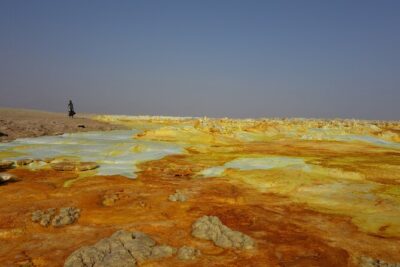
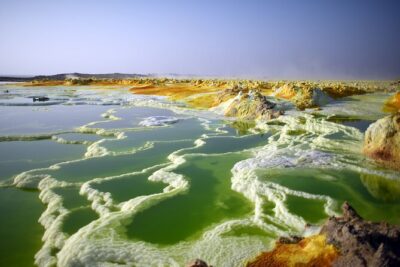
The following day brings a hike of about two hours around Dallol. The formations show yellow, green, white and orange mineral colors created largely by salt, potash and sulfur. You then continue to the salt mountains, which show the area’s volcanic forces in a more dramatic form.
You need to follow the guide closely around these formations. The schedule makes clear that the Danakil section is not a gentle sightseeing drive. Heat, rough conditions and walking time can make the experience tiring, especially when combined with the next night’s volcano trek.
Erta Ale requires patience and stamina
Erta Ale is one of the tour’s biggest adventure moments. From the base camp, you trek for about 90 minutes to two and a half hours toward the volcanic area. A camel can be hired if you want that option, though the listing does not state the price or availability, so confirm this before departure.
The trek is timed for the evening, and the route can take energy after the day at Dallol. At the volcano, you spend time near the eruption area before returning to camp. The description presents this as a serious outing, and you should take it that way. Moderate fitness is the stated minimum, but Danakil demands more than an ordinary city tour.
The schedule also leaves room for practical variation. After breakfast, you may swim in Afdera Salt Lake before returning to Mekelle, or go directly to the city. The stop is listed as very brief, suggesting that the actual timing depends heavily on road conditions and how the previous days unfold.
Bring a headlamp or torch and a remote charger. Power interruptions have been noted as a practical issue on Ethiopia trips, and the Danakil camp is not the place to rely on a full phone battery. You should also pack light for this portion and protect cameras and phones from dust.
More Omo Valley Tribal Tours in Addis Ababa
- 6 Days Omo Valley Tribes Tours From Addis Ababa
★ 5.0 · 33 reviews - 3 Days Omo Valley Tour
★ 5.0 · 24 reviews - 5 Days Omo Valley Tours
★ 5.0 · 15 reviews - 6 Days Lalibela, Omo Valley and Harar
★ 5.0 · 15 reviews
The long road to Lalibela
Day five is mostly a drive through the Tigray and Amhara regions. You pass chained mountain ranges, countryside settlements and working rural areas, with stops for lunch, photographs and short visits with local people.
This is a useful transit day because it shows how quickly Ethiopia’s scenery and daily life change outside the major sights. It is also an eight-hour road day. If you dislike sitting in a vehicle, this route may test your patience.
Arrival in Lalibela is planned for late afternoon, with time to see sunset from your hotel. That timing gives you a gentle introduction before the church visits begin in earnest.
Lalibela’s churches deserve the full day
Lalibela is the historical heart of the itinerary. The town is known for churches cut from solid rock, arranged in three groups and linked to the vision of King Lalibela, who intended the complex to represent an earthly Jerusalem.
The visit begins with Bete Medhanialem, described here as the largest monolithic church in the world, followed by nearby churches. A guide matters greatly in Lalibela because the meaning is found not only in the stonework but also in the religious use, symbols, windows and connections between the buildings.
You then reach St. George, the cross-shaped church most often associated with Lalibela. It was carved downward into the rock, creating a powerful view from above before you descend toward it. Allow yourself time to look at the doors, windows and carved details instead of rushing from one church to the next.
The listed church visits total several hours, with additional exploration depending on available time. You should dress respectfully and expect an active day on uneven ground. This is a religious site as well as a historic one, and the presence of worshippers can change the mood and access.
The day ends at a local tej bet, where you taste Ethiopian honey wine and watch music and shoulder-shaking dance. It is a good counterpoint to the churches: less formal, more social and rooted in present-day Ethiopian life.
Omo Valley: memorable encounters with serious ethical questions
Flights take you from Lalibela to Jinka via Addis Ababa. The connection uses two flights, so this is not a simple hop. After checking in, you have a free afternoon for a walk in Jinka or a visit to the South Omo Research Center, whose museum explains the area’s communities.
The next morning, you cross Mago National Park to reach a Mursi village. The visit is presented as a chance to see everyday routines, but you should approach it with care. Photography is part of the stated experience, including portraits of women known for wearing lip plates, yet these are living communities, not exhibits. Ask before taking pictures, listen to your guide and be ready to put the camera away.
From Jinka, the route continues toward Turmi, with a possible stop at Key Afer, Dimeka or Kako markets. Market days depend on your dates, and there may instead be a local ceremony or another activity. This flexibility is useful, but it also means you should not book expecting one exact market scene.
In Turmi, you visit a Hammar village. The bull-jumping ceremony is an important rite of passage and a sign that a man is ready for marriage, but it only takes place if the timing happens to match your visit. Do not treat it as guaranteed.
The following day focuses on the Karo people near the Omo River. Body painting is part of the visual culture here, and the route includes time in a village and inside a home. That can be one of the most revealing parts of the trip, provided the visit is handled respectfully and without turning private life into a photo opportunity.
In the afternoon, you cross the Omo River in a traditional wooden boat to reach a Dasenech village, followed by a 20-minute walk. The description includes a reference to female circumcision, a serious and harmful practice. A responsible guide should present such information with care and without sensationalism. Ask Aspire Ethiopia Tours how community visits and photography are managed before you book.
Konso connects farming, walls and social order
Leaving the Omo Valley, you stop at the Konso Cultural Centre. Konso communities are known for terracing and villages built with dry-stone walls over generations.
This is a welcome change after the portrait-focused visits farther south. The interest here lies in how people organize land, homes and community life. You see a society shaped by practical farming knowledge and long-term cooperation.
The drive from Turmi toward Arba Minch takes around six to eight hours, with possible stops for markets or other points of interest. Again, the road time is substantial. The benefit is a broader look at southern Ethiopia; the drawback is that the day leaves little room for a relaxed pace.
Bale Mountains bring wildlife and high country
The itinerary then heads toward Bale Mountains National Park, described as Ethiopia’s second-highest mountain area. The route passes through the Rift Valley and includes lunch in Shashamene, known here as a home for Jamaicans.
You continue to Bale Goba for the night, with chances to look for Mountain Nyala, Menelik bushbuck, reedbuck, Ethiopian kudu, warthogs and other wildlife. Sightings are never guaranteed, so approach this as a wildlife search rather than a checklist.
The next day includes Harenna rainforest and Tulu Dimtu. You walk and drive through the park while looking for Ethiopian wolves, giant mole rats and other species. The full day from Arba Minch to Bale and then onward to Hawassa makes this another long travel day, but it gives the trip a final change of mood after the heat and dust of the Omo Valley.
The title promises Simien Mountains, but the scheduled program does not visit Simien. If Simien’s cliffs and endemic wildlife are your main reason for booking, ask Aspire Ethiopia Tours to correct the route or explain the intended substitution before paying.
Hawassa finishes with fish, water and music
At Lake Hawassa, you visit the fish market in the morning. Fishermen bring in their catch after spending the night on the far side of the lake, while people and birds compete for the fish. The scene is active and highly local, with a strong sense of work rather than staged entertainment.
Later, you stop for lunch at Kuriftu Resort and spend time walking or canoeing on the lake. This provides a more comfortable pause before the final drive to Addis Ababa.
The farewell dinner includes Ethiopian food, live folk music and dance, with honey wine or beer. It is a fitting close because the trip has mixed formal heritage sites with food, drink, music and village life from the start.
What the $3,410 price means
At $3,410 per person, this is an expensive trip in absolute terms, but the route covers an unusually large portion of Ethiopia in 13 days. You are paying for coordination across several regions, domestic flights, remote-road logistics, local guides, drivers and access to places that are difficult to arrange independently.
The value depends on what is included. The supplied details confirm admission tickets at many stops, pickup, mobile ticketing and group discounts, but they do not spell out every hotel, meal, domestic flight, park fee or camping cost. Ask for a written inclusion list before booking.
A group of up to 14 can make the per-person cost more manageable, while a private or customized version may cost more. Gashaw is repeatedly identified as the person who handles planning and organizes guides and drivers. His responsiveness and willingness to adjust plans are useful strengths for a route where road conditions, market dates and local events can affect the day.
Free cancellation is available if you cancel at least 24 hours before the start time. Poor weather can lead to a new date or a full refund, and the operator requires suitable weather for the activity.
Who should book this Ethiopia tour?
I would choose this tour if you want maximum variety, enjoy meeting people in a small group and can accept early mornings, long drives and basic conditions. It suits an active first-time visitor who wants culture and nature in equal measure.
I would not choose it if you want a slow holiday, guaranteed ceremonies, luxury accommodation or a single clear regional focus. The Danakil treks require stamina, and the Omo Valley visits call for patience and respectful behavior.
Before booking, confirm three points: the exact Simien or Bale route, what the $3,410 includes, and how photography and community visits are handled. If those answers suit you, this is a powerful way to see Ethiopia’s contrasts in one carefully planned journey.
FAQ
How long is the tour?
The tour lasts approximately 13 days.
Where does the tour begin?
The tour is based in Addis Ababa, Ethiopia, and includes pickup.
How much does it cost?
The listed price is $3,410 per person.
How large can the group be?
The maximum group size is 14 people.
Is a mobile ticket available?
Yes, mobile ticketing is available.
What level of fitness is required?
A moderate level of physical fitness is required. The Danakil section includes two demanding treks, including the evening trek to Erta Ale.
Does the tour include Lalibela’s rock-hewn churches?
Yes. The program visits the main church groups, including Bete Medhanialem and St. George.
Does the tour include domestic flights?
Yes. The route from Lalibela to Jinka includes two flights, with a plane change in Addis Ababa.
Does the itinerary visit the Simien Mountains?
The written schedule visits Bale Mountains National Park, not Simien Mountains. Confirm the intended mountain destination with Aspire Ethiopia Tours before booking.
Can I cancel for a full refund?
You can receive a full refund if you cancel at least 24 hours before the experience start time. Cancellations or changes made less than 24 hours before the start are not accepted for a refund.
More Simien Mountains Trekking in Addis Ababa
- Simien Mountains Trekking Adventure
★ 5.0 · 8 reviews - 3 Days Trekking Simien Mountains Tours
★ 5.0 · 6 reviews - Northern Ethiopia & Trekking Simien Mountains , 10 Days
★ 4.5 · 5 reviews - 5 Day Addis,Bahir Dar,Gondar,Simien Mountains and Lalibela Tours
★ 5.0 · 4 reviews
Just added around Addis Ababa
- Yod Abyssinia Cultural Night: Dinner, Music, and Dance★ 5.0 · 7 reviews
- Stunning Views Wonchi Crater Lake a Private Day Trip★ 5.0 · 3 reviews
- Locally crafted beer and wine tasting and nightlife in Addis tour★ 5.0 · 6 reviews
- Two days Lake Wenchi and Menagesha Forest★ 5.0 · 3 reviews
- 3-Day Cultural Tour in South Omo Valley★ 5.0 · 4 reviews
- Addis Ababa City Tours Full-Day Tours★ 5.0 · 5 reviews
- Tribes of the Ethiopian Omo Valley – 9 Day Tour★ 5.0 · 5 reviews
- South Omo Valley Tribes 8 Days Tour Package★ 5.0 · 4 reviews
Danakil Depression Tours, compared.

12 Days SIMIEN MOUNTAIN-LALIBELA-DANAKIL-TIGRAY CHURCHES
Read our review →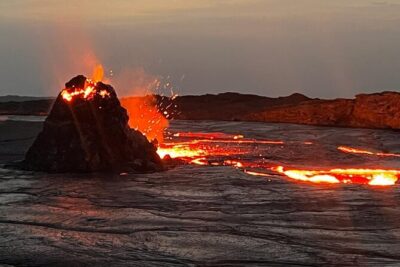
3 Day Danakil Depression Ertale and Dallol Tours
Read our review →
5 DAYS Lalibela, Axum, Tigray churches and Danakil
Read our review →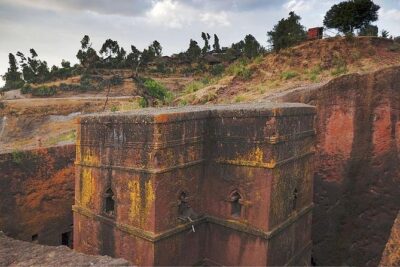
6 Days tour Package (Simien Mountains, Lalibela, and Danakil Depression)
Read our review →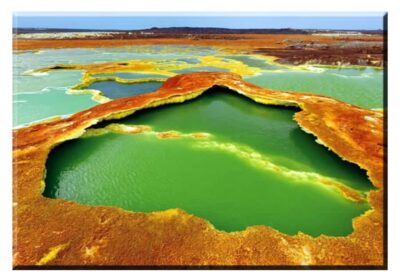
2-Night 3-Day Danakil Depression Tour without Flights
Read our review →