
Reviewed · DANAKIL DEPRESSION TOURS
Lalibela, Axum, Danakil and Omo Valley 8 DAYS
The most striking thing about this eight-day Ethiopia tour is its sheer range. In one tightly packed trip, you move from Lalibela’s medieval churches to Axum’s ancient monuments, then across the Danakil Depression and into the Omo Valley. Few itineraries cover such different parts of Ethiopia so quickly.
I like that domestic flights, entrance fees, fuel, lodging, and local guides are built into the price. I also like the small maximum of 10 people, which should make airport transfers, village visits, and long drives easier to manage. The main drawback is the pace: this is not a gentle holiday, and Erta Ale, Danakil, and the Omo Valley bring rough roads, early starts, heat, and limited time to rest.
Key points to know before booking
- Four very different regions in eight days: You see northern churches, ancient Axum, volcanic Danakil, and southern cultural sites.
- Erta Ale is physically demanding: The route includes a rough drive to Dodom and a walk to a volcano with a lava lake.
- Flights save valuable time: Domestic air connections make this ambitious route possible, though flight schedules shape each day.
- The Omo Valley visits are short and focused: You see Ari, Mursi, Hamer, and Konso cultural sites, with limited time at each.
- The price covers major trip costs: At $2,051.29 per person, lodging, breakfast, domestic flights, transport, fuel, guides, scouts, and entrance fees are included.
- You need moderate fitness and flexibility: Weather, road conditions, flight changes, and local conditions can affect the plan.
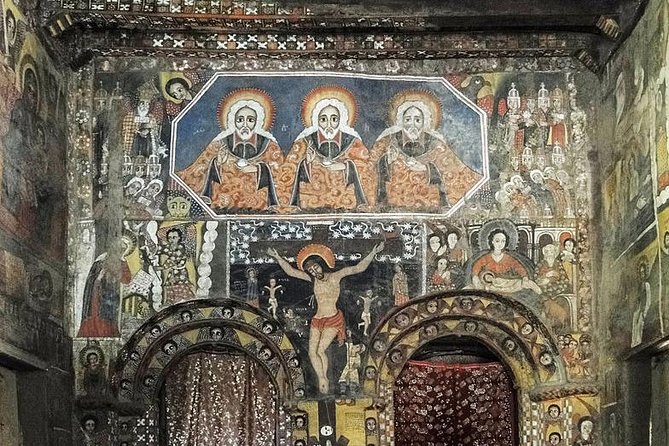
Lalibela’s churches begin the journey

Your first day starts with a morning flight north to Lalibela, followed by a hotel transfer and lunch. The main visit comes in the afternoon, when you enter the first group of rock-hewn churches.
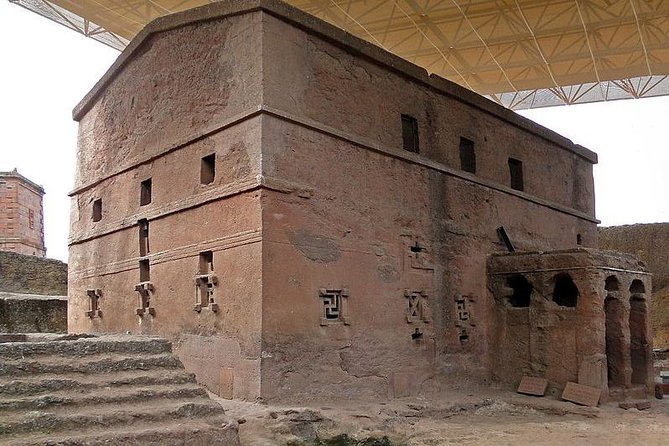
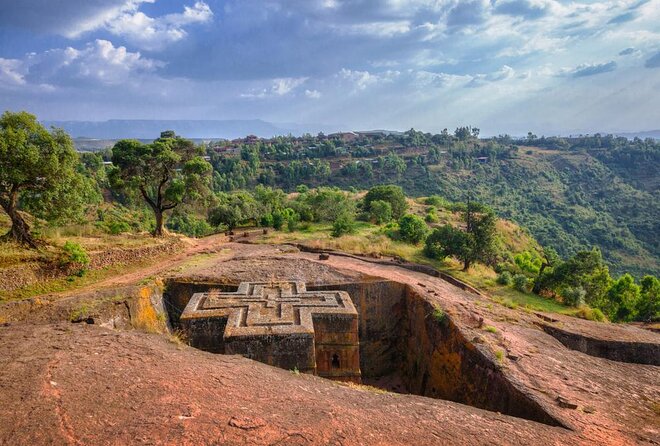
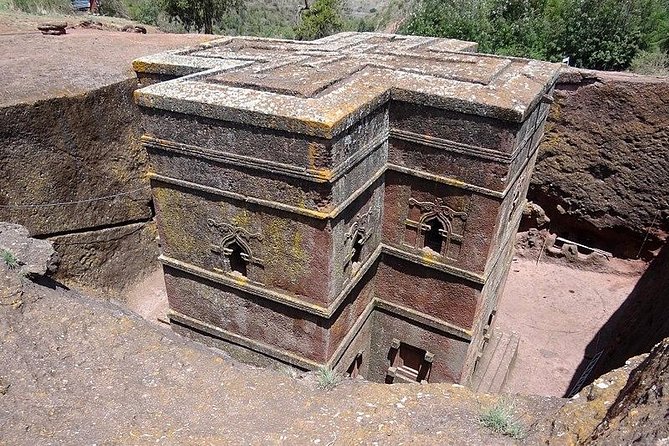
These churches were carved during the reign of King Lalibela, from 1181 to 1221. They are not built from separate blocks of stone. They were cut down into the rock, leaving churches, courtyards, trenches, and passageways below ground level. The site includes about 11 churches arranged in groups, with the Jordan River area helping separate the main sections.
You have about four hours here, and that is a useful amount of time for a first look. The churches are the anchor of the trip, so resist the temptation to rush from one doorway to the next. Look at how the buildings relate to the rock around them, and allow time for your guide to explain the religious setting.
The practical issue is timing. Since you arrive by air that morning, your first day depends on the flight and transfer running smoothly. The tour provides pickup in Lalibela, but you should be ready to begin sightseeing after lunch rather than treating arrival day as free time.
More omo valley tribal tours in Lalibela:
- 6 Days Omo Valley Tribes Tours From Addis Ababa
★ 5.0 · 33 reviews - 3 days around Arbaminch and Konso Adventure Tours Life Time
★ 5.0 · 24 reviews - 3 Days Omo Valley Tour
★ 5.0 · 24 reviews
Axum and Gheralta bring a different northern Ethiopia
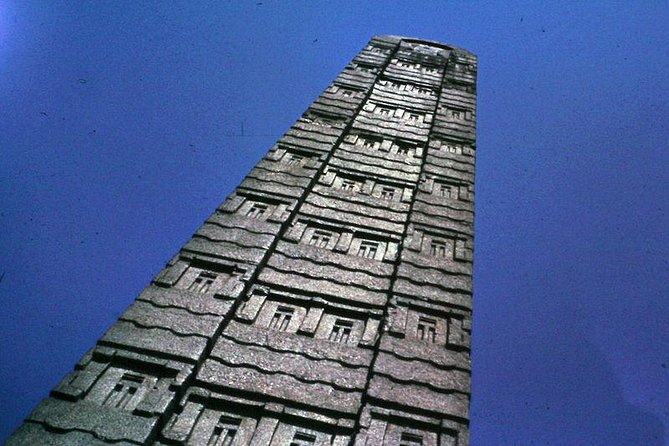
Day two begins with another flight, this time from Lalibela to Axum. The Axum visit is brief, listed at about one hour, before you drive toward Hawzien through Adwa and the Gheralta plains.
Axum is one of Ethiopia’s great historical centers, but this schedule gives you only a quick introduction. That can work if your main goal is to sample several regions, but it will feel short if Axum is a major reason for your visit. Ask your operator before departure which monuments are included during the hour, since the supplied schedule names Northern Stelae Park but does not provide a full list of Axum stops.
Gheralta changes the mood completely. The area is known for rock-hewn churches set among dramatic cliffs and dry highland terrain. Hawzien works as the overnight base, and the listed visit lasts about three hours. This is one of the most rewarding parts of the route for people who enjoy ancient religious sites in remote settings.
You should also confirm the exact Gheralta activities before paying. A previous booking error sent a participant toward a Tigray cliff church instead of Axum. A 200-meter climb along a cliff face is a serious undertaking, not a casual sightseeing stop. The published tour only says that Hawzien is a base for Gheralta churches, so ask directly if any climb is planned and what equipment or fitness it requires.
Erta Ale turns the trip into an expedition
Day three is where the tour becomes much more demanding. You drive toward Erta Ale through Mekele, then continue to Dodom, the settlement at the volcano’s base. The stated drive to Dodom covers about 80 kilometers on one of the roughest roads in the region.
Erta Ale is a shield volcano rising to about 613 meters. Its summit caldera contains a lava lake, described as one of only a few permanent lava lakes in the world. The attraction is not simply a viewpoint beside a road. You are heading into an isolated volcanic area, then walking toward the summit.
The schedule gives roughly six hours to the stop, but the real strain comes from the combination of rough driving, limited facilities, and walking on uneven ground. The tour requires moderate physical fitness, and that wording matters here. You should be comfortable with a strenuous outing and prepared for a basic environment.
The departure is listed at 9:00 a.m., with the drive to Dodom and the onward approach to Erta Ale. Exact timing may shift, so pack water, sun protection, sturdy shoes, and clothing suitable for dust. The operator supplies local guides and scouts where needed, which is important in a remote volcanic area.
This is an unforgettable part of the route for the right person. It is also the clearest reason not to book this trip if you want a relaxed cultural holiday. You are trading comfort and spare time for access to a rare natural sight.
Danakil reveals salt, craters, and extreme terrain
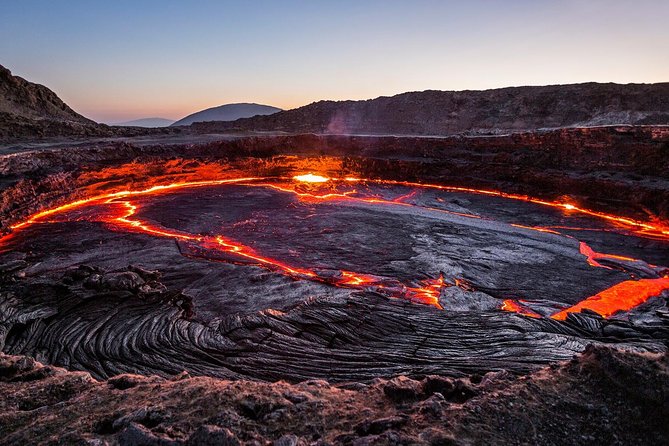
Day four starts with sunrise around Erta Ale. You visit the northern pit, described as the main crater, then walk about five minutes to the southern and central pits. The main crater is about 200 meters deep and 350 meters across, while the smaller southern pit is about 100 meters deep.
After an early breakfast, the plan is to descend around 9:00 a.m. and return to Dodom, ideally leaving by 7:00 a.m. You then reach camp by about 10:30 a.m. for a rest period. Lake Giulietti, also called Lake Afrera, is listed as an optional stop, and the information warns that it may not be available during some seasons. Do not treat it as guaranteed.
The Danakil Depression is a place of stark volcanic forms, salt flats, and low-lying basins. The itinerary’s wording makes clear that this is a full field day rather than a polished sightseeing circuit. Rest time at camp is welcome, especially after the Erta Ale outing.
You should ask ahead about the exact accommodation arrangement in the Danakil section. The program includes accommodation, but the itinerary refers to camp rather than naming the facilities. That distinction matters if you need a private room, reliable electricity, or more comfort at night.
More danakil depression tours in Lalibela:
- 3 Days Danakil Depression Tour
★ 4.5 · 135 reviews - 3 Days Danakil Depression Tours Via Semera
★ 5.0 · 47 reviews - 12 Days SIMIEN MOUNTAIN-LALIBELA-DANAKIL-TIGRAY CHURCHES
★ 5.0 · 45 reviews - 3 Day Danakil Depression Ertale and Dallol Tours
★ 5.0 · 44 reviews
Dallol and the salt caravans show the human side of Danakil
Day five begins with a drive to Ragad, also called Asebo, where salt workers cut blocks from the ground. The salt is shaped into rectangular pieces and loaded onto camels. This is a working industry, not a staged display, and it gives the volcanic region a human dimension.
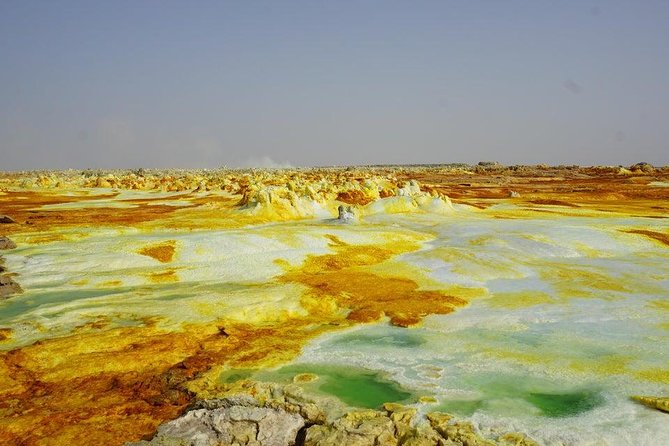
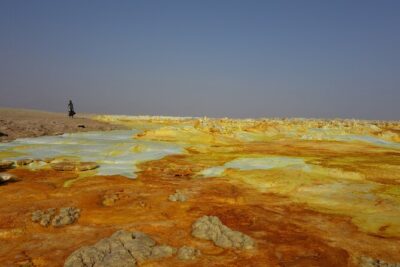
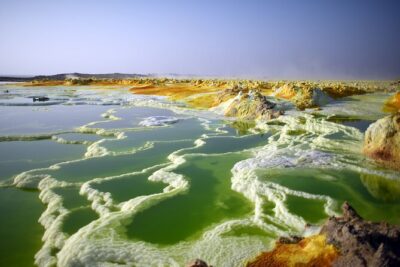
The route continues to Dallol, about 116 meters below sea level. The area is known for colors and formations created by volcanic activity. You also visit Lake Assal and may see camel caravans moving through the salt region. The schedule notes that camel caravans do not operate in July, August, and early September, so those dates are less suitable if that is a key reason for booking.
The excursion lasts about six hours, followed by the return to Hamedela and the drive to Mekele. You then take an evening flight to Addis Ababa, listed at 7:50 p.m., arriving at 9:10 p.m.
That flight is a useful time saver, but it also makes day five long. If the road runs late, the flight becomes an important pressure point. Keep your schedule flexible and avoid arranging a nonrefundable evening commitment in Addis.
Jinka introduces the Omo Valley
Day six shifts south by air. After arriving at Jinka Airport, you meet the local team and drive to Ari villages. The Ari are described as the largest population in the lower Omo Valley. The visit focuses on village life, pottery, and clothing made from the leaves of enset, a banana-like plant.
You also visit Jinka Museum, which holds musical instruments, weapons, household items, and related objects. The museum is a useful companion to the village visit because it gives you a wider frame for the area’s material culture.
The listed time is about three hours in the Ari villages and one hour at the museum. That is enough for an introduction, but not a long stay. You will need to listen carefully to local guides and follow directions about photography and payments. Village and elder payments are included, which simplifies the money side of the visit, but respectful behavior is still your responsibility.
The Omo Valley section is especially valuable because it is not limited to scenery. It brings you into contact with communities whose work, clothing, homes, and customs differ sharply from those in northern Ethiopia. At the same time, the schedule is brief, so you should see it as an overview rather than a slow cultural study.
Mago National Park and the Mursi visit

After breakfast on day seven, you take a day excursion to Mago National Park and visit a Mursi village. The listed visit lasts about two hours. The Mursi live in low huts made from straw and leaves, and the description highlights the traditional lip and ear ornaments associated with some women.
This stop can be visually powerful, but it also calls for care. Cultural visits should never be reduced to photographs of unusual customs. Use your guide to understand the local rules, ask before taking pictures, and remember that you are entering a community rather than visiting a museum exhibit.
The short visit means the guide’s handling of the stop matters. A good local guide can explain what you are seeing and help keep the interaction respectful. The tour includes local guides and elder payments, which should make the arrangement clearer than trying to organize a visit independently.
Turmi brings Hamer traditions into view
The route then continues to Turmi, home of the Hamer people. The Hamer are associated with bull jumping, a rite that marks a boy’s passage into manhood. During the ceremony, female relatives dance and invite whipping from recently initiated men. The scars are described as a sign of support and a factor in later marriage choices.
The boy must run twice across the backs of a line of bulls or castrated steers. The event is highly physical and can be confronting to watch. The schedule gives only about one hour in Turmi, and bull jumping is not guaranteed simply because you visit the area. If a ceremony is important to you, ask when one is expected and what happens if none is taking place.
Even without a ceremony, Turmi adds another cultural setting to a trip already packed with contrasts. You will want to keep an open mind and avoid judging a practice only by your own customs. A local explanation is essential here.
Konso’s terraces close the route
The final day takes you to the Konso Cultural Landscape after an early breakfast. This protected cultural area features stone-walled terraces, fortified settlements, and dry highland terrain shaped by more than 21 generations of community knowledge.
The terraces are not just a scenic feature. They show how people adapted farming and settlement patterns to a difficult environment. The site also includes anthropomorphic wooden statues connected with respected community members, heroic events, and funerary traditions.
You have about four hours here, and it is a fitting final stop because it combines engineering, community organization, and cultural practice. The visit is included in the broad tour price, although the detailed itinerary lists no separate admission charge for this day.
The supplied schedule says the trip ends with a drop-off at your hotel in Addis Ababa. Since the final day is based in southern Ethiopia, confirm the exact return flight or road connection before booking onward travel from Addis.
What the $2,051.29 price really covers
At $2,051.29 per person, this tour is not a bargain-basement land package, but it covers many costly pieces. You receive accommodation, bed and breakfast, domestic flights, an air-conditioned vehicle, fuel and lubricants, professional and local guides, scouts where needed, entrance fees, village and elder payments, and airport transfers.
That bundle has real value in Ethiopia. Booking this route independently would mean coordinating several flights, remote-area vehicles, specialist local support, multiple hotels, and access payments. The small-group format also spreads vehicle and guide costs across as many as 10 people.
The included vehicle is described as air-conditioned, and one detailed experience connected with this tour format used a Toyota 4WD for difficult roads. The published details do not promise a particular vehicle model, so confirm the vehicle type for the Danakil and Omo Valley sections.
You still pay for international flights, alcoholic drinks, camera or video fees where required, laundry, telephone, fax, internet, and personal purchases. Those extras are easy to overlook. Carry a separate allowance for tips and personal needs, though the tour data does not state a required tipping amount.
Who should book this Ethiopia itinerary?
I would choose this trip if you want a fast survey of Ethiopia’s best-known cultural and natural regions and do not want to manage the logistics yourself. It suits people who value access and variety more than leisurely mornings, long hotel stays, or deep time in one place.
It is also a strong fit for solo visitors and couples who like small-group travel. The maximum of 10 people is intimate enough to keep the group manageable, while still helping control the cost of drivers, vehicles, and guides.
I would hesitate to recommend it to anyone with limited mobility or a low tolerance for rough roads. Erta Ale requires a demanding outing, Danakil includes basic camp conditions, and the Omo Valley involves long transfers and short visits. The moderate fitness requirement should be taken seriously.
Accommodation is described in practical terms rather than luxury terms. One detailed account described the hotels as basic, clean, comfortable, and close to city centers. That sounds like the right expectation: functional places to sleep, not resort-style lodging.
The company’s staff has also been praised for handling changes, including missed flights and custom itinerary needs. That is useful on a route where flight schedules and road conditions can affect the plan. Still, confirm every major transfer before departure, especially Axum on day two and the final connection to Addis Ababa.
Should you book it?
Book this tour if you want maximum variety in minimum time and are ready for demanding travel. Lalibela, Gheralta, Erta Ale, Dallol, Mursi country, Hamer territory, and Konso are an impressive collection of places for eight days.
Do not book it expecting a restful holiday or a detailed study of every region. The strongest value lies in having transport, flights, guides, fees, and lodging arranged across difficult terrain. Before you commit, confirm the exact Axum and Gheralta schedule, Danakil camp arrangements, vehicle type, seasonal camel-caravan conditions, and the final return to Addis.
The cancellation terms are strict close to departure: six or more full days ahead allows a full refund, two to six days allows a 50 percent refund, and cancellation less than two days ahead is nonrefundable. Poor weather may lead to a new date or full refund. That makes early planning wise, but flexibility essential.
FAQ
Where does the tour start?
The tour starts in Lalibela, Ethiopia, at 7:00 a.m. Pickup is also offered from Addis Ababa and Lalibela according to the tour details.
Where does the tour end?
The tour ends in Addis Ababa, with drop-off at your hotel.
How long is the tour?
The experience lasts approximately eight days.
What is the maximum group size?
The maximum group size is 10 people.
Are domestic flights included?
Yes. Domestic flights are included in the tour price.
Are entrance fees included?
Yes. Entrance fees, village payments, and elder payments are included.
Is accommodation included?
Yes. Accommodation is included according to the program, along with bed and breakfast.
What fitness level is required?
The tour requires a moderate level of physical fitness. The Erta Ale section includes rough roads and a demanding walk, so you should be prepared for active days.
What is not included in the price?
International flights, alcoholic drinks, camera or video fees where required, laundry, internet, fax, telephone charges, and personal expenses are not included.
Just added around Lalibela
- Trekking in Ethiopia’s Lalibela Wollo Highland 4 Days / 3 Nights★ 5.0 · 6 reviews
- The Rock-Hewn Churches of Lalibela: 3 Days / 2 Nights★ 5.0 · 6 reviews
- Lalibela Backpacker tours★ 5.0 · 6 reviews
- Lalibela churches Guided Tour★ 5.0 · 6 reviews
- Lalibela 2-Day Eco Trekking Tour★ 5.0 · 3 reviews
- Lasta Mountains: Highland Eco Trekking Tour in Lalibela★ 5.0 · 4 reviews
- Lalibela Churches Day Tour★ 5.0 · 7 reviews
- Full Day Tour To The 11 Rock Hewn Churches Of Lalibela★ 5.0 · 5 reviews
Danakil Depression Tours, compared.

12 Days SIMIEN MOUNTAIN-LALIBELA-DANAKIL-TIGRAY CHURCHES
Read our review →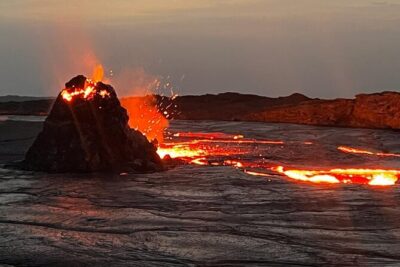
3 Day Danakil Depression Ertale and Dallol Tours
Read our review →
5 DAYS Lalibela, Axum, Tigray churches and Danakil
Read our review →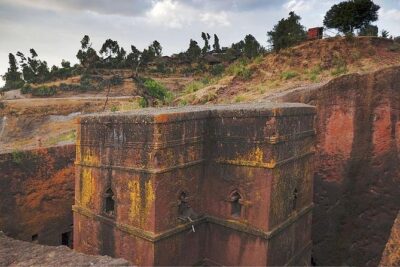
6 Days tour Package (Simien Mountains, Lalibela, and Danakil Depression)
Read our review →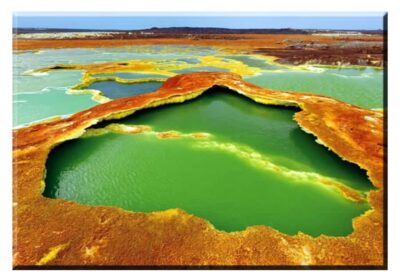
2-Night 3-Day Danakil Depression Tour without Flights
Read our review →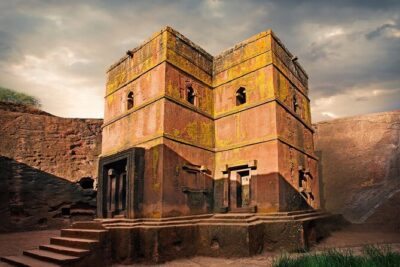
Browse the lists this tour appears in