

Reviewed · OMO VALLEY TRIBAL TOURS
Private Omo Valley Tours From Addis Ababa
The most striking part of this trip is its range. In one journey, you move from Addis Ababa through woven Dorze villages, crocodile-filled Lake Chamo, Mago National Park, and the dry Omo Valley, then return via Konso and Tiya, two UNESCO-listed sites. I like the private format and the chance to see communities that are often left out of shorter southern Ethiopia routes.
I also like that meals, lodging, road transport, and activities are bundled together, which matters in a remote region where arranging each piece yourself would be awkward. The main drawback is the long road time, along with a major detail that needs clarification before booking: the page describes the trip as both seven days and 13 days.
Key points at a glance
- Lake Chamo boat cruise: Watch for Nile crocodiles, hippos, and water birds.
- Four distinct Omo Valley communities: The route includes Bana, Ari, Mursi, Hamer, Karo, and Dassanech areas.
- Mago National Park: A full-day excursion leads to a Mursi village.
- UNESCO-listed Konso and Tiya: See Konso’s famous terraces and Tiya’s carved stelae.
- Private touring: You travel with your own party and guide, with a maximum group size of 15.
- Strong guide focus: Past trips have been led by guides including Niko, Firew, Barch, Marko, Aman, and Amanuel.
What this southern Ethiopia route really offers
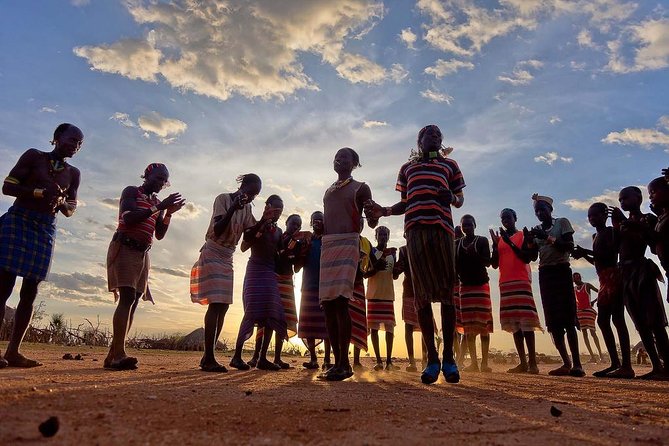
This is not a relaxed resort holiday. It is a road trip through southern Ethiopia, built around cultural visits, wildlife, archaeological sites, and time in places where infrastructure can be basic. The reward is variety. You are not simply ticking off one attraction after another. You are moving through very different parts of the country and seeing how food, clothing, farming, livestock, craft, and ceremony change from one area to the next.
The advertised price is $1,890 per person. For a private, all-inclusive journey, that can represent fair value, especially because the package includes breakfast for six days, lunch for six days, dinner, lodging, road transport, activities, and landing and facility fees. Still, you should ask for a clear written price breakdown and confirm exactly how many nights and touring days are included. The seven-day itinerary and the 13-day description do not match.
That mismatch is not a small wording issue. It affects hotel nights, meals, driving time, and the value of the fare. The day-by-day schedule clearly runs from Day 1 through Day 7, beginning at Bole Airport and ending in Addis Ababa. I would treat seven days as the working schedule unless the operator confirms otherwise.
More Omo Valley Tribal Tours in Addis Ababa
- 6 Days Omo Valley Tribes Tours From Addis Ababa
★ 5.0 · 33 reviews - 3 Days Omo Valley Tour
★ 5.0 · 24 reviews - Danakil Depression, Lalibela, Omo Valley and Simien Mountains
★ 5.0 · 23 reviews
Day 1: Addis Ababa to Arba Minch and the Dorze hills
The first day is an eight-hour drive to Arba Minch, with a stop in a Dorze village along the way. That is a serious opening stretch, so you should be ready for a full day in the vehicle. The payoff is an early look at southern Ethiopia’s cultural life rather than a quick transfer straight to the Omo Valley.
The Dorze are known for weaving, including the production of traditional shawls called shammas. Their tall, distinctive homes are described as having an elephant-like shape, a design linked to the area’s former association with elephants. The visit gives you a chance to connect architecture with local memory instead of treating the house as just a photo stop.
Food is part of the story here. Enset, often called false banana, is a staple for the Dorze people. You may learn how this plant supports daily life and, depending on the visit arrangements, see how it relates to local cooking. Do not expect an instant, polished museum presentation. The point is the living village and the people who make the crafts and grow the food.
You spend the night in Arba Minch. Since the schedule is already demanding, I would ask what time the vehicle leaves Addis Ababa, how many rest stops are planned, and what type of accommodation is used in Arba Minch.
Day 2: Lake Chamo, Konso, Bana, Ari, and Jinka
Day 2 packs a lot into roughly seven hours of touring and driving. After breakfast, you take a boat on Lake Chamo, described as Ethiopia’s third-largest lake. The cruise is one of the trip’s clearest wildlife moments, with possible sightings of Nile crocodiles, hippos, and a range of birds.
Wildlife sightings are never guaranteed, but the boat changes the pace of the trip. After long stretches on the road, you are out on the water, looking for animals rather than walking from one cultural site to another. Bring sun protection and keep your camera ready, but give the wildlife room and follow the boat crew’s instructions.
The route then turns toward Bana villages. The Bana are described as pastoral and semi-nomadic people living in the demanding environment of the lower Omo Valley. Men may wear colorful clay caps decorated with feathers, a striking detail that reflects local style and identity.
You also visit the Ari people, the largest population in the lower Omo Valley according to the tour description. Ari women are associated with pottery and skirts made from enset fiber. This is a useful contrast with the Dorze visit. You see the same broad region, but different communities use materials and skills in their own ways.
The overnight stop is Jinka, a practical base for the next day’s excursion into Mago National Park. Because this day includes a boat trip, several village visits, and a long drive, it may feel full rather than leisurely.
Day 3: Mago National Park and a Mursi village
Day 3 takes you into Mago National Park for a visit to a Mursi village. The excursion lasts about six hours, with lunch back in Jinka before the drive onward to Turmi. The park section is important because it combines the cultural visit with a protected natural setting.
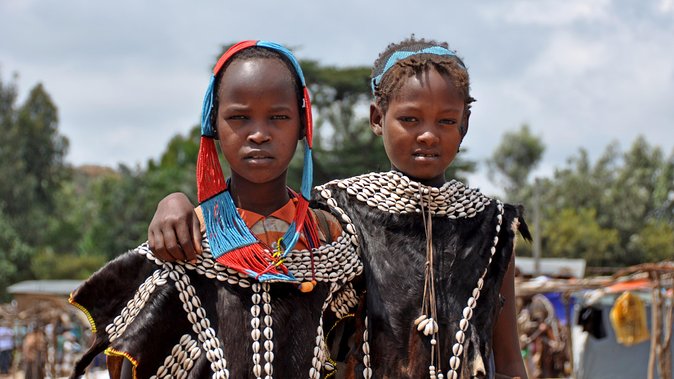
The Mursi are known for their low straw-and-leaf huts and distinctive body adornment, including terra-cotta lip plates and stretched ear lobes worn by some women. These features are often photographed, but a respectful visit should go beyond the most obvious image. Pay attention to the village layout, the homes, the work taking place, and the way your guide explains local customs.
This part of the trip also raises an ethical question. Visits to Omo Valley communities can easily become uncomfortable if people are treated as photo subjects rather than hosts. Ask your guide about photography fees and permission before taking pictures. Put the camera down when appropriate. A private tour gives you more room to discuss this with your guide and adjust the pace.
After lunch in Jinka, you continue to Turmi, associated with the Hamer people. The day ends there. The road conditions, not just the distance on a map, determine how much time you get in each place, so flexibility matters.
Same country, a very different kind of day:
- Full Day Tour of Addis Ababa with Hotel Pickup and Drop-off
★ 5.0 · 430 reviews - Taste of Ethiopia
★ 5.0 · 406 reviews - Day Trip From Addis Ababa See Historical Monastery,Stunning Nature,Animals,Birds
★ 5.0 · 303 reviews - Addis Ababa: Debre Libanos, Blue Nile Gorge, and Cave Tour
★ 4.5 · 256 reviews
Day 4: Karo people near Murulle

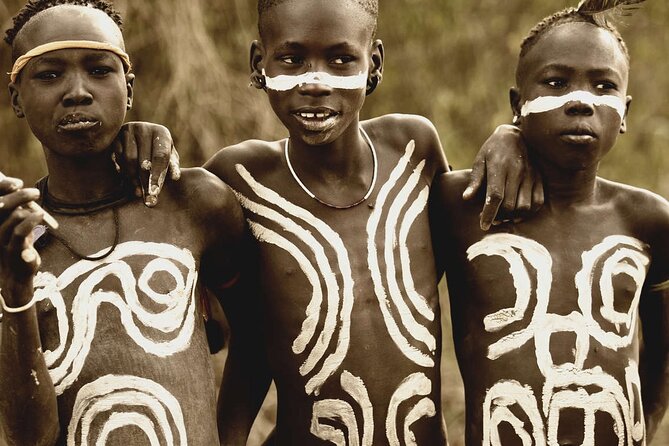
The fourth day is a six-hour outing to Murulle, where you may meet Karo people. Karo body painting is a central feature of the visit. White chalk may be used on faces and bodies in preparation for a ceremony, and the designs can carry social meaning.
The tour description also explains scarification traditions among Karo women and men. Women may scar the chest as a sign of beauty, while men’s scars can represent an enemy or dangerous animal killed. These are not casual fashion choices, and your guide’s explanations will shape how you understand what you see.
This is one of the places where a good guide matters most. Names associated with past journeys include Niko, Barch, Firew, Marko, Aman, Amanuel, Alex, and Shahsa, but you are not guaranteed a particular guide unless the company confirms it. If communication style or photography guidance is important to you, request your preference before paying.
You return to Turmi for the night. The schedule does not promise a specific ceremony, so do not book this trip expecting one particular event to take place. You are visiting a community and learning about its customs, not attending a fixed daily performance.
Day 5: Omorate and the Dassanech people

Day 5 is an excursion to Omorate to visit the Dassanech, described as the people of the delta. They live on the northern shore of Lake Turkana, and the visit takes you farther into the lower Omo region.
The Dassanech stop gives the route a different setting and cultural focus from the Mursi, Hamer, and Karo visits. I like that the trip does not stop after seeing one or two well-known communities. You get a broader sense of the Omo Valley’s diversity, though the experience still depends on local conditions, access, and the quality of the day’s arrangements.
After Omorate, you drive back toward Konso. This is another substantial road day, listed at about six hours. The sequence is efficient, but not gentle. If you prefer long meals, slow walks, or unplanned stops, you may find the schedule tight.
The route description says you proceed to Konso, but the next day also includes a Konso visit before continuing toward Welayta Sodo. Confirm the overnight location for Day 5. It is a sensible question because the wording leaves room for confusion.
Day 6: Konso’s terraces and the road to Welayta Sodo
Konso is one of the strongest stops on the itinerary. The area is a UNESCO World Heritage site, recognized for its carefully built terraces. These terraces show how farming communities have shaped steep or difficult ground for cultivation and soil protection.
The Konso visit adds an important historical and agricultural side to the trip. After several days focused mainly on village life and cultural traditions in the Omo Valley, you see a different form of human adaptation. Coffee from the area is also regarded as among the best in Ethiopia, giving you another reason to pay attention to local food and farming.
The schedule lists about four hours for the day and continues southward toward Jinka before proceeding to Welayta Sodo. This wording is unclear, since Jinka was already visited earlier and the route appears to be moving back toward the central highlands. Ask the operator to provide the exact driving plan and hotel location for this night.
This is the day most in need of confirmation. The sites themselves are clear, but the sequence needs tightening. A private tour should allow the company to explain the route in plain terms before departure.
Day 7: Tiya, Addis Ababa, and a final Ethiopian dinner

The final day begins after breakfast with the journey toward Addis Ababa. The route includes a stop in Butajira and a visit to Tiya, another UNESCO-listed site. Tiya is known for its carved stelae, stone monuments that give the return journey an archaeological focus.
You then continue to Addis Ababa, arriving in the early evening according to the schedule. The trip ends with a folkloric dinner featuring national dishes, dances from different Ethiopian ethnic groups, and a traditional coffee ceremony. It is a fitting final night because it brings food, music, and hospitality together after the long regional road trip.
The airport transfer follows the dinner, so you need to confirm the timing of your departure flight. The itinerary says you will later be transferred to the airport, but it does not provide a specific buffer. Do not assume every international departure time will work. Give the operator your flight details well in advance.
Private touring, meals, and the price
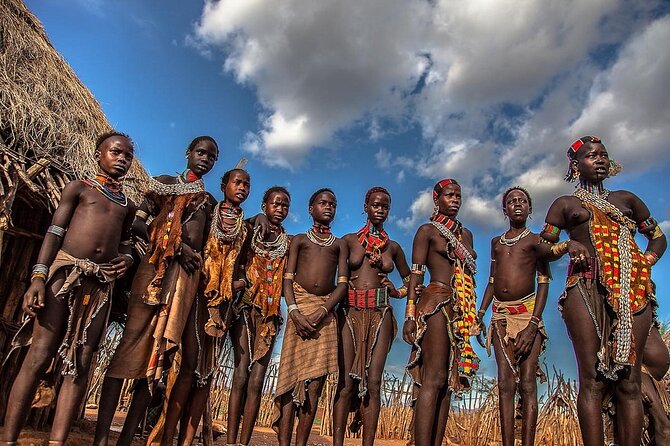
The private format is the tour’s biggest practical advantage. You travel with your own party and guide instead of being tied to a large bus group. That can make it easier to pause at a village, ask questions, adjust a photography stop, or discuss respectful conduct during cultural visits.
The maximum group size is 15, but private booking may mean a much smaller party. Confirm how the price changes for one person, a couple, or a larger private group. Group discounts are offered, but the details are not provided.
At $1,890 per person, the value depends on what is truly included. The package lists breakfast and lunch for six days, dinner, lodging, transit, activities, landing fees, and facility fees. That reduces the number of daily expenses you need to manage in remote areas.
I would still ask these questions before booking:
- Is the trip seven days or 13 days?
- Are all hotel nights included?
- Is the Lake Chamo boat fee included?
- Are national park and village entry fees included?
- What is included in the final folkloric dinner?
- Does the fare cover airport pickup and the return airport transfer?
- Are tips, drinks, and personal purchases separate?
The tour starts at Bole Airport at 7:00 a.m. Pickup is offered, and confirmation is provided at booking. The operator says the service may use a multilingual guide, so tell them your language needs early.
Who will enjoy this trip most
I would choose this tour if you want southern Ethiopia’s major cultural stops without organizing vehicles, hotels, permits, and local guides yourself. It suits a solo visitor who wants a private arrangement, a couple seeking a focused route, or a photographer who needs help moving safely between distant locations.
The private setup has also been used for customized photography trips. If photography is your priority, discuss camera rules, village fees, time at each stop, and the type of access you can expect. Do not assume a special photography schedule is included unless it is written into your booking.
You should have moderate physical fitness. The information provided does not promise difficult hikes, but the long drives, heat, uneven village surfaces, and repeated days on the road can wear you down. The listed formal dress code is worth taking seriously, while the note about operating in all weather means you should pack for changing conditions.
Service animals are allowed, and the tour operates near public transportation, though most of the actual route is by private road transport. Minimum age is 18. Vegetarian meals are available if requested at booking, and specific dietary needs should be given in advance.
Cancellation is free up to 24 hours before the start time for a full refund. A late cancellation is not refundable, and a minimum number of participants may apply if the operator changes the departure arrangement.
Should you book the Omo Valley tour?
Book it if you want a wide southern Ethiopia route, appreciate having a guide and driver arranged, and accept that this is a demanding road journey. The mix of Lake Chamo, Mago National Park, Omo Valley communities, Konso, Tiya, and Addis Ababa’s final dinner gives you a fuller picture than a short Omo Valley visit.
Pause before paying if you need a slow schedule, guaranteed ceremonies, or perfectly clear logistics. Most important, get the duration and Day 5 and Day 6 routing corrected in writing. If the company confirms a seven-day schedule with all listed inclusions, the price may be reasonable for a private all-inclusive trip. If it is truly 13 days, ask what extra sites, nights, meals, and transport are added.
FAQ
How long is the tour?
The day-by-day schedule covers seven days, but the overall description also refers to a 13-day tour. Ask Aman Ethiopia Tours And Travel Agent to confirm the correct duration before booking.
Where does the tour start?
The tour starts at Bole Airport in Addis Ababa, Ethiopia, with a listed start time of 7:00 a.m. Pickup is offered.
What meals are included?
Breakfast and lunch are included for six days, along with dinner. Specific dietary requirements and vegetarian meals should be requested when booking.
Which UNESCO sites are included?
The route visits Konso and Tiya, both described as UNESCO World Heritage-listed sites.
What is the maximum group size?
The activity has a maximum of 15 travelers, and it is described as a private tour for you and your own party.
Can I cancel for a full refund?
Yes. You can cancel at least 24 hours before the local start time for a full refund. Cancellations or changes made less than 24 hours before the start are not accepted for a refund.
Just added around Addis Ababa
- Yod Abyssinia Cultural Night: Dinner, Music, and Dance★ 5.0 · 7 reviews
- Stunning Views Wonchi Crater Lake a Private Day Trip★ 5.0 · 3 reviews
- Locally crafted beer and wine tasting and nightlife in Addis tour★ 5.0 · 6 reviews
- Two days Lake Wenchi and Menagesha Forest★ 5.0 · 3 reviews
- 3-Day Cultural Tour in South Omo Valley★ 5.0 · 4 reviews
- Addis Ababa City Tours Full-Day Tours★ 5.0 · 5 reviews
- South Omo Valley Tribes 8 Days Tour Package★ 5.0 · 4 reviews
- Day Trip to Tiya UNESCO Site & Melka Kunture Archaeological Site★ 4.5 · 3 reviews
Omo Valley Tribal Tours, compared.

6 Days Omo Valley Tribes Tours From Addis Ababa
Read our review →
Lalibela, Axum, Danakil and Omo Valley 8 DAYS
Read our review →

3 days around Arbaminch and Konso Adventure Tours Life Time
Read our review →Danakil Depression, Lalibela, Omo Valley and Simien Mountains
Read our review →


9 Days Tours To Danakil Depression, Simen MNP, Lalibela With Omo Valley Tribes
Read our review →Browse the lists this tour appears in