
Reviewed · EVENING EXPERIENCES
2 Days and 1 Night in Lalibela from Addis Ababa
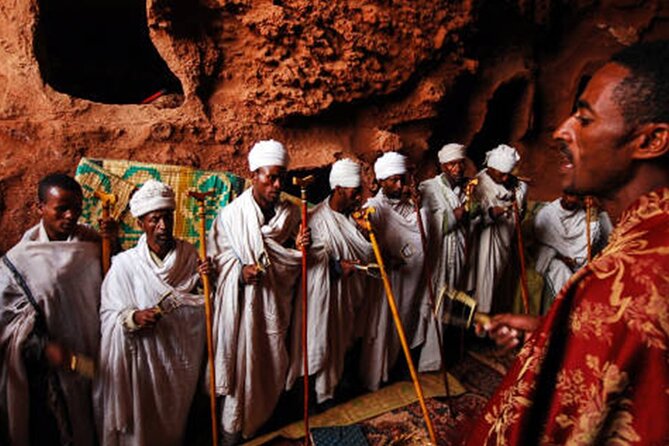
Lalibela is one of Ethiopia’s great travel surprises: churches cut down into solid volcanic rock, not built up stone by stone. On this two-day trip, you visit the main church groups around the Jordan River, then make an early visit to Neakuto Leab Church, a quieter site set in a natural cave.
I like the efficient plan and the chance to see all eleven listed churches without arranging several transfers yourself. I also like the human side of the trip: the guide, driver, and support staff are described as warm and welcoming, with one account even praising the cooks. The main drawback is the pace. Day one lasts about eight hours, and day two begins early, so you get a strong first look at Lalibela rather than a slow, deeply detailed stay.
Key things to know before booking
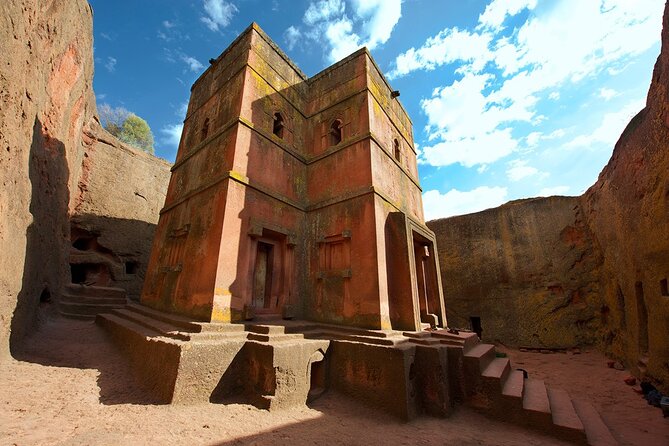
- Eleven churches in one packed day: The first day covers Bete Medhanealem, Bete Maryam, Bete Golgotha Mikael, Bete Meskal, Bete Denagel, Bete Giyorgis, Bete Amanuel, Bete Qeddus Merkoreos, Bete Abba Libanos, Bete Gabriel-Ruphael, and Bete Lehem.
- A UNESCO World Heritage setting: These medieval churches were carved during the reign of King Lalibela, from 1181 to 1221, and are tied to his plan to recreate Jerusalem.
- A useful early start: Pickup is arranged from Bole Addis Ababa International Airport at 6:00 am, making this suitable for a short Ethiopian itinerary.
- One night in Lalibela: Accommodation, breakfast, bottled water, an air-conditioned vehicle, and an English-speaking guide are included.
- A different second morning: Neakuto Leab Church lies about 7 kilometers from Lalibela and occupies a natural cave with old stone vessels collecting holy water.
- Small enough to remain manageable: The maximum group size is 30 people, though the actual group may be smaller.
Why Lalibela deserves two days
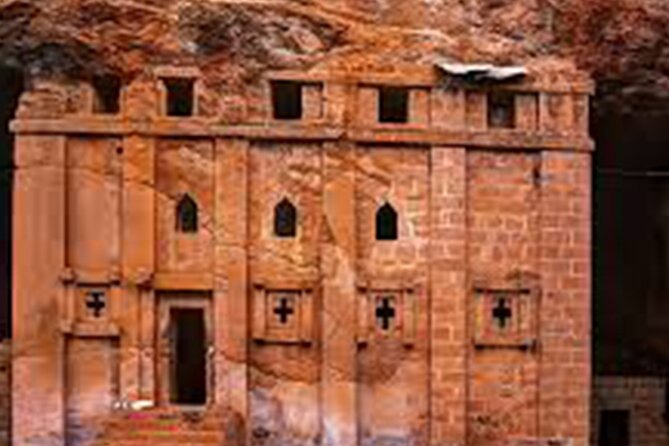
Lalibela is not simply a collection of old churches. It is a place where architecture, faith, and living religious practice share the same space. The churches were cut directly into volcanic rock during the time of King Lalibela, creating a set of buildings that seem to rise from the ground even though much of the work took place below it.
The setting also carries strong symbolic meaning. King Lalibela is associated with the idea of creating a new Jerusalem in Ethiopia, and the churches are arranged in groups connected by passages, courtyards, and the Jordan River area. You are not just looking at unusual stone buildings. You are walking through a sacred plan.
That context matters because the churches can look confusing at first. Some are easy to identify from their shape, while others are reached through carved paths and enclosed areas. An English-speaking guide helps turn a fast visit into something more readable by explaining the names, religious purpose, designs, and stories connected with each site.
This tour gives you one full sightseeing day, which is enough to see the main collection. It is not enough to linger everywhere. If you enjoy architecture, religious art, or historic building methods, you may wish for more time. If Lalibela is one stop in a wider Ethiopian journey, the compact schedule makes practical sense.
A few more Addis Ababa trips to weigh up
- 2-Night 3-Day Danakil Depression Tour without Flights
★ 4.8 · 31 reviews - Lalibela One Night/two Days
★ 4.5 · 8 reviews - Lalibela One Night/two Days
★ 5.0 · 8 reviews
Day one: flying from Addis Ababa to the churches
The trip begins at Bole Addis Ababa International Airport at 6:00 am. That early meeting time is useful, but you should treat it as a real early start rather than a casual suggestion. The plan calls for a flight from Addis Ababa to Lalibela, followed by sightseeing in the church area.
An air-conditioned vehicle is included for the ground arrangements, and bottled water is provided. The flight is central to the schedule, since reaching Lalibela by air allows you to fit the visit into two days. Still, check the final booking details carefully because the inclusion list names the vehicle and accommodation but does not separately spell out airfare.
The first church group lies north of a small stream called the Jordan River. The churches are traditionally described as three connected groups, and the day includes the full list of eleven sites. Admission is shown as free in the schedule, though the tour price still covers guiding, transport arrangements, accommodation, and breakfast.
Expect about eight hours for the first day. That is a lot of ground for a single day, so wear practical shoes and be ready for frequent movement between churches. The tour information does not specify the walking distance or the exact order of visits, so ask the guide how the day will be arranged once you arrive.
Bete Medhanealem and Bete Maryam
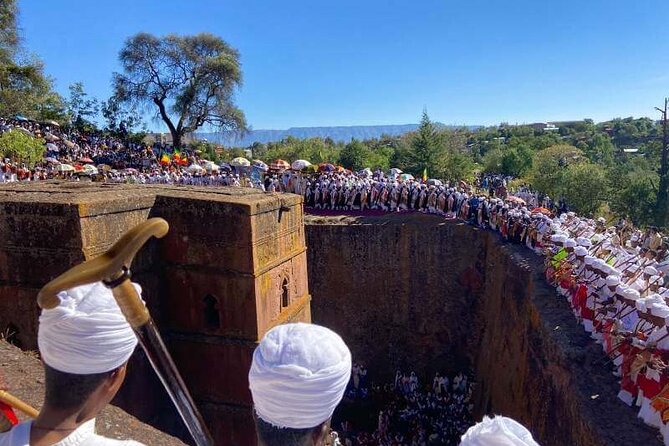
Bete Medhanealem, or the House of the Savior of the World, is one of the first major churches on the route. Its name alone gives you a sense of the religious scale of Lalibela. Here, the carved stone is not just a building material. It is part of a sacred setting designed to echo biblical places and events.
Bete Maryam, the House of Mary, brings a different focus. Mary holds an important place in Ethiopian Orthodox devotion, and the church is one of the best-known stops in the complex. Your guide can explain the symbolism and the way the church fits into King Lalibela’s wider plan.
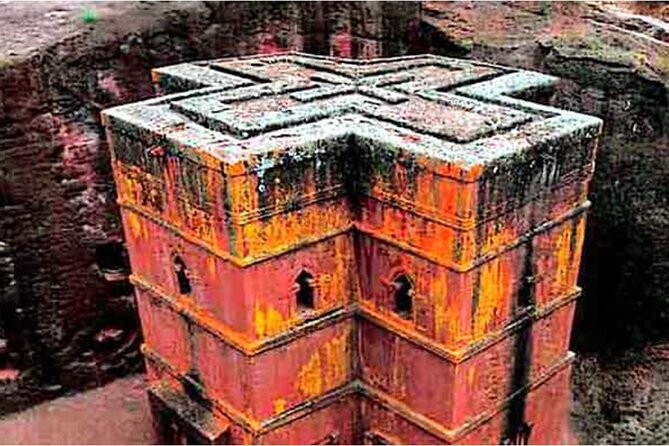
These early visits help you understand the basic pattern of the site: rock is removed from around and within the church, leaving a free-standing or partly enclosed structure. The effect is unusual. You may look down into a church from the surrounding rock rather than approach it from a conventional street.
Bete Golgotha Mikael, Bete Meskal, and Bete Denagel
The next group includes Bete Golgotha Mikael, Bete Meskal, and Bete Denagel. Their names connect them with Golgotha, the Archangel Michael, the Cross, and the Virgins. The names are not decorative labels. They point to the religious stories and ideas that shape the site.
Bete Meskal means House of the Cross, while Bete Denagel means House of Virgins. Bete Golgotha Mikael adds another layer of biblical and Orthodox Christian symbolism. This is where a guide adds real value, especially if you do not already know the religious references.
The churches are not presented as isolated monuments. Their closeness makes the visit feel like a sacred route. You may move from one carved space to another, noticing how the rock, shadows, steps, and narrow passages change the mood from one stop to the next.
Because the day is full, do not expect unlimited time at every church. If one site matters most to you, tell the guide early. A clear request may help you use your available time well, though the exact flexibility depends on the day’s transport and flight schedule.
Same country, a very different kind of day:
- Full Day Tour of Addis Ababa with Hotel Pickup and Drop-off
★ 5.0 · 430 reviews - Taste of Ethiopia
★ 5.0 · 406 reviews - Day Trip From Addis Ababa See Historical Monastery,Stunning Nature,Animals,Birds
★ 5.0 · 303 reviews - Addis Ababa: Debre Libanos, Blue Nile Gorge, and Cave Tour
★ 4.5 · 256 reviews
Bete Giyorgis, the church many people remember
Bete Giyorgis, or Saint George, is among Lalibela’s signature churches. It is included in the day’s program and is often the image people associate with the town’s unusual architecture: a church cut into rock rather than assembled from blocks.
The church’s importance is both visual and religious. Its form shows the skill of the medieval builders, while its dedication gives it a central place in local worship. Your guide is expected to explain the structure and its connection to the wider church group, rather than leaving you to simply take photographs and move on.
This stop can be especially rewarding if you pause to look at the relationship between the church and the surrounding rock. The whole point is easy to miss if you rush from one viewpoint to the next. Give yourself a moment to notice the depth of the excavation and the way the church sits within it.
Bete Amanuel, Bete Qeddus Merkoreos, and Bete Abba Libanos
The itinerary also includes Bete Amanuel, Bete Qeddus Merkoreos, and Bete Abba Libanos. Bete Amanuel is known in the schedule by its name, while Bete Qeddus Merkoreos refers to Saint Mercurius. Bete Abba Libanos is the House of Abba Libanos.
Together, these sites show the range of Lalibela’s religious naming and design. Some churches are more visually striking from the outside, while others gain meaning through their interior details, setting, or associations. This is a good reason to listen closely during the visit rather than judging each church only by its first view.
The guide’s role is particularly useful here. You are moving through a large historic area in a short time, and names can blur together. A simple explanation of who each church honors and how it relates to the others helps the day feel like one connected place.
Bete Gabriel-Ruphael and Bete Lehem
Bete Gabriel-Ruphael, dedicated to the angels Gabriel and Raphael, adds another religious theme to the route. Bete Lehem, also called Bethlehem, means House of Holy Bread. These final names on the church list reinforce Lalibela’s connection with biblical places and Christian ritual.
Bete Lehem’s association with holy bread gives you a glimpse of how the churches relate to worship, not just history. The town is an active pilgrimage center, and the churches continue to matter as places of faith.
The schedule groups all eleven churches into the first day, but it does not promise a separate meal or extended rest stop during the sightseeing hours. Breakfast is included, while personal expenses are not. Plan your spending accordingly and ask the operator what meal arrangements are available beyond breakfast.
An overnight in Lalibela
The tour includes one night at a Lalibela hotel. That overnight stay is valuable because it prevents the church visit from becoming a same-day sprint from Addis Ababa and back. You have at least one evening in town, even though the schedule does not list a detailed evening program.
The information does not name the hotel or describe its room standards, so do not book this expecting a specific property unless the operator confirms it. Accommodation is included, and breakfast is included, but personal expenses are not.
The overnight also creates a practical buffer between the main church visit and the return flight. Since the second day starts early, you should keep the evening simple and be ready for the morning departure.
Day two: Neakuto Leab Church and the flight home
The second morning begins with a visit to Neakuto Leab Church. It lies about 7 kilometers from Lalibela, just off the airport road, which makes it a sensible final stop before flying back to Addis Ababa.
Neakuto Leab differs from the main church groups. It is described as a simple but attractive church housed in a natural cave and attributed to King Lalibela’s successor. The cave setting gives the visit a more modest feel than the grander church group, but that is part of its appeal.
The site also contains old stone receptacles that collect holy water dripping from the roof of the cave. This small detail connects the geology of the place with religious practice. It gives you something concrete to look for and helps explain why a natural cave could become a sacred site.
The second day is listed at about six hours and ends with a flight from Lalibela back to Addis Ababa. The early visit means you will not have much free time for extra sightseeing. If you want markets, additional churches, or a slower look at town life, this schedule may feel too tight.
What the $450 price gets you
At $450 per person, this is not a bargain-basement trip, but the value depends on what is covered in your final confirmation. The package includes breakfast, accommodation, an air-conditioned vehicle, bottled water, and an English guide. It also organizes the flights shown in the plan, though you should confirm whether the airfare is included in the quoted price because it is not separately listed under inclusions.
The price is easier to justify if you value time. Reaching Lalibela independently would mean arranging flights, airport transfers, a hotel, a church visit, and a guide. Here, those pieces are organized around a two-day schedule from Addis Ababa.
The tradeoff is control. A packaged plan gives you less freedom to change the order, stay longer at one church, or add unscheduled stops. You are paying for convenience and a guided overview, not a private, slow-paced architectural study.
Who will get the most from this trip
This tour suits you if Lalibela is a priority but you have only two days available. It also works well if you prefer having transport and a guide arranged rather than coordinating each part yourself.
You will likely enjoy it most if you care about religious buildings, medieval engineering, Ethiopian Orthodox traditions, and symbolic architecture. The extra visit to Neakuto Leab is useful for anyone who wants something beyond the main church circuit.
The pace may be harder for you if you have limited mobility, dislike early starts, or need long rest periods. The tour says most people can participate, and service animals are allowed, but it does not provide detailed accessibility information. Ask the operator about walking conditions and access before booking.
The maximum group size is 30 people. That is not an intimate private tour, so the quality of the experience may depend partly on how large your actual departure is. A group of 30 can make a busy historic site feel less flexible, while a smaller group should make questions and photography easier.
Practical details that matter
Free cancellation is available if you cancel at least 24 hours before the local start time. Changes or cancellations made inside that window are not accepted for a refund.
Confirmation is provided when you book, and mobile tickets are supported. Pickup is offered from Bole Addis Ababa International Airport, with a stated start time of 6:00 am.
The strongest praise for the experience centers on friendly staff, warm hospitality, helpful drivers and guides, and the emotional impact of Lalibela itself. One account describes the setting around Epiphany as especially moving, but the tour does not promise that festival timing. If you are hoping to visit for a major religious celebration, confirm the dates and availability before relying on this itinerary.
Should you book the Lalibela trip?
Book it if you want a practical first visit to Lalibela and need to fit the churches into a short Ethiopian trip. The program covers all eleven listed churches, adds Neakuto Leab, includes a hotel night and breakfast, and gives you an English-speaking guide to explain what you are seeing.
Think twice if you want unhurried exploration, a named hotel, or a private itinerary with lots of spare time. Before paying, confirm the flight inclusion, hotel name, meal arrangements beyond breakfast, and the amount of walking involved.
For most visitors with only two days, the plan offers a useful balance: a full day among Lalibela’s great churches, a quieter cave church the next morning, and organized travel back to Addis Ababa.
FAQ
Where does the tour start?
The tour starts at Bole Addis Ababa International Airport in Addis Ababa, Ethiopia.
What time does pickup begin?
The stated start time is 6:00 am.
How long is the experience?
The tour lasts approximately two days and includes one night in Lalibela.
How do I reach Lalibela from Addis Ababa?
The itinerary calls for a flight from Addis Ababa to Lalibela on the first day and a flight back to Addis Ababa on the second day.
Which churches are visited?
The listed churches are Bete Medhanealem, Bete Maryam, Bete Golgotha Mikael, Bete Meskal, Bete Denagel, Bete Giyorgis, Bete Amanuel, Bete Qeddus Merkoreos, Bete Abba Libanos, Bete Gabriel-Ruphael, and Bete Lehem.
Is Neakuto Leab Church included?
Yes. The second morning includes a visit to Neakuto Leab Church, about 7 kilometers from Lalibela.
What does the price include?
The listed inclusions are breakfast, an air-conditioned vehicle, accommodation, bottled water, and an English guide. Personal expenses and anything not listed are excluded.
What is the cancellation policy?
You can cancel for a full refund up to 24 hours before the experience start time. Cancellations or changes made less than 24 hours in advance are not accepted for a refund.
Just added around Addis Ababa
- Yod Abyssinia Cultural Night: Dinner, Music, and Dance★ 5.0 · 7 reviews
- Stunning Views Wonchi Crater Lake a Private Day Trip★ 5.0 · 3 reviews
- Locally crafted beer and wine tasting and nightlife in Addis tour★ 5.0 · 6 reviews
- Two days Lake Wenchi and Menagesha Forest★ 5.0 · 3 reviews
- 3-Day Cultural Tour in South Omo Valley★ 5.0 · 4 reviews
- Addis Ababa City Tours Full-Day Tours★ 5.0 · 5 reviews
- South Omo Valley Tribes 8 Days Tour Package★ 5.0 · 4 reviews
- Day Trip to Tiya UNESCO Site & Melka Kunture Archaeological Site★ 4.5 · 3 reviews
Evening Experiences, compared.
2-Night 3-Day Danakil Depression Tour without Flights
Read our review →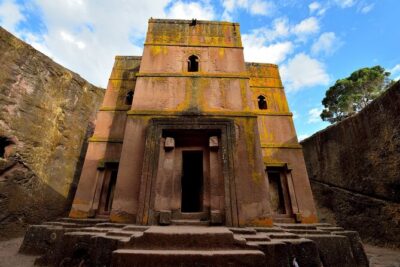
2 Days 1 night tour to Lalibela Rock-hewn churches
Read our review →

Yod Abyssinia Cultural Night: Dinner, Music, and Dance
Read our review →
Browse the lists this tour appears in