
Reviewed · HIKING & TREKKING
2 Nights 3 Days Trek to Semien Mountain
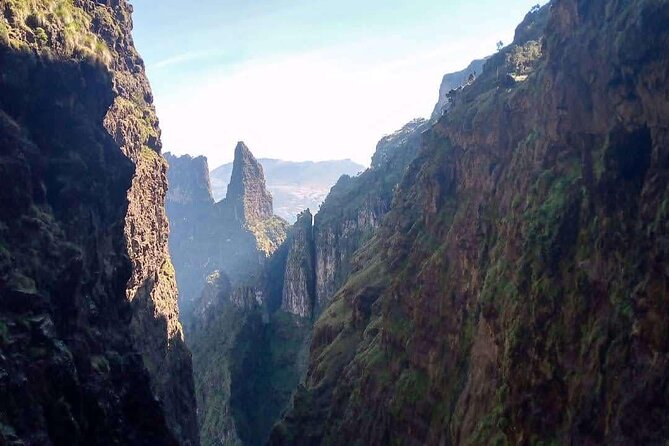
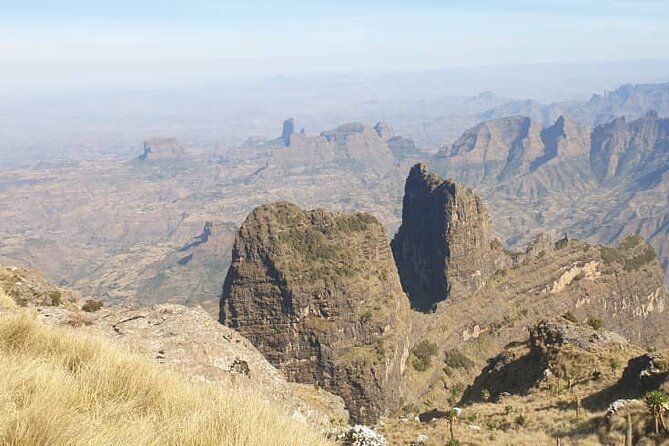
The best part of this three-day Simien Mountains trek is the steady change in scenery as you climb from Gondar toward high plateaus, deep valleys, and open viewpoints. You walk through a protected park where Gelada baboons may appear beside the trail, Jinbar Waterfall drops into a deep gorge, and Imet Gogo provides one of the finest views in the range.
I like that the tour handles the less glamorous work for you: park permits, the required scout, meals, accommodation, and the drive back to Gondar. I also like the route itself. It is not just a short viewpoint stop, but a proper trek with two nights in the mountains and enough time to feel the scale of the area.
The main caution is altitude. You sleep at about 3,250 to 3,600 meters, and the daily walks last roughly four to seven hours. You need moderate fitness, a willingness to camp, and a bit of patience with a schedule that depends on mountain weather.
Key points at a glance
- High-altitude walking: Sleep at Sankobar and Geech, with the second camp reaching about 3,600 meters.
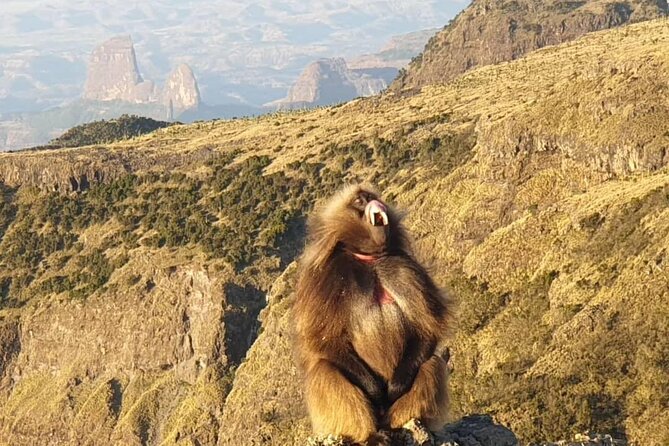
- A strong wildlife chance: Gelada baboons are commonly associated with the route, and Day 3 is a good time to watch for Lammergeier vultures.
- Jinbar Waterfall: Day 2 includes a descent to the stream that feeds the waterfall, followed by a climb toward Geech.
- The Imet Gogo viewpoint: The final trekking day ends with one of the range’s most dramatic promontory views.
- Practical inclusions: Park fees, an English-speaking guide, scout, accommodation, and all listed breakfasts, lunches, and dinners are included.
- Small-group format: The maximum group size is 15 people, with pickup and return to the Gondar meeting point.
Why three days works well in the Simien Mountains
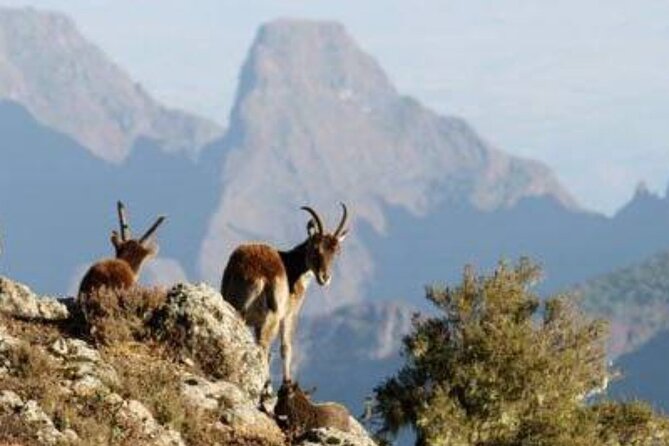
The Simien Mountains cover about 220 square kilometres of peaks, plateaus, cliffs, and valleys north of Gondar. A quick drive into the park can give you a fine view, but this trip lets you walk through the area instead of treating it as a roadside photo stop.
The route has a useful rhythm. You begin with a drive from Gondar, then walk to Sankobar on the first day. Day 2 is the longest and most demanding stretch, leading to Geech and its high camp. Day 3 brings the major viewpoint at Imet Gogo before you return by road to Gondar.
That pattern matters. You get a taste of the park on the first day, a full mountain day in the middle, and a final scenic walk before the transfer back. You are not trying to fit every corner of the park into one rushed outing.
At $400 per person, this is not a bare-bones budget walk. I see the price as paying for a package of services that would be awkward to arrange alone: transport from Gondar, park entry and taxes, the English-speaking guide, the obligatory scout, overnight accommodation, and nine listed meals. The value improves if you want a planned trip rather than separate negotiations for permits, food, local support, and transport.
Still, you should check what kind of accommodation is being used before departure. The general information refers to camping and also notes Simien Lodge and Limalimo Lodge as alternatives in the area, but the three-day schedule specifically identifies campsites at Sankobar and Geech. If you strongly prefer a lodge bed, ask for confirmation before paying.
A few more Ethiopia trips to weigh up
- Trekking at Bale Mountains 3 Days
★ 5.0 · 28 reviews - 3 Days Bale Mountains Trekking
★ 5.0 · 19 reviews - 4 days semien mountain national park trekking,
★ 5.0 · 11 reviews
Day 1: Gondar to Sankobar at 3,250 meters
The day begins at 8:00 a.m. in Gondar. You drive toward Debark, the usual administrative gateway for the park, where the permit is obtained and the required scout joins the group.
The drive from Gondar takes about two to three hours. That makes the start time sensible, but it also means your first day is not a full morning on foot. You should eat breakfast before pickup and keep water, sun protection, and a light layer within reach during the drive.
From Debark, the vehicle continues toward Buytras, near Simien Lodge. The walking section to Sankobar takes about three to four hours. The trail leads toward the first camp at roughly 3,250 meters above sea level, so the distance is only part of the challenge. The height can make an ordinary uphill walk feel slower than expected.
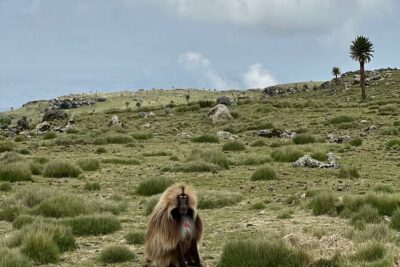
This is also your first real chance to see Gelada baboons. These highland primates are one of the defining sights of the Simien Mountains, and spotting them adds life to what might otherwise feel like a demanding transfer day. Keep your camera ready, but do not let photography distract you from your footing or the guide’s instructions.
Sankobar works as an introduction to the park. You get your first night in the mountains, a chance to settle into the colder air, and a clear warning about the days ahead: this is a walking trip, not a sightseeing circuit with occasional steps.
The first night may be the point at which you decide how well your body is handling the altitude. Take the evening slowly. Your meals are included, including dinner, and the guide can help keep the next morning organized. The supplied information does not specify the exact sleeping setup or bedding, so ask in advance if you need particular camping equipment or have strict comfort requirements.
Day 2: Jinbar Waterfall and the high camp at Geech
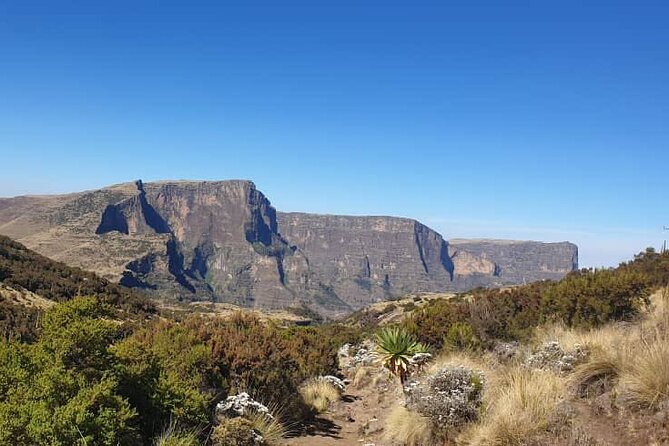
Day 2 is the long one, taking about five to seven hours on foot. It is the physical heart of the trip, and you should treat it as such.
The route heads toward Geech through the Jinbar Waterfall area. You first descend toward the Jinbar Wenz, the stream that feeds the waterfall. After this lower section, a short ascent remains to reach Geech village and the nearby campsite.
The waterfall is more than a quick photo stop. The descent and return climb give the day a clear shape, and the watercourse helps you understand the deep cuts in the mountains. Conditions may affect how powerful the waterfall looks, but the route remains one of the most memorable parts of the trek because it combines walking, height, and a major natural feature.
Geech sits at about 3,600 meters. That makes the second night higher than the first, and the altitude is likely to be more noticeable. You do not need to be an elite hiker, but you should be comfortable walking for much of a day on uneven mountain paths.
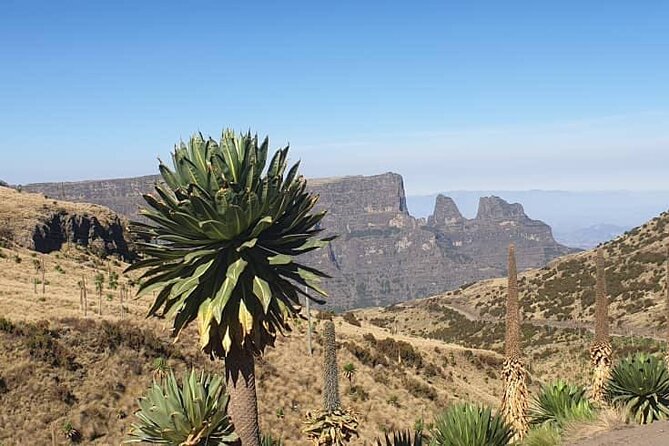
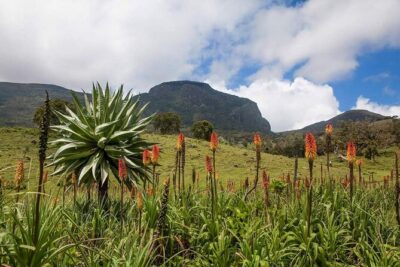
The campsite has broad views and giant lobelia plants, which give the high ground a distinctive feel. These plants are one of the details that make the Simien route different from a standard forest hike. At this height, open views and unusual plant forms do much of the visual work.
Kedadit summit, close to camp, is suggested as a place to watch the sunset. This is an optional-feeling reward after a long walk, not a separate full-day hike. If the weather is clear and your energy holds, it could be the best quiet moment of the trip. If you are tired or feeling the altitude, staying near camp is the sensible choice.
Lunch and dinner are included on this day, along with breakfast. The tour says meals can be prepared as vegan food and adjusted for health restrictions. You should still state your needs clearly when booking and remind the team before departure, since remote mountain meals are easier to manage when the guide knows ahead of time.
Day 3: Imet Gogo before the return to Gondar
The final walking day covers about four to five hours. You leave Geech for the Imet Gogo promontory, a major viewing point in the Simien range, then continue back toward the road near Ambaras.
Imet Gogo is the reward for the previous two days. The promontory gives you one of the most dramatic views in the park, with the mountain cuts and distant ridges opening out below. The exact visibility depends on weather, but this is the day when the route delivers its biggest scenic payoff.
The area is also a good place to watch for Lammergeier vultures. These large birds are among the most striking wildlife possibilities on the route. Look up as well as down: trekking in the Simiens is not only about the trail under your boots, but also about what moves across the open sky.
From Imet Gogo, you trek back toward the road near Ambaras. There, the car meets you for the drive to Gondar. This arrangement saves you from retracing the entire route on foot and keeps the final day within a reasonable four to five hours.
The return to Gondar means the trip ends back where it began. That is useful if you have a hotel, onward plans, or a flight connection. I would still avoid scheduling an important same-day departure without a generous buffer. The drive and mountain conditions can affect timing, and the tour description gives an approximate, not guaranteed, duration.
Same country, a very different kind of day:
- Full Day Tour of Addis Ababa with Hotel Pickup and Drop-off
★ 5.0 · 430 reviews - Taste of Ethiopia
★ 5.0 · 406 reviews - Day Trip From Addis Ababa See Historical Monastery,Stunning Nature,Animals,Birds
★ 5.0 · 303 reviews - Addis Ababa: Debre Libanos, Blue Nile Gorge, and Cave Tour
★ 4.5 · 256 reviews
What the guide and scout add to the trip
The tour includes an English-speaking guide and a park scout. The scout is not an optional extra: one is collected at the park headquarters after the permit is obtained.
That local support matters in a protected mountain area. The guide can explain the route, manage the group, and help with meal or health restrictions. The scout provides the required park support and forms part of the official arrangement for the trek.
One guide name connected with the company is Tsehaynew. The supplied comments specifically point to him as someone who seems to know more information than some of the other guides, so you can ask if he is available when you book. Availability is not guaranteed, but it is a useful request if detailed explanation is important to you.
The group limit is 15 people. That is small enough to feel more manageable than a large coach excursion, though it is not a private trek. If you want a very quiet pace or plenty of individual attention, ask how many people are booked for your date.
Meals, camping, and what to clarify before departure
Breakfast, lunch, and dinner are included for the three days. That is a meaningful part of the $400 cost because food logistics become harder once you leave Gondar and spend nights at high camps.
Vegan meals are available, and the company says it can also provide food based on health restrictions. Tell the operator about your needs at booking. A clear request gives the team time to plan rather than forcing an improvised solution at camp.
Alcoholic drinks are not included. That is a minor point for most people, but it is worth knowing because there may not be an easy place to buy extras once the trek is under way.
Accommodation is included, but the schedule names Sankobar and Geech campsites rather than specifying tents, sleeping mats, or other equipment. You should ask what is supplied and what you must bring. The wider area also has Simien Lodge and Limalimo Lodge, which are alternatives to the usual camping setup, but the information does not confirm that either lodge is part of this $400 package.
This is one area where a short pre-trip message can prevent disappointment. Ask about:
- The exact sleeping arrangement at both camps
- Which camping items are supplied
- How dietary restrictions should be communicated
- The likely group size on your date
- Whether Tsehaynew can guide your departure
- What happens if weather changes the route
Fitness, altitude, and the real demands of the route
The tour asks for moderate physical fitness. That description is fair, but it should not be read as a casual walking holiday.
You walk for about four hours on Day 1, five to seven hours on Day 2, and four to five hours on Day 3. The total hours are manageable for an active person, yet high altitude can make the same distance feel harder than it would at home.
Sankobar is around 3,250 meters, and Geech is around 3,600 meters. You should expect the height to be a central part of the experience. Walk at a steady pace, drink water, and tell the guide promptly if you feel unwell. The tour data does not give a medical altitude protocol, so you should speak with a medical professional if you have concerns about high-altitude walking.
Good footwear is important, as is clothing you can layer. The information does not provide a packing list, so you should ask the operator for current advice before leaving Gondar. Weather can change the feel of an exposed mountain route quickly, and the trip requires good weather to run as planned.
Who will get the most from this $400 trip
I would recommend this trek to you if you want more than a quick Simien viewpoint and prefer having the main logistics arranged. It suits an active visitor based in Gondar who wants wildlife, big mountain views, and a genuine multi-day walk without organizing every permit and meal independently.
It is also a good fit if you value local structure. The required scout, English-speaking guide, park fees, food, accommodation, and transport are all grouped into one booking. That reduces the number of details you must handle yourself.
I would hesitate to recommend it to you if you dislike camping, struggle with long walking days, or have little flexibility around weather. It may also be a poor fit if you need a private group, a guaranteed lodge room, or a tightly timed return to Gondar.
The four existing ratings are all five-star, and the strongest praise focuses on the company’s service, organization, and the mountain experience itself. One wider Ethiopia trip was described as carefully arranged, while another specifically praised customer service and suggested asking for Tsehaynew. Those points matter because a mountain tour is only as good as its practical handling. Still, the small number of ratings means I would judge the trip mainly by its clear inclusions and your comfort with the camping and altitude.
Booking, weather, and cancellation details
Pickup is offered from Gondar, with the activity beginning at 8:00 a.m. and ending back at the meeting point. Confirmation is provided when you book, and the maximum group size is 15.
Good weather is required. If poor weather causes cancellation, you are offered another date or a full refund. You can also cancel for a full refund if you do so at least 24 hours before the start time. Changes or cancellations made less than 24 hours before departure are not accepted for a refund, with cut-off times based on local time.
That policy is useful, but I would still avoid placing this trek at the very end of an Ethiopia itinerary. A weather change may force a new date, and the mountain drive takes time.
Should you book the Simien Mountains trek?
Book it if you want a well-organized three-day introduction to one of Ethiopia’s great mountain areas, and if you are ready for high camps and long walking days. The combination of Gelada baboons, Jinbar Waterfall, giant lobelias, Lammergeier sightings, and Imet Gogo gives the route plenty of variety.
At $400, the trip offers solid value for someone who wants permits, a scout, guide, meals, accommodation, and transport handled together. Before booking, confirm the camping equipment and sleeping arrangements, state any food restrictions, and ask whether Tsehaynew is available.
Skip it if you need lodge comfort, a gentle pace, or guaranteed weather. For an active visitor with three days to spare from Gondar, though, this is a practical way to see the Simiens on foot rather than from behind a vehicle window.
FAQ
Where does the trek start and finish?
The trek starts in Gondar, Ethiopia, with pickup offered at 8:00 a.m. The activity ends back at the meeting point in Gondar after the return drive from near Ambaras.
How long are the walking days?
Day 1 takes about four hours, Day 2 takes approximately five to seven hours, and Day 3 takes around four to five hours. These are approximate times.
What altitude do the camps reach?
The first overnight camp at Sankobar is about 3,250 meters above sea level. The Geech campsite on the second night is about 3,600 meters above sea level.
Are meals included?
Yes. Breakfast, lunch, and dinner are included for all three days. Vegan meals and food for health restrictions can be provided when arranged with the tour team.
Is a guide included?
Yes. The price includes an English-speaking guide and the required park scout. The scout is collected at the Simien Mountains National Park headquarters after the permit is obtained.
What happens if bad weather cancels the trek?
The experience requires good weather. If it is canceled because of poor weather, you are offered a different date or a full refund. Free cancellation is also available up to 24 hours before the scheduled start time.
Just added around Ethiopia
- Yod Abyssinia Cultural Night: Dinner, Music, and Dance★ 5.0 · 7 reviews
- 2 days Tigray Church★ 5.0 · 3 reviews
- 3 days tour Danakil Depression (Dallol & Erta Ale)★ 4.0 · 5 reviews
- 2 Days Dallol Trip★ 5.0 · 4 reviews
- Trekking in Ethiopia’s Lalibela Wollo Highland 4 Days / 3 Nights★ 5.0 · 6 reviews
- The Rock-Hewn Churches of Lalibela: 3 Days / 2 Nights★ 5.0 · 6 reviews
- Lalibela Backpacker tours★ 5.0 · 6 reviews
- Lalibela churches Guided Tour★ 5.0 · 6 reviews
Hiking & Trekking, compared.
5-Day Northern Ethiopia Tour : 3D Simien Mountains Trek & Axum.
Read our review →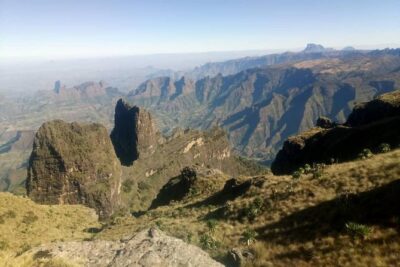
4 Days Trekking to Simien Mountain National Park
Read our review →
3-days Scheduled Lalibela Churches & Abune Yosef Trekking
Read our review →Browse the lists this tour appears in