
Reviewed · ROCK HEWN CHURCH TOURS
3-days Scheduled Lalibela Churches & Abune Yosef Trekking
The best part of this three-day Lalibela trek is the change of pace: one morning you are among Ethiopia’s famous rock-hewn churches, and soon you are walking through highland villages where coffee ceremonies, livestock, school visits, and family-run hospitality feel wonderfully ordinary. The route reaches Mount Abune Yosef at roughly 4,200 to 4,280 meters, with wide views and a good chance of seeing Gelada baboons.
I like the genuine community focus, especially the overnight stay in Ade Medhamialem village. I also like the mix of culture and walking, from Asheton Maryam Monastery to St. George Church. The main caution is physical: although the trek is graded easy, the second day covers more than 18 kilometers, the total distance is about 45 kilometers, and the altitude makes the effort more serious than the label suggests.
Key points to know before booking

- A village overnight, not just a hotel-based tour: Sleep in Ade Medhamialem and take part in local daily life.
- Mount Abune Yosef reaches about 4,200 meters: Expect high-altitude walking, cold conditions, and broad views.
- Gelada baboons are a major wildlife bonus: Herds may appear along the mountain routes.
- Lalibela’s churches are included: The final afternoon covers the UNESCO-listed church complex, including St. George.
- The hardest day is Day 2: The walk to Tegu Kebele and Abune Yosef lasts about 10 hours.
- Guides are central to the experience: Sami, Joseph, Moges, and Kanu are names associated with this program, with porter support included.
From Lalibela to the highlands

This is a small-group, community-based trek run by Access Eco Trekking Tours. The maximum group size is 16 people, and departures are scheduled every Monday and Friday. Pickup is offered, and the program includes a professional trekking guide, porter support, meals during the trek, entrance fees, and hotel pickup and drop-off.
The price is $350 per person, which is a fair package price if you value local guiding and a village stay. You are not only paying for a hike. The fee covers two dinners, two lunches, two breakfasts, bottled water, the Lalibela church entrance fee, park entrance, and guide services. Alcohol costs extra, and transportation to and from attractions is listed separately, so ask exactly how any trailhead transfer will be handled.
The program works best for someone who wants more than a quick church visit. Lalibela’s famous monuments are only one part of the experience. The other part is seeing how people live in the surrounding highlands, where farming, herding, village hospitality, and mountain travel still shape the day.
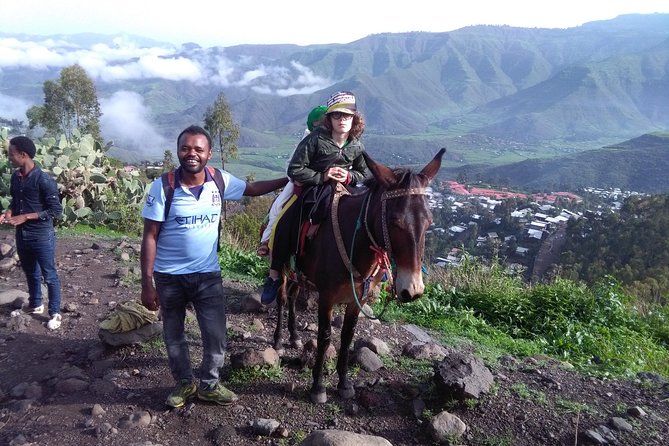
You meet the operator at its office near the Ethiopian Airlines Lalibela office for a briefing and route explanation. The next morning, the guide and porter meet you at your hotel around 7:45 a.m. to organize the supplies carried by donkey before setting out.
That practical meeting matters. Use it to ask about the day’s distance, sleeping arrangements, food, blankets, and the pace of the group. The tour operates in all weather, so pack for changing conditions rather than assuming warm Ethiopian sunshine.
More Rock Hewn Church Tours in Lalibela
- Visiting Lalibela churches
★ 5.0 · 40 reviews - Visit the rock hewn churches
★ 5.0 · 39 reviews - Lalibela churches , church museum & Yemrehan kirstose ( cave church)
★ 5.0 · 19 reviews
Day 1: Asheton Maryam and the first village night
The first day combines a mountain church with the beginning of the village trek. The route takes you toward Asheton Maryam Monastery, then onward through areas identified as Ade Medhamialem, Asheton, Hudad, and the lower slopes of Mount Abune Yosef.
Asheton Maryam is important because it gives you a church visit outside Lalibela’s main cluster. The setting adds a mountain pilgrimage feel, and the walk to reach it makes the visit more active than simply moving between city sights.
The day lasts about seven hours. That is not a huge number on paper, but it is your first time adjusting to the route, the altitude, and the walking surface. The grade is described as easy, yet you should not read that as flat or effortless. Take the first day slowly and save energy for the longer climb ahead.
A highlight is the chance to join a traditional coffee ceremony in a mountain village. Coffee is not a rushed cup grabbed between sights here. The ceremony offers a window into hospitality and routine, and it is one of the most memorable cultural details in the whole program.
You spend the night at Ade Medhamialem village. This is the part that gives the trek its local character. You may see simple homes, fields, horses, cows, and green mountain meadows, depending on the season. The setting is basic rather than polished, which is precisely the point, but it also means you should prepare for limited comforts.
Bring a sleeping bag if you can. The operator provides blankets, but high-altitude nights can be cold, and extra insulation is useful. A warm layer, headlamp, hand sanitizer, and a small towel are sensible additions. The supplied information does not promise private rooms or hotel-style facilities, so expect a modest village stay.
Food is included, with dinner on the first night. The community-based model is designed to direct benefits toward local people, and staying in the village gives that idea a practical shape. You are not just passing through for a photograph. You are using local hospitality, food, and guiding services.
Day 2: Tegu Kebele and the summit of Abune Yosef

Day 2 is the heart of the trek and the day to take most seriously. After breakfast, you walk toward Tegu Kebele, visiting the small and big Ziget mountains before reaching the top of Mount Abune Yosef at about 4,200 meters.
The planned walking time is around 10 hours, with more than 18 kilometers on foot. That is a full day even for a fit hiker. At this altitude, the same uphill effort can feel much harder than it would at sea level, so keep your pace steady and drink regularly.
The summit is the reward. From Abune Yosef, you get wide views over the highlands and valleys around Lalibela. The scenery includes steep cultivated fields, simple huts, grazing animals, and open ridges. This is not a walk through untouched wilderness. It is a working rural area, and that human presence is part of what makes the views meaningful.
The route also offers the chance to see Gelada baboons, Ethiopia’s distinctive highland primates. Several outings connected with this trek have included sightings of herds, as well as the large Lammergeier, sometimes called the bearded vulture. Wildlife is never guaranteed, but the open mountain terrain gives you a real chance to spot animals along the way.
Pack lunch, water, sun protection, and something warm for the summit. Bottled water is included, as are lunch and dinner for the relevant days, but you still need a daypack for personal items. Clouds and weather can change quickly at high elevation, and the tour runs in all conditions.
You return to Ade Medhamialem village for the night. That return is useful because it avoids turning the summit day into a long transfer back to Lalibela. It also gives you another evening in the community, rather than reducing the village visit to a brief stop.
The route is described as easy, but I would place it closer to moderate for many people because of the distance and altitude. People with ordinary fitness may manage it at a careful pace, while anyone unused to long uphill days should think hard before booking. The group may include different fitness levels, and the guides have been praised for walking slowly and helping less experienced hikers. Still, no guide can remove the physical demands of an 18-kilometer mountain day.
Day 3: Downhill to Lalibela’s rock-hewn churches

The final morning begins with breakfast and a downhill walk back toward Lalibela city. The day is listed at about five hours, followed by lunch and an afternoon visit to the famous rock-hewn churches.
The downhill section sounds easier than the summit day, but long descents can be tiring on knees and ankles. Trekking poles may help, especially if the ground is uneven or wet. Keep some energy in reserve because the church visit comes after the walk, not instead of it.
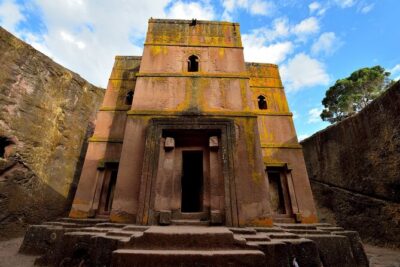
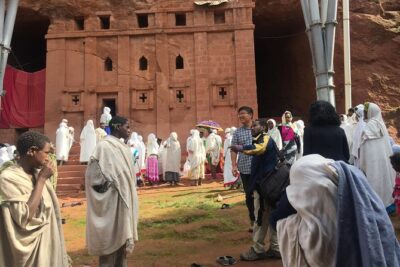
After lunch, you visit Lalibela’s UNESCO World Heritage churches, including St. George, the cross-shaped church cut down into the rock. The church complex is the ideal finish because you now reach it with a stronger sense of the surrounding region. The mountain days give context to Lalibela’s religious importance and its connection to the highlands.
The church visit is included in the price, along with the entrance fee. Ask the guide how the afternoon will be paced, since the exact order and length of the church visit may depend on the group and local conditions. The program ends after the churches.
Same country, a very different kind of day:
- Tour 11 monolithic rock churches & museum in Lalibela & cave church with mummies
★ 5.0 · 37 reviews - Lalibela, Axum, Danakil and Omo Valley 8 DAYS
★ 5.0 · 29 reviews - Rock Churches of Lalibela Guided Tour
★ 5.0 · 27 reviews - Day Trip to Rock Hewn Churches of Lalibela
★ 5.0 · 16 reviews
A closer look at the community-based approach

The strongest reason to choose this tour is the way it links outdoor activity with local life. You spend money on village accommodation, guiding, porters, meals, and local services rather than staying in Lalibela for every night.
The coffee ceremony is a good example of the difference. It is not a staged museum display. It is an everyday social practice that lets you sit, watch, and share time with people in the village. A visit to a local school is also possible within the experience, adding another view of community life.
The overnight stay may include simple food and basic sleeping conditions. That is a tradeoff, not a flaw. If you want polished rooms, private bathrooms, and a tightly controlled schedule, this is probably the wrong choice. If you want a closer look at rural life and are comfortable with fewer comforts, it is a strong fit.
The program is described as eco-friendly and sustainable, but you should judge that in practical terms: walking between communities, using local services, carrying supplies with donkeys, and keeping the group limited to 16 people. Ask what is provided locally and what you should bring so you do not create unnecessary waste or arrive unprepared.
Guides, porters, and group size

Guides named in connection with this trek include Sami, Joseph, Moges, and Kanu. The most useful thing to look for is not a particular name alone, but how the guide handles pace, altitude, weather, and group differences.
A porter is included, and supplies are carried by donkey. That means you do not need to carry all your food and shared equipment, but you still need a comfortable daypack with water, layers, rain protection, medication, and valuables.
With a maximum of 16 people, the group is small enough for the guide to keep an eye on the pace, though it is not a private trek. If you want a completely personal schedule, ask about a private arrangement before booking. The listed departures are Monday and Friday, so your wider Ethiopia itinerary needs to fit those dates.
A tuk-tuk transfer to a nearby trailhead may be used at the start, depending on the final arrangement. Since transportation to and from attractions is not included as a general item, confirm this detail in advance.
What the $350 price includes
At $350, the package offers good value for someone who wants both trekking and sightseeing. Included are:
- Hotel pickup and drop-off
- Professional Lalibela church and trekking guide
- Porter support
- Bottled water
- Lalibela church entrance fee
- Park entrance fee
- Two breakfasts
- Two lunches
- Two dinners
- Airport or departure tax
The first day’s breakfast is not included, and alcoholic drinks cost extra. The description also lists transportation to and from attractions as not included, so clarify any local vehicle costs before departure.
The value is strongest because the price combines a mountain trek, village accommodation, food, guides, park access, and the Lalibela church visit. Booking around eight days ahead is the usual pattern, but availability can change. Confirmation is received at booking, and free cancellation is available up to 24 hours before the start time. Last-minute changes or cancellations inside that window are not accepted.
Who should book this Lalibela trek?
You should consider it if you want:
- A three-day experience rather than a short church excursion
- Mountain scenery and wildlife alongside cultural visits
- A village overnight with basic local hospitality
- Guided walking with porter support
- A structured program departing on Monday or Friday
- A chance to see Gelada baboons and possibly a Lammergeier
- A community-based alternative to staying in Lalibela every night
Think twice if you want a gentle holiday walk. The program covers about 45 kilometers, includes a 10-hour day, and reaches more than 4,000 meters. The operator asks for moderate physical fitness despite the easy grade, and that is the safer way to interpret the route.
Also consider current conditions in the region. One account connected with the trek described feeling safe despite conflict in the area, but that does not guarantee conditions at your travel date. Check current local advice before you go and ask the operator for an update.
Should you book it?
Book this trek if you want Lalibela to be more than a single afternoon among famous churches. The combination of Abune Yosef views, Gelada baboons, village coffee, and St. George Church gives you a fuller picture of the area than a city-only tour.
I would especially recommend it to fit hikers who value local contact over comfort. Bring a sleeping bag if possible, prepare for a long summit day, and confirm transport and sleeping arrangements before paying. If you do those things, the $350 cost buys an unusually varied three days in the Lalibela highlands.
FAQ
How long is the Lalibela and Abune Yosef trekking tour?
The tour lasts approximately three days and includes about 45 kilometers of total trekking.
On which days does the tour depart?
Scheduled departures are every Monday and Friday.
How high does the trek reach?
The route reaches Mount Abune Yosef at approximately 4,200 to 4,280 meters.
Is the tour suitable for beginners?
The trek is graded easy, but you should have a moderate physical fitness level. Day 2 involves more than 18 kilometers of walking and lasts about 10 hours, so it requires stamina.
Are Lalibela church entrance fees included?
Yes. The Lalibela churches entrance fee and park entrance fee are included.
Are meals included?
Two breakfasts, two lunches, and two dinners are included. Breakfast on the first day is not included.
What is the cancellation policy?
You can cancel up to 24 hours before the experience starts for a full refund. Cancellations or changes made less than 24 hours before the start time are not accepted.
More Hiking & Trekking in Lalibela
- Trekking in Ethiopia’s Lalibela Wollo Highland 4 Days / 3 Nights
★ 5.0 · 6 reviews - Day Hike Around Lalibela
★ 5.0 · 5 reviews - Lasta Mountains: Highland Eco Trekking Tour in Lalibela
★ 5.0 · 4 reviews - Lalibela 2-Day Eco Trekking Tour
★ 5.0 · 3 reviews
Just added around Lalibela
- Trekking in Ethiopia’s Lalibela Wollo Highland 4 Days / 3 Nights★ 5.0 · 6 reviews
- Lalibela Backpacker tours★ 5.0 · 6 reviews
- The Rock-Hewn Churches of Lalibela: 3 Days / 2 Nights★ 5.0 · 6 reviews
- Lalibela churches Guided Tour★ 5.0 · 6 reviews
- Lalibela 2-Day Eco Trekking Tour★ 5.0 · 3 reviews
- Lasta Mountains: Highland Eco Trekking Tour in Lalibela★ 5.0 · 4 reviews
- Lalibela Churches Day Tour★ 5.0 · 7 reviews
- Full Day Tour To The 11 Rock Hewn Churches Of Lalibela★ 5.0 · 5 reviews
Rock Hewn Church Tours, compared.
Ethiopia Tigray Tours: Guided tour of Tigray rock hewn churches
Read our review →
Lalibela churches , church museum & Yemrehan kirstose ( cave church)
Read our review →
2 Days 1 night tour to Lalibela Rock-hewn churches
Read our review →
Browse the lists this tour appears in