
Reviewed · SIMIEN MOUNTAINS TREKKING
Simien Mountains National Park – 7 Day Trek
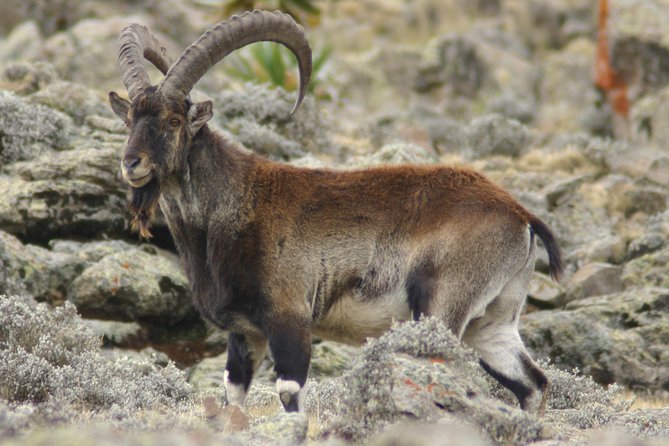
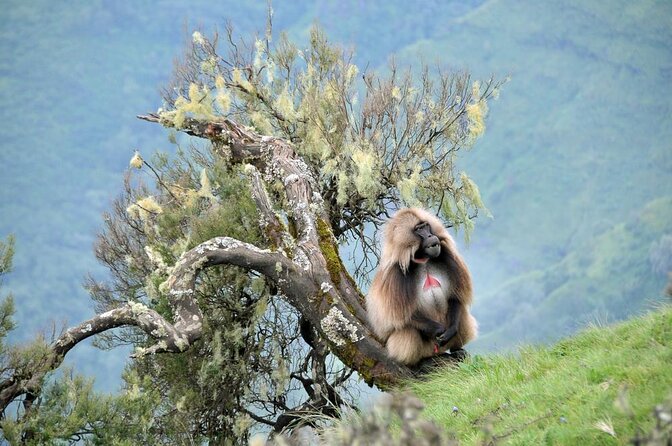
The best part of this seven-day Simien Mountains trek is its range. You move from cliff-edge paths and high camps to warmer valleys, crossing forests, rivers, villages, and broad mountain viewpoints. I like the chance to see Gelada monkeys and Walia ibex, and I especially like the stop for coffee with a local family in a traditional tukul hut. The full route feels like a real crossing, not a short walk to one famous viewpoint.
I also like that the $900 price includes meals, park fees, transport, a guide, and a scout, which removes several common costs from a high-altitude trip. The main caution is simple: this is not a gentle sightseeing hike. Long days, steep paths, camping, and elevations between 2,000 and 4,200 meters require strong fitness and a willingness to handle basic mountain conditions.
Key points at a glance
- Six nights across changing mountain scenery: The route runs from Sankaber through Geech, Chennek, Sona, Mekarebya, and Mulit before reaching Adiarkay.
- A serious high-altitude challenge: The trek reaches Imet Gogo at 3,926 meters and Buwhit Pass at about 4,200 meters.
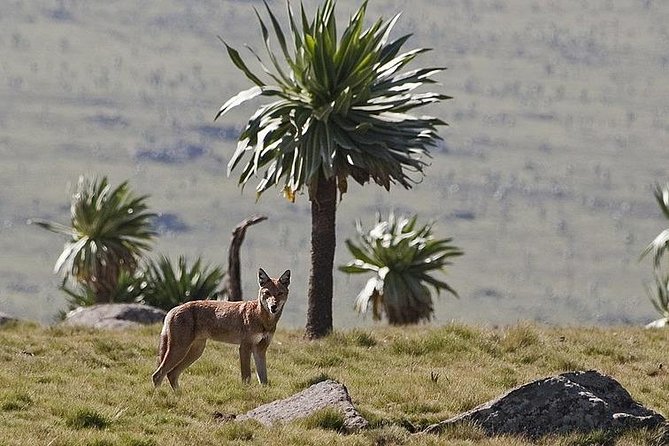
- Wildlife is part of the walk: Look for Gelada monkeys, Walia ibex, many bird species, and possibly the rare Simien fox or a leopard.
- A useful local encounter: At Geech village, you can share coffee with a local family inside a traditional tukul hut.
- Good meal and transport coverage: Six breakfasts, seven lunches, six dinners, park fees, guide and scout fees, and an air-conditioned vehicle are included.
- Small-group scale: The maximum group size is 15 people, a practical limit for narrow mountain paths and camp routines.
What this seven-day route is really like
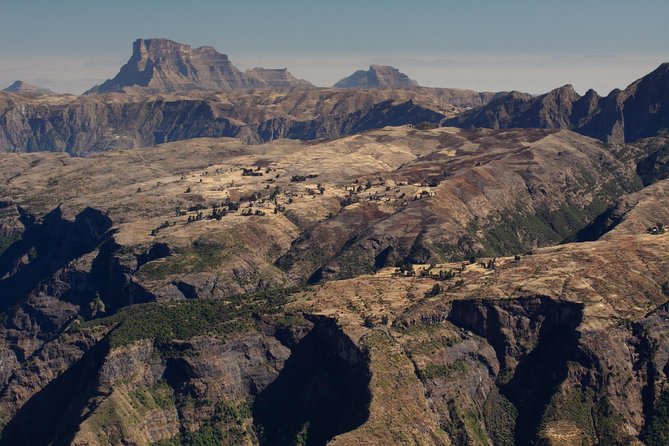
This is a point-to-point mountain journey with two shorter trekking sections and five full hiking days. You begin and end in Gondar, but most of the week is spent on foot between high camps and remote settlements.
The elevation changes matter more than the mileage. The route rises and falls between roughly 2,000 and 4,000 meters, with Buwhit Pass reaching about 4,200 meters. At that height, a path that looks modest on a map can feel demanding. You need strong physical fitness, steady pacing, and enough patience to let your body adjust.
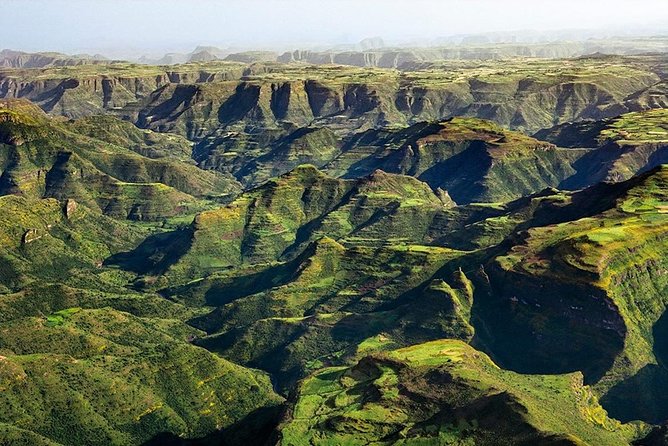
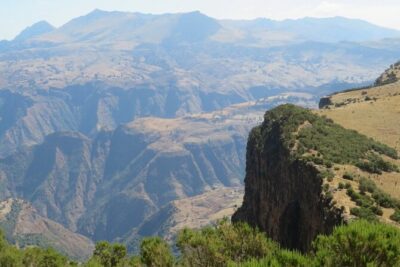
The trip also gives you a good sense of how varied the Simien Mountains can be. You start among high cliffs and forests, pass waterfalls and rivers, walk across open viewpoints, and later descend into warmer country with different plant life. That change is one of the strongest reasons to choose seven days instead of a shorter visit.
More Simien Mountains Trekking in Gonder
- 6 Days tour Package (Simien Mountains, Lalibela, and Danakil Depression)
★ 5.0 · 32 reviews - 4 Days Trekking to Simien Mountain National Park
★ 5.0 · 7 reviews - Simien Mountains – 4 Days
★ 4.0 · 7 reviews
Day 1: Gondar to Sankaber and the first cliff-edge walk
The vehicle leaves Gondar at 8:00 a.m. and reaches Simien Mountains National Park at about 11:00 a.m. From there, you are dropped roughly two hours before Sankaber camp and begin walking along the cliff edge.
This first hike lasts about two hours, with a picnic lunch along the way. It is a sensible opening day because you get a first look at the scenery without starting with the longest route. The cliff-edge setting gives you an immediate feel for why this park is famous, though you should still treat the path with care and follow the guide’s instructions.
That night, you camp in tents at Sankaber. The schedule lists about six hours for the day, which includes transport, park entry, lunch, and the trek. Since the tour provides meals but does not list camping equipment in detail, I would confirm what tents, sleeping gear, and personal equipment are supplied before you leave Gondar.
Day 2: Sankaber to Geech, with Jinbar Waterfall
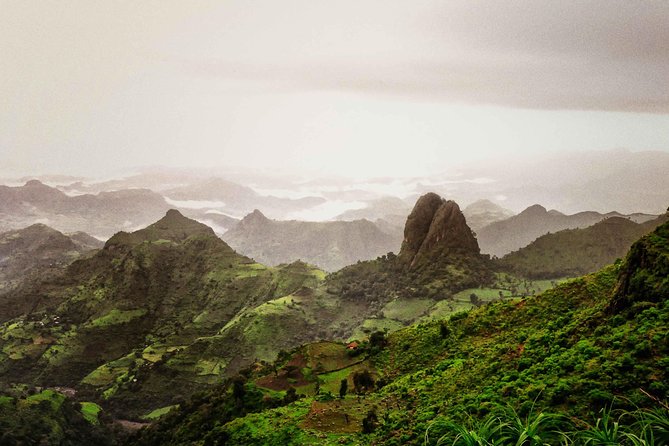
The second day is a five to six hour hike from Sankaber to Geech camp. The route winds between the cliff edge and forest, giving you a mix of open views and more sheltered walking.
The major natural feature is the 500-meter Jinbar Waterfall. You stop for lunch beside the Jinbar River, so this is a day when the setting does much of the work. The waterfall and river also give the route a welcome sense of movement after the broad, still views from the cliffs.
You pass through Geech village, where you can have coffee with a local family in a traditional tukul hut. I consider this one of the most valuable parts of the week. It adds a human connection to the trek and lets you see a little of daily mountain life rather than spending every hour focused only on scenery and wildlife.
The listed duration is about seven hours, so allow for a full day outside. The path is not presented as technical climbing, but the combination of altitude, uneven ground, and a long walking day will test your legs.
Day 3: Geech to Chennek and the view from Imet Gogo
The walk from Geech to Chennek takes around seven to eight hours. The day’s main prize is Imet Gogo, a high viewpoint at 3,926 meters.
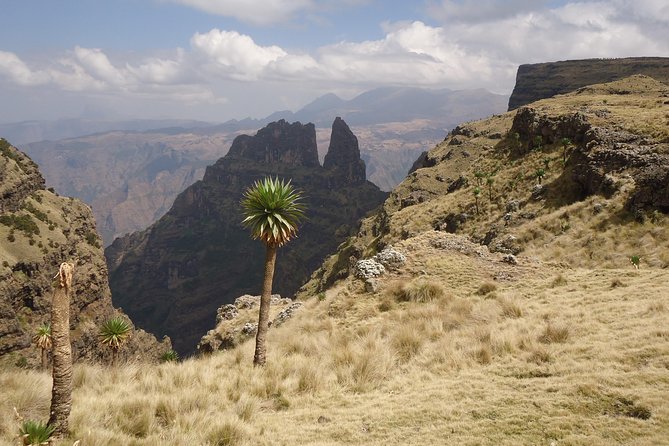
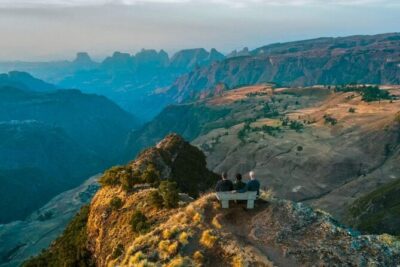
From Imet Gogo, you get 360-degree views across the Simien range, including canyons, cliffs, and valleys that seem to run on without end. This is likely to be one of the most memorable viewpoints of the trip, but it is also a serious altitude day. You may find the thin air more difficult than the trail itself.
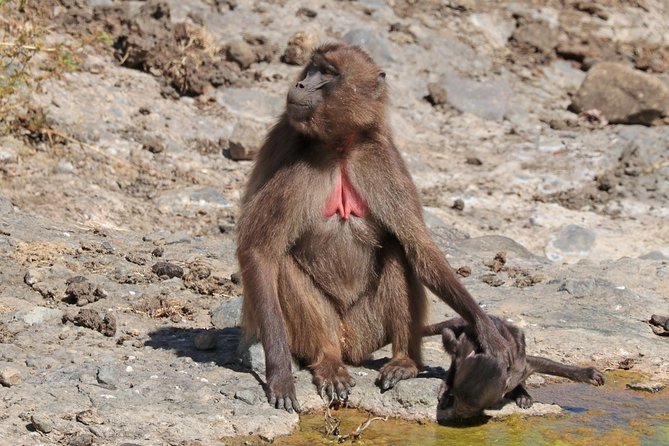
Chennek is also an important point for wildlife watching. The area is associated with Walia ibex, an animal found only in the Simien Mountains. Gelada monkeys may also appear along the route. Keep your camera ready, but do not let photography turn the walk into a stop-and-start struggle. A steady pace helps on a day this long.
More simien mountains trekking in Ethiopia:
- 12 Days SIMIEN MOUNTAIN-LALIBELA-DANAKIL-TIGRAY CHURCHES
★ 5.0 · 45 reviews - Danakil Depression, Lalibela, Omo Valley and Simien Mountains
★ 5.0 · 23 reviews - 5-Day Northern Ethiopia Tour : 3D Simien Mountains Trek & Axum.
★ 5.0 · 9 reviews - Simien Mountains Trekking Adventure
★ 5.0 · 8 reviews
Day 4: Chennek over Buwhit Pass to Sona
Day four is the most demanding section on paper. You trek from Chennek to Sona by way of Buwhit Pass, which reaches about 4,200 meters. The walking time is listed as eight hours.
This is the day to take your fitness honestly. High altitude, a long ascent, and the later descent can make the route feel far harder than the previous days. You should expect to walk slowly near the pass and allow the guide to set the pace.
The reward is wildlife and wide mountain views. Walia ibex may be seen here, and there is also a chance of spotting the rare Simien fox. The word chance matters. Wildlife is never guaranteed, so choose this trip for the walk and scenery first, with animals as an added benefit.
Sona is known for its sunsets. After an eight-hour day, you may be tired enough to consider skipping the evening view. I would try not to. A sunset at the end of this high route can be one of the week’s simplest and most satisfying moments.
Day 5: The long descent from Sona to Mekarebya
From Sona, you hike downhill for about five hours to Mekarebya. The schedule gives the day about eight hours, likely allowing time for breaks and the full camp routine.
A downhill day sounds easy, but it can be rough on knees and thighs. Use trekking poles if you have them, shorten your stride, and avoid rushing simply because the route is descending. The temperature should rise as you lose altitude, and the vegetation changes from highland growth toward what you would expect in warmer country.
This change gives the trek a useful rhythm. The first half is about high ridges, cold air, and exposed views. By Mekarebya, you begin to feel the mountain’s lower zones. Pack clothing you can adjust during the day because conditions will not stay constant.
Day 6: Mekarebya to Mulit, with river crossings
The route from Mekarebya to Mulit takes five to six hours, though the day is listed as about eight hours overall. You cross the Insya River several times before making a final steep climb to the campsite.
You may see vervet monkeys along this section. The river crossings add a change of pace, but they also make footwear and balance more important. The exact conditions are not provided, so you should be ready for wet or uneven footing and follow the guide’s choice of crossing points.
The final climb into Mulit is steep. After several days on the trail, that last ascent can feel like a blunt reminder that the trip is not finished yet. Still, this is a rewarding type of hiking day because it combines wildlife, water, changing vegetation, and a clear physical finish.
Day 7: Mulit to Adiarkay, then back to Gondar
The final walk is mostly downhill and takes about two and a half hours to Adiarkay. Once you reach the main road, you begin the drive back to Gondar, where the program ends.
Compared with the middle days, this is a shorter and more manageable finish. It gives you time to get off the trail without facing another major pass or all-day climb. The drive also makes clear how far you have crossed on foot since Sankaber.
The tour includes lunch on this final day. Breakfast is included on six days and dinner on six days, which matches a six-night camping schedule. Alcoholic drinks and services not specifically listed are not included, so budget separately for anything beyond the stated meals and arrangements.
Wildlife: what you might actually see
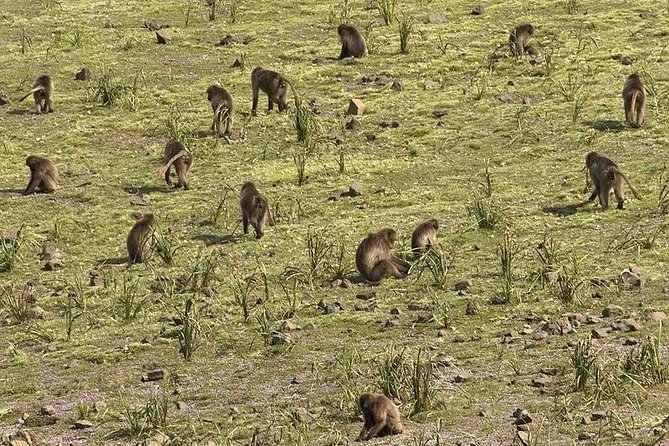
Gelada monkeys are one of the main attractions of the Simien Mountains. You may also see Walia ibex, a variety of bird life, and vervet monkeys on the lower sections.
The Simien fox and leopard are possible sightings, but they are not promised. I would treat them as lucky extras rather than reasons to book the trek. The more dependable reward is the mix of wildlife habitat and dramatic scenery you pass through over a full week.
The guide and scout are important here. Their role is not only to lead the way but also to help with the practical rhythm of a long trek and wildlife viewing. The company has received strong praise for its arrangements, airport assistance, guides, and ability to adjust wider Ethiopia trips to suit a budget. Alex, the manager, is specifically noted for helping plan a trip around personal needs and cost.
That does not mean every guide will be Alex, so confirm who will lead your departure. Ask how the scout and guide divide responsibilities, and ask what support is available if someone struggles with altitude or fatigue.
What the $900 price covers
At $900 per person, the price is easiest to judge by what it removes from your planning. Included are all fees and taxes, park entry, guide and scout fees, an air-conditioned vehicle, six breakfasts, seven lunches, and six dinners.
For a seven-day trip, that is a useful package. You are not paying separately for each park fee, daily lunch, or the main vehicle connection between Gondar and the trail. The inclusion of both a guide and a scout is also appropriate for a route with narrow paths, wildlife opportunities, river crossings, and large elevation changes.
The price does not include alcoholic beverages or services that are not listed. Camping and personal gear are not explained in the supplied details, so I would make that one of your first questions. Confirm whether tents, sleeping bags, mattresses, porter services, and drinking water are included or must be arranged separately. Do not assume that an included meal package covers every camp need.
Fitness, altitude, and what to ask before departure
The tour requires a strong physical fitness level. You should be comfortable walking for five to eight hours, handling steep climbs and descents, and spending several days at high elevation.
The hardest portions are likely to be Imet Gogo at 3,926 meters, Buwhit Pass at about 4,200 meters, and the steep final climb to Mulit. The route also includes repeated elevation changes, so the downhill days are not automatic rest days.
Before booking, I would ask:
- What camping equipment is supplied?
- Is drinking water included?
- How is the group pace managed?
- What happens if a participant cannot continue?
- Who will be the guide for your departure?
- Are there extra costs for personal gear or porters?
The maximum group size is 15. That is not a private trek, but it is still limited enough to keep the group more manageable than a large coach-style outing. A smaller group can also make village visits, meal timing, and wildlife stops easier to handle.
Pickup is offered, and the listed start time is 8:00 a.m. The tour uses an air-conditioned vehicle for the road sections. Your confirmation arrives when you book, and service animals are allowed according to the supplied details.
The company’s strongest practical qualities
The most consistent praise is aimed at organization and personal attention. The company has been credited with managing airport assistance, transfers, guides, drivers, and custom planning smoothly. That is useful in Ethiopia, where a well-coordinated road connection can make a major difference before and after a remote trek.
I also like the flexibility suggested by Alex’s planning help. If you are combining this trek with a wider Ethiopia trip, ask for the route to be fitted around your budget and available time. The company has handled changes to proposed plans, which may help if you need a different arrival or departure arrangement.
Still, the five published ratings represent a small sample, and one detailed account concerned a three-day hike rather than this exact seven-day route. I would see the feedback as encouraging evidence of good planning, not proof that every detail of a seven-day departure will be identical.
Who should book this trek
You should consider this trip if you want a demanding mountain route rather than a short park visit. It suits strong hikers who like long days, simple camping, changing scenery, and the possibility of seeing rare animals.
It may not suit you if you want hotels, short walks, guaranteed wildlife, or a flexible schedule with plenty of recovery time. The elevation and five full trekking days are the real commitment. A seven-day route also means that discomfort from poor footwear, inadequate clothing, or an unsuitable sleeping setup can build quickly.
For the right person, the length is the point. You get to move beyond the most accessible viewpoints and experience the mountain as a connected journey, from the high cliffs near Sankaber and Chennek to the warmer country around Mekarebya and Mulit.
Should you book the Simien Mountains trek?
Book it if you are fit, prepared for camping, and want a serious high-altitude hike with strong scenery and a real village encounter. The included meals, park fees, transport, guide, and scout make $900 a reasonable package price, provided the camping arrangements meet your needs.
Before paying, confirm the equipment list, water arrangements, guide’s name, and response plan for altitude or injury. If those details are clear, this is a strong choice for a full Simien Mountains crossing. If you are uncertain about seven consecutive days on foot, choose a shorter trek instead of treating this one as a casual introduction.
FAQ
Where does the Simien Mountains trek start and finish?
The tour starts in Gondar and finishes in Gondar. Transport leaves Gondar at 8:00 a.m. on the first day, and the final drive begins from Adiarkay after the last walk.
How long is each day of trekking?
The trek includes two half days and five full days. Listed daily durations range from about three hours on the final day to eight hours on several of the longer sections.
What is the highest point on the route?
Buwhit Pass is the highest point listed, at about 4,200 meters above sea level. Imet Gogo reaches 3,926 meters.
What meals are included?
The package includes six breakfasts, seven lunches, and six dinners. Alcoholic beverages are not included.
What wildlife might I see?
Possible wildlife includes Gelada monkeys, Walia ibex, vervet monkeys, and many bird species. You might also see the rare Simien fox or a leopard, but these sightings are not guaranteed.
Can I cancel for a full refund?
Yes. You must cancel at least three full days before the experience start time for a full refund. Cancellations or changes made less than three full days before the start time are not accepted for a refund.
More National Parks in Ethiopia
- 2 Days Wildlife Safari to Awash National Park
★ 4.5 · 21 reviews - 5 Days Tour to World Heritage–listed Harrar, Dire Dawa and Awash NATIONAL PARK
★ 4.5 · 10 reviews - Awash National Park Tours
★ 5.0 · 10 reviews - 2 Days Awash National Park Safari Tours
★ 5.0 · 9 reviews
More Hiking & Trekking in Ethiopia
- Trekking at Bale Mountains 3 Days
★ 5.0 · 28 reviews - 3 Days Bale Mountains Trekking
★ 5.0 · 19 reviews - 4 days semien mountain national park trekking,
★ 5.0 · 11 reviews - 6 Days Bale Mountains Trekking
★ 5.0 · 10 reviews
Just added around Ethiopia
- Yod Abyssinia Cultural Night: Dinner, Music, and Dance★ 5.0 · 7 reviews
- 2 days Tigray Church★ 5.0 · 3 reviews
- 3 days tour Danakil Depression (Dallol & Erta Ale)★ 4.0 · 5 reviews
- Trekking in Ethiopia’s Lalibela Wollo Highland 4 Days / 3 Nights★ 5.0 · 6 reviews
- 2 Days Dallol Trip★ 5.0 · 4 reviews
- The Rock-Hewn Churches of Lalibela: 3 Days / 2 Nights★ 5.0 · 6 reviews
- Lalibela Backpacker tours★ 5.0 · 6 reviews
- Lalibela churches Guided Tour★ 5.0 · 6 reviews
Simien Mountains Trekking, compared.

12 Days SIMIEN MOUNTAIN-LALIBELA-DANAKIL-TIGRAY CHURCHES
Read our review →
6 Days tour Package (Simien Mountains, Lalibela, and Danakil Depression)
Read our review →Danakil Depression, Lalibela, Omo Valley and Simien Mountains
Read our review →
5-Day Northern Ethiopia Tour : 3D Simien Mountains Trek & Axum.
Read our review →
4 Days Trekking to Simien Mountain National Park
Read our review →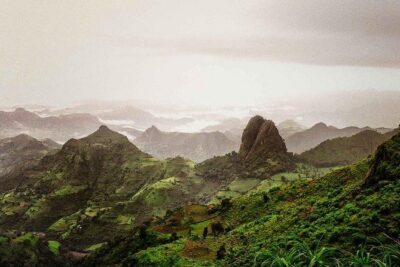
Browse the lists this tour appears in