
Reviewed · 6-DAY EXPERIENCES
6 day Omo ValleyTours
The Omo Valley is one of the few places where a short road trip can introduce you to six very different cultures, from Hamar villages near Turmi to Dorze communities high above Arba Minch. This six-day tour also adds a dugout canoe crossing, tribal markets, Mago National Park, Lake Chamo, and several long drives.
I like the wide cultural range packed into one route, and I like that local guides such as Mickey and Abey are part of the experience. The main caution is the pace: several days involve hours on rough or tiring roads, and the published schedule lists both a flight after Day 5 and another departure from Arba Minch on Day 6, so you should confirm the exact plan before paying for flights.
Key points at a glance
- Hamar country near Turmi: Visit a Hamar village and, if timing works, see a bull-jumping or Evangadi dancing ceremony.
- Karo body painting: Meet the small Karo community beside the Omo River and learn about its distinctive face and body decoration.
- Dassanech by canoe: Cross the Omo River in a dugout canoe to reach a village close to the Kenyan border.
- Mursi and Mago National Park: Drive through the park to meet Mursi people, including women known for wearing lip plates.
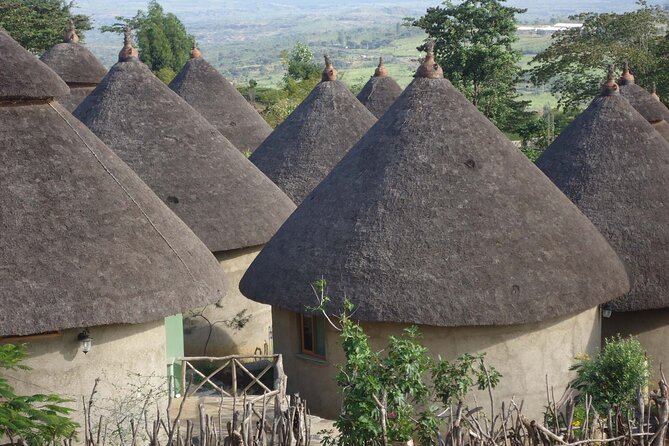
- Dorze mountain culture: Visit Guge Mountain at about 2,400 meters and see weaving, pottery, and kocho preparation.
- Lake Chamo finale: Spend part of the final morning on the lake, looking for crocodiles, visiting a fish market, and riding by boat.
Why the Omo Valley deserves six days
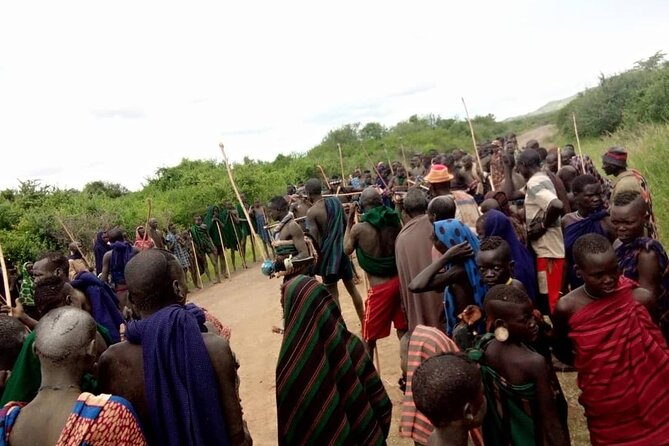
I like this route because it does not treat the Omo Valley as one single culture. At least 30 ethno-linguistic groups live in the wider region, and the differences can appear in dress, body painting, ceremonies, food, architecture, and language.
That variety is also a reminder to travel thoughtfully. The Hamar, Karo, Dassanech, Mursi, Konso, and Dorze are not actors placed on a stage for tourists. You are visiting living communities whose customs are changing as roads, phones, markets, schools, and outside influence reach the area.
Your guide matters here. Mickey is named as the tour manager and company contact in several accounts, while Abey is identified as a guide on one six-day trip. Robel is also referred to as Mickey in another account, so names and roles are not entirely clear. Ask who will lead your departure, how village visits are arranged, and how photography is handled.
A few more Addis Ababa trips to weigh up
- 6 Days Omo Valley Tribes Tours From Addis Ababa
★ 5.0 · 33 reviews - 6 Days Lalibela, Omo Valley and Harar
★ 5.0 · 15 reviews - 6-Day Omo Valley Cultural Private Tour
★ 5.0 · 6 reviews
Day 1: From Jinka Airport to Hamar country
Your guide meets you at Jinka, also called Baco, Airport. From there, the road runs about 130 kilometers to Turmi, a drive listed at roughly two hours, though road conditions and stops can affect the timing.
If your arrival falls on a Monday, Tuesday, Thursday, or Saturday, the schedule may include a tribal market in Jinka, Kako, Keyafer, Alduba, or Turmi. This is a useful way to begin because markets show everyday trade, clothing, food, and movement between communities, rather than only formal cultural encounters.
Later, you visit a Hamar village. Hamar women are known for elaborate hair arrangements made with clay and other decorative materials, and Hamar people are often distinguished by striking clothing and body adornment. The visit is meant to give you time with the community, not just a quick roadside stop.
A bull-jumping ceremony may be available, as may an Evangadi dancing ceremony. Both are listed as optional, and neither should be treated as guaranteed. Ask your guide what is actually taking place that day, who has invited visitors, and what payment or photography rules apply.
You spend the night at Paradise Lodge Turmi. The first day is reasonably manageable, but the combination of an airport arrival, a long transfer, and a village visit means you will want an early start and a flexible attitude.
Day 2: Karo artistry beside the Omo River
Day 2 takes you about 65 kilometers west of Turmi to meet the Karo, or Kara, people. The drive is listed at around one hour, followed by time to learn about a community described as the smallest ethnic group in the Omo Valley.
The Karo are particularly known for elaborate face and body painting. You may be offered the chance to have your own face or body painted in a Karo style. I would treat this as a personal choice, not a must-do photo opportunity. Ask permission before photographing people, and let your guide explain which interactions are welcome.
The setting beside the Omo River gives this day a different feel from the Hamar visit. You are seeing how a river corridor shapes settlement and daily life, while also learning how visual decoration can carry social and cultural meaning.
You return to Turmi for lunch. If it is a market day, another market visit may be included. The schedule also allows for a Hamar bull-jumping ceremony or Evangadi dancing, but these remain optional and depend on local timing.
Paradise Lodge Turmi is your base again. Two nights in one place help keep the trip from becoming a constant hotel change, though the days are still active. The stated duration is about seven hours, so this is not a quick morning outing.
Day 3: Crossing the Omo River to Dassanech villages
After breakfast, you leave around 8:30 a.m. for Omo Rate, a town near the Kenyan border. The distance is about 72 kilometers and the drive is listed at roughly one hour, followed by the border-area visit.
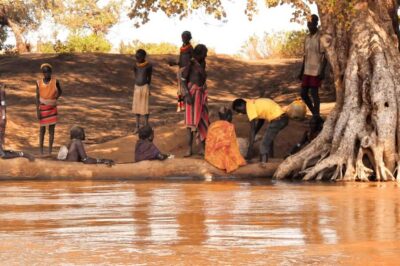
You first go to the immigration post, then cross the Omo River in a dugout canoe. After landing, you walk for about 10 minutes to reach a Dassanech village. This crossing is one of the most distinctive parts of the route because the river is not simply a view from the road. It becomes part of the journey.
The Dassanech live in a region shaped by the Omo and by the nearby international border. Your guide can help explain the practical rules at the immigration post and the right way to approach the village visit. Keep your belongings secure during the canoe crossing and follow local instructions.
You return to Turmi for lunch, with another possible market or Hamar ceremony if the calendar and local events line up. Then you continue to Jinka for the night at Eco-Omo Lodge, in rooms in the newer building.
This is another roughly seven-hour day. The early start, canoe crossing, walking, return drive, lunch, and onward transfer make it one of the more tiring sections. Still, the Dassanech visit adds a setting and community that are not repeated elsewhere on the tour.
Same country, a very different kind of day:
- Full Day Tour of Addis Ababa with Hotel Pickup and Drop-off
★ 5.0 · 430 reviews - Taste of Ethiopia
★ 5.0 · 406 reviews - Day Trip From Addis Ababa See Historical Monastery,Stunning Nature,Animals,Birds
★ 5.0 · 303 reviews - Addis Ababa: Debre Libanos, Blue Nile Gorge, and Cave Tour
★ 4.5 · 256 reviews
Day 4: Mursi communities and the Konso area
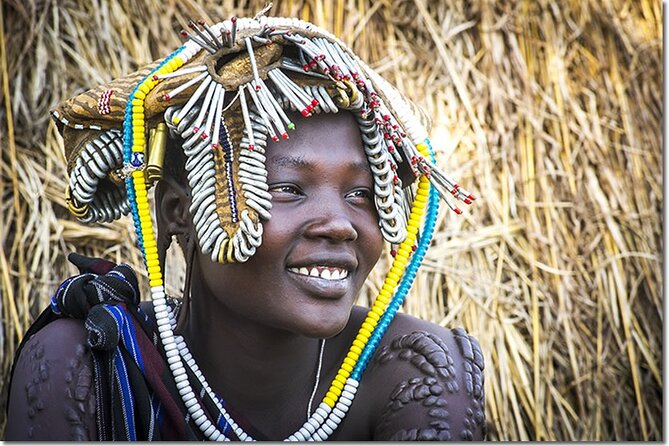
Day 4 begins with a drive of about 50 kilometers through Mago National Park to meet Mursi people. The Mursi are widely known for the lip plates worn by some women, along with distinctive body decoration and community traditions.
The visit can be visually striking, but it deserves careful handling. Do not reduce people to one famous feature. Pay attention to what your guide says about introductions, photographs, and respectful conduct. A brief exchange can be meaningful when it is approached as a meeting with people, not as a collection of unusual images.
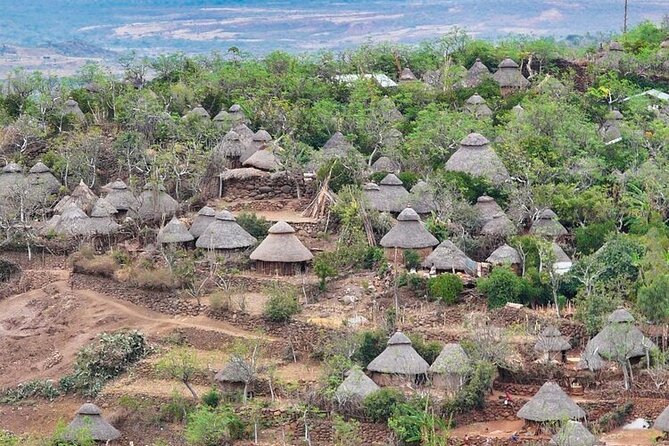
After returning to Jinka, you drive another 150 kilometers to Konso and visit a Konso village. The day is listed at about eight hours, making it the longest scheduled day in the trip.
That length matters. You will see two very different areas, but you will not have unlimited time in either. The Mursi visit is the headline stop, while Konso gives you another cultural perspective before the route turns toward Arba Minch.
You spend the night at Kanta Lodge Konso. If you prefer slow travel, this is the day to question. If your priority is seeing as much of the Omo region as possible in six days, the demanding schedule may be a fair trade.
Day 5: Dorze food and crafts on Guge Mountain
From Konso, you continue about 130 kilometers toward the Arba Minch area and visit the Dorze people on Guge Mountain. The community lives at an altitude of about 2,400 meters, so this stop brings cooler mountain conditions and a change from the hotter lowland route.
The Dorze are known for weaving and pottery. You can also see how kocho is prepared from enset, often called the false banana plant. This is one of the tour’s most useful cultural stops because food preparation gives you a direct look at household knowledge, farming, and local taste.
I especially like this part of the route for visitors who want more than ceremonial visits and portraits. Handicrafts and food show daily work and skills that continue beyond a single performance.
The schedule then says you go to Arba Minch Airport for an afternoon flight to Addis Ababa. Yet Day 6 also describes breakfast in Arba Minch, a Lake Chamo outing, city walking, lunch, and a flight to Addis Ababa. That is a clear point to settle before booking. It may reflect alternative versions of the itinerary, but the supplied schedule does not explain it.
Day 6: Lake Chamo, crocodiles, and Arba Minch
The final day begins with an 8 a.m. hotel pickup for Lake Chamo. You spend several hours around the lake, looking for crocodiles, visiting a fish market, and taking a boat ride.
This is a welcome change after several road-heavy days. The lake outing gives you open water, wildlife viewing, and a chance to observe local fishing activity. The description does not guarantee a particular number of crocodiles or a specific boat type, so think of it as a nature visit rather than a guaranteed wildlife show.
After the lake, you return to Arba Minch for a city walk before lunch. The planned airport transfer is listed for 1:30 p.m. The day is estimated at seven hours, so timing will matter if your domestic flight is fixed.
The tour ends back at the Addis Ababa meeting point after the flight. Domestic airfare is not included, which gives you some control over the booking but also makes it important to coordinate departure times with the operator.
What the $899 price really covers
The listed price is $899 per person. Included are an air-conditioned vehicle, local guide, accommodation, entrance fees listed in the program, airport or departure tax, government taxes, five breakfasts, six lunches, and five dinners.
That package covers the main ground costs for a route with several hotel nights, park access, long transfers, and multiple local visits. The air-conditioned vehicle will be especially welcome on the longer road days, although air conditioning does not change the fact that you will spend many hours in transit.
Domestic flights are not included. Drinks are also extra. Since the route refers to flights from Arba Minch to Addis Ababa, ask the company to confirm how many flight segments you need and which day each one occurs.
For value, I would compare the $899 against what you would pay for a private vehicle, local guide, accommodation, meals, entrance fees, and regional transfers on your own. The tour can make sense if you want the route organized and prefer direct help with local arrangements. It is less attractive if you want a slow schedule or wish to choose every hotel and flight yourself.
Group size, comfort, and the road
The maximum group size is 15 people. That is small enough to keep a vehicle group manageable, but it is not a private tour. At village visits, a group of 15 can feel noticeable, especially when combined with other visitors.
Pickup is offered, and the meeting point is Bole Addis Ababa International Airport. The stated start time is 9 a.m. Confirmation is provided at booking, and the tour says most people can participate.
The schedule contains six to eight-hour days, several one-hour road estimates, a canoe crossing, walking to a village, and a mountain visit. You should be comfortable with a physically active road trip and with changing conditions. The information does not provide a full accessibility assessment, so anyone needing specific mobility support should ask before booking.
The accommodation names are Paradise Lodge Turmi, Eco-Omo Lodge Jinka in the new building rooms, and Kanta Lodge Konso. No detailed room or bathroom specifications are provided, so request current information if hotel standards are important to you.
The strongest part of the guiding service
The most consistent positive detail is the company’s communication and flexibility. Mickey is described as responding promptly, answering questions, adapting itineraries, and helping match a package to available time and budget.
English ability is specifically praised in connection with Mickey. Abey is named as a guide who helped keep a group comfortable. These details matter because the Omo Valley route has moving parts: market days, ceremonies, village permissions, road timing, border-area procedures, and flights.
Before departure, I would send one clear message asking for:
- The name of your assigned guide and driver
- The exact flight schedule
- Which ceremonies are possible on your dates
- Photography and village-visit fees, if any
- The final hotel list
- What happens if roads or local events change the timing
The company offers free cancellation up to 24 hours before the local start time for a full refund. Changes or cancellations inside that window are not accepted for a refund.
Is this Omo Valley tour right for you?
Book this tour if you want a broad first look at southern Ethiopia in a short period. You will meet several communities, see the Omo River from a canoe, visit Mago National Park, sample Dorze food culture, and finish with Lake Chamo.
I would especially recommend it to people who value local guiding and do not want to arrange a complicated route themselves. The strong points are the cultural variety, named local staff such as Mickey and Abey, included meals and ground transport, and the possibility of adjusting plans to suit your time and budget.
Think twice if you dislike long drives, uncertain timing, or group visits in communities where photography and tourism require extra care. Also resolve the Day 5 and Day 6 flight conflict before booking. If the operator confirms the schedule and you accept the busy pace, the $899 ground package offers a practical way to reach a difficult-to-organize part of Ethiopia.
FAQ
Where does the tour start?
The tour starts at Bole Addis Ababa International Airport in Addis Ababa, Ethiopia.
What time does the tour start?
The stated start time is 9 a.m.
Where does the tour end?
The activity ends back at the Addis Ababa meeting point after the return flight.
How long is the tour?
The tour is planned for six days, with daily activities lasting approximately five to eight hours.
Is the domestic flight included?
No. The domestic flight is not included in the listed price.
What meals are included?
The package includes five breakfasts, six lunches, and five dinners. Drinks are not included.
Which communities are included in the route?
The route includes visits connected with the Hamar, Karo or Kara, Dassanech, Mursi, Konso, and Dorze communities.
Is the tour suitable for most people?
The activity states that most people can participate. It includes long drives, a dugout canoe crossing, a short walk to a village, and a visit to Guge Mountain.
How many people can join the tour?
The maximum group size is 15 people.
Just added around Addis Ababa
- Yod Abyssinia Cultural Night: Dinner, Music, and Dance★ 5.0 · 7 reviews
- Stunning Views Wonchi Crater Lake a Private Day Trip★ 5.0 · 3 reviews
- Locally crafted beer and wine tasting and nightlife in Addis tour★ 5.0 · 6 reviews
- Two days Lake Wenchi and Menagesha Forest★ 5.0 · 3 reviews
- 3-Day Cultural Tour in South Omo Valley★ 5.0 · 4 reviews
- Addis Ababa City Tours Full-Day Tours★ 5.0 · 5 reviews
- Day Trip to Tiya UNESCO Site & Melka Kunture Archaeological Site★ 4.5 · 3 reviews
- Tribes of the Ethiopian Omo Valley – 9 Day Tour★ 5.0 · 5 reviews
6-Day Experiences, compared.

6 Days Omo Valley Tribes Tours From Addis Ababa
Read our review →
6 Days tour Package (Simien Mountains, Lalibela, and Danakil Depression)
Read our review →
6 Days Omo valley Tribal Tour (Starts Arba Minch End Jinka)
Read our review →

Browse the lists this tour appears in