

Reviewed · OMO VALLEY TRIBAL TOURS
6-Day Omo Valley Cultural Private Tour
The most memorable part of this six-day route is the chance to visit several distinct communities in southern Ethiopia, rather than seeing the Omo Valley through one short village stop. You can watch Hamer evangadi dancing, see Karo body painting, visit Konso terraces, and stay close to the communities you came to understand.
I like the private format, since your group can set the pace and ask questions as you go. I also like the mix of culture and nature: Lake Chamo hippos, Nech Sar wildlife, dry plains, mountain villages, museums, and local markets all make the journey feel varied.
The main drawback is the amount of driving. Several days run for five to seven hours, and the route is not a soft-paced holiday. Also, the $500 price includes accommodation, transport, guides, entrance fees, water, and tax, but not lunch, dinner, or possibly the domestic flights, so check that point before paying.
Key things to know before booking

- Hamer night dancing in Turmi: You may see evangadi, a traditional evening dance, during your Turmi stay.
- A family-style village visit: The tour is designed around direct contact with local communities, including a visit to one family house as a guest.
- Lake Chamo and Nech Sar on day one: Hippos, zebras, and a boat ride give the trip a nature-based start.
- Market timing matters: Weyto and Erbore markets are listed for Saturday, while Key Afar and Konso are strongest on Thursday.
- Long road days: The longest drives run about seven hours, with rough, dry stretches between cultural stops.
- Private service for your group: A car, driver, guide, accommodation, entrance fees, bottled water, and government tax are included.
Why this Omo Valley route is worth your time
The Lower Omo is not one single cultural stop. It is a broad region where nearby communities have different languages, clothing, homes, ceremonies, crafts, and farming methods. That contrast is the reason to choose a multi-day trip like this.
You will not simply tick off villages from a vehicle window. The plan includes time in Hamer, Karo, Erbore, Tsemai, Konso, and Dorze areas, with museums and markets adding context. The visit to a family home is especially important because it gives you a look at daily life, not just a staged performance.
I also like the way the route begins and ends near Arba Minch. Lake Chamo and the Chencha mountains give you a gentler introduction to the south before the roads become longer and the settlements more remote.
Still, keep your expectations sensible. This is an organized cultural tour, not an independent village visit. Your guide and driver arrange access, transport, and introductions. That makes the journey possible, but you should remain respectful about photography, clothing, and personal space. Ask before taking pictures, particularly during ceremonies or inside homes.
More Omo Valley Tribal Tours in Addis Ababa
- 6 Days Omo Valley Tribes Tours From Addis Ababa
★ 5.0 · 33 reviews - 3 Days Omo Valley Tour
★ 5.0 · 24 reviews - Danakil Depression, Lalibela, Omo Valley and Simien Mountains
★ 5.0 · 23 reviews
Day one: Lake Chamo, hippos, and Nech Sar wildlife
You fly from Addis Ababa to Arba Minch, where the driver meets you at the airport. After checking into Paradise Lodge, the first activity is a boat trip on Lake Chamo.
The lake is known for local hippos, and the boat gives you a different view of the area than the road will. You then cross toward Nech Sar National Park and drive through the park. Zebras are among the animals you may see before returning to Arba Minch for the night.
This is a smart opening day. Instead of spending your first hours in a car, you get water, wildlife, and open views. The listed activity time is about three hours, though airport arrival, hotel check-in, and the drive can make the day feel longer.
Paradise Lodge is included, as is accommodation throughout the route. Meals are not included, so ask your guide how lunch and dinner will be handled each day. The supplied information specifically excludes lunch and dinner, while the first-day description refers to good food at the accommodation, so budgeting for meals remains necessary.
Day two: The road to Turmi through Tsemai and Erbore country
The second day is a road day, with about five hours listed for the route from Arba Minch to Turmi. You pass through Weyto Valley and stop around Weyto, associated with the Tsemai people.
If your schedule lines up with Saturday, Weyto market day adds a useful layer to the visit. Markets show ordinary trade and social life, not just ceremonial culture. You then continue to Erbore for a brief village visit before arriving in Turmi, home of the Hamer.
The Hamer are one of the best-known communities in this part of Ethiopia, partly because of their distinctive appearance and ceremonies. In the evening, you may see evangadi, a traditional night dance. The timing of this event can depend on local arrangements, so it should be treated as a planned possibility rather than a guaranteed show.
You stay at Turmi Lodge. This two-night base is practical because it avoids packing and unpacking after every cultural visit. It also allows the third day to reach the Karo area and return to Turmi.
Day three: Karo body painting and a Hamer village
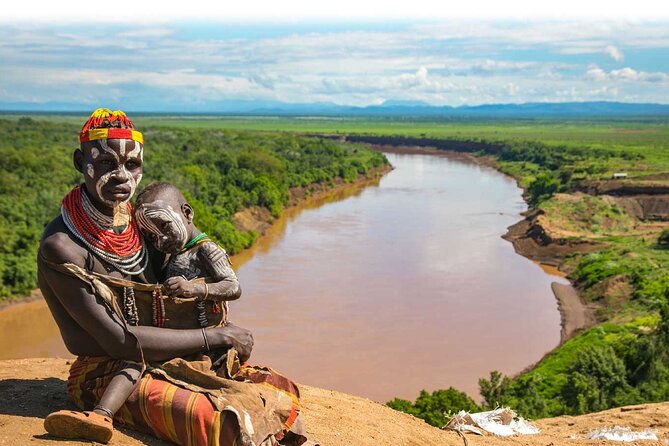
The route to Kolcho village takes you to the Karo people on the banks of the Omo River. The Karo are noted for traditional body painting, one of the most visually striking artistic practices in the region.
This stop is valuable because it helps you see how personal decoration can carry cultural meaning. The supplied schedule does not promise a particular ceremony, so approach the visit as an introduction to Karo life and art rather than a guaranteed event.
The day lasts about seven hours, making it one of the trip’s longer outings. Roads across the Omo region can make distances feel greater than they appear on a map. Carry water, protect your camera and phone from dust, and wear shoes that can handle uneven ground.
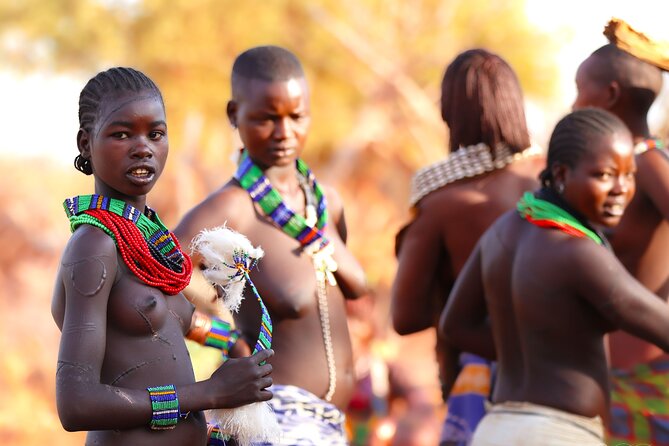
Later, you visit a Hamer village near Turmi. The village homes are built from mud, wood, and thatch, with roughly 10 to 15 huts grouped around the daily life of an extended family. The Hamer women are known for red-dyed, plaited hair and leather skirts decorated with shells.
This is where the tour’s family and village focus matters most. You get a chance to see how homes, clothing, and household routines fit together. The description presents these villages as having limited Western influence and few non-organic materials, but you should still avoid treating the community as a museum display. Listen to your guide and follow local requests.
You return to Turmi Lodge for a second night.
Same country, a very different kind of day:
- Full Day Tour of Addis Ababa with Hotel Pickup and Drop-off
★ 5.0 · 430 reviews - Taste of Ethiopia
★ 5.0 · 406 reviews - Day Trip From Addis Ababa See Historical Monastery,Stunning Nature,Animals,Birds
★ 5.0 · 303 reviews - Addis Ababa: Debre Libanos, Blue Nile Gorge, and Cave Tour
★ 4.5 · 256 reviews
Day four: Jinka, a small museum, and the change in scenery

Day four moves north toward Jinka, first crossing dry, sandy plains around Key Afar and then reaching more fertile rolling hills. The change in vegetation and soil is one of the pleasures of this route. The Omo Valley is not visually uniform, and the road shows you that clearly.
In Jinka, you visit a small museum explaining local customs. I consider this an important stop because cultural visits are easier to understand when you have some background first. A short optional walk through town lets you meet people along the way before continuing toward the Konso area.
The schedule lists about six hours of driving. It also describes an overnight at Kanta Lodge in Konso. Because the day heading and overnight wording are not perfectly clear, confirm the exact night’s location with Ethio Target Tours before departure. This matters because the next day also refers to Jinka, Key Afar, and Konso, and the route may be adjusted according to road conditions and local timing.
The practical lesson is simple: ask for a day-by-day hotel and flight outline, not just the broad route. The tour is private, so the operator may have flexibility, but you will want to know where you sleep each night.
Day five: Key Afar market and Konso traditions

The fifth day includes Key Afar, Konso, and the return toward Arba Minch, with about seven hours on the road. Thursday is the important market day in Key Afar, where Benna and Tsemai communities trade goods.
If markets are a priority for you, plan the trip around Thursday. The market can make the cultural side of the tour feel more grounded because you are seeing buying, selling, and social contact rather than only a formal village visit.
Konso is known for its agricultural terraces and wooden waka statues. The terraces show how people have shaped steep or difficult land for farming, while the waka statues honor dead heroes. A local village visit and cultural museum add meaning to what you see outside.
The Konso stop is a useful counterpoint to Turmi and the Omo River communities. Here, farming systems and memorial art are central features. You are not only looking at clothing or dance. You are seeing how a community works with soil, hills, ancestors, and local materials.
Kanta Lodge is listed for the night. Again, confirm the exact lodging sequence when you book, since the itinerary places Kanta Lodge on both the fourth and fifth nights. That may reflect a two-night stay or a simplified description.
Day six: Arba Minch, Dorze weaving, and the flight to Addis
The final day begins early. You drive through fertile country toward Arba Minch, a name associated with Forty Springs. The area is also known for ensete, often called false banana, and for fruit production.
From Arba Minch, the road climbs into the Chencha mountains to a Dorze village. Dorze weaving in wool and cotton is a major reason for the visit, and you will have a chance to shop. If you want locally made textiles, this is likely to be one of the best buying opportunities of the trip.
The schedule gives about three hours for the final activity before your airport transfer and flight back to Addis Ababa. Since the start is early and the flight time is not stated, keep your final-day plans in Addis flexible.
The ending works well. After the dry plains and lowland villages, Dorze country provides a cooler mountain setting and a final look at another regional tradition.
What the $500 price really covers

At $500 per person, the tour can offer solid value if you want a private six-day route with transport and lodging arranged. The included package covers:
- Private car with driver
- Guide
- Entrance fees
- Accommodation
- Bottled water during the tour
- Government tax
The biggest value is the vehicle and driver. The Omo Valley covers large distances, and arranging each road section, park entrance, village visit, and hotel independently would be difficult. A private vehicle also means your group is not tied to the pace of a large coach.
You must add lunch and dinner to your budget. Laundry is also excluded. Most important, confirm whether the flights between Addis Ababa and Arba Minch are included, since the package information lists the flights in the route but does not name them among the inclusions.
The accommodation is described positively, with Paradise Lodge in Arba Minch, Turmi Lodge, and Kanta Lodge in the route. Do not expect a luxury safari setup based on the information provided. The appeal is location and convenience, not a long list of hotel facilities.
Transport, pace, and comfort
This tour suits you if you can handle long drives and changing conditions. The scheduled road days run about five, six, and seven hours, and that does not always include every village stop, meal break, or photo pause.
You should start each morning ready for a full day. Bring sun protection, comfortable walking shoes, a refillable water bottle, and a small bag for the vehicle. The tour supplies bottled water, but extra water is still sensible on long drives.
The private setup is a strong advantage for a small group. You can ask the driver to pause at appropriate points, spend more time in a museum, or keep a village visit brief if the heat becomes tiring. The tour is still governed by local access and road conditions, so flexibility works best when you discuss it with the guide.
Most people can participate, and service animals are allowed. The meeting point is Bole Addis Ababa International Airport at 8:00 a.m., and the activity ends back at that meeting point after the return flight.
Working with Ethio Target Tours
Solomon is the company representative most clearly identified in the supplied information. He is described as handling organization and keeping in touch during wider Ethiopia itineraries, including northern routes such as Bahir Dar, Gondar, the mountains, Lalibela, and Addis Ababa.
The strongest praise centers on organization, reliable communication, drivers, guides, and accommodation. One account specifically highlights a friendly staff, a good driver, and satisfactory food. Another describes the company as precise and professional when arranging a group of ten.
That is useful for this route because the logistics are not minor. Flights, airport pickups, several lodges, long drives, park entry, and village access all need coordination. Still, I would ask for the name of your assigned guide and driver before the trip, since Solomon may be the organizer rather than the person in the vehicle each day.
The company has six listed ratings at five stars, but the written comments are brief and do not provide detailed day-by-day accounts. I would treat that as a positive signal about service, not as proof that every road, hotel, or cultural visit will match your hopes.
Who should book this six-day Omo Valley trip?
I would choose this tour if you want a private introduction to southern Ethiopia and prefer having the practical pieces handled for you. It suits people who care about village life, local art, traditional clothing, markets, wildlife, and regional variety.
It is also a good match for a small group of friends or family members. The private car gives you more control than a large group departure, and the two-night Turmi stay reduces the constant hotel changes.
I would think twice if you want leisurely mornings, high-end hotels, or short transfer times. The Omo Valley is a demanding destination, and the experience depends partly on accepting long road sections, heat, dust, and simple accommodation.
Book only after confirming three points: the domestic flight cost, the precise overnight plan for days four and five, and which market days align with your dates. Also ask how village visits and photography permissions are handled. These questions will not remove the rough edges, but they will make the trip easier to judge.
FAQ
Where does the tour start and end?
It starts at Bole Addis Ababa International Airport at 8:00 a.m. The activity ends back at the same meeting point after you fly back to Addis Ababa.
Are airport pickups included?
Yes. Pickup is offered, and the itinerary says you will be collected from Arba Minch Airport on arrival. The meeting point listed for the tour is Bole Addis Ababa International Airport.
What is included in the $500 price?
The price includes a car with driver, a guide, entrance fees, accommodation, bottled water during the tour, and government tax.
Are meals included?
No. Lunch and dinner are not included. Laundry service is also excluded.
Which market days are important on the route?
Weyto and Erbore market days are listed as Saturday. Key Afar market day is Thursday, and Konso market days are Monday and Thursday.
Can the tour be canceled for bad weather?
The experience requires good weather. If poor weather causes the operator to cancel, you will be offered another date or a full refund. Personal cancellations or amendments are non-refundable.
Should you book it?
Book this tour if you want a focused, private look at the Omo Valley with cultural visits, wildlife, markets, and mountain villages in one six-day route. The best features are the range of communities, the Hamer evening dance, Karo body painting, Konso terraces, Dorze weaving, and the practical support of a driver and guide.
The decision is less favorable if you dislike long drives or expect every flight and meal to be covered. Confirm those costs, check the exact hotel plan, and match your dates to the markets. If those details work for you, $500 per person is a reasonable price for a tightly arranged private journey through one of Ethiopia’s most distinctive regions.
More 6-Day Experiences in Addis Ababa
- 6 Days Lalibela, Omo Valley and Harar
★ 5.0 · 15 reviews - 6 day Omo ValleyTours
★ 5.0 · 5 reviews - 6 days Omo valley cultural Tour
★ 5.0 · 3 reviews - 6 days 5 nights Addis Abeba sightseeing & Lalibela Rock-Hewn Churches
★ 5.0 · 3 reviews
Just added around Addis Ababa
- Yod Abyssinia Cultural Night: Dinner, Music, and Dance★ 5.0 · 7 reviews
- Stunning Views Wonchi Crater Lake a Private Day Trip★ 5.0 · 3 reviews
- Locally crafted beer and wine tasting and nightlife in Addis tour★ 5.0 · 6 reviews
- Two days Lake Wenchi and Menagesha Forest★ 5.0 · 3 reviews
- 3-Day Cultural Tour in South Omo Valley★ 5.0 · 4 reviews
- Addis Ababa City Tours Full-Day Tours★ 5.0 · 5 reviews
- South Omo Valley Tribes 8 Days Tour Package★ 5.0 · 4 reviews
- Day Trip to Tiya UNESCO Site & Melka Kunture Archaeological Site★ 4.5 · 3 reviews
Omo Valley Tribal Tours, compared.

6 Days Omo Valley Tribes Tours From Addis Ababa
Read our review →
Lalibela, Axum, Danakil and Omo Valley 8 DAYS
Read our review →

3 days around Arbaminch and Konso Adventure Tours Life Time
Read our review →Danakil Depression, Lalibela, Omo Valley and Simien Mountains
Read our review →


Browse the lists this tour appears in