

Reviewed · HISTORICAL TOURS
Experience a Cultural and Historical Journey through Addis Ababa
Addis Ababa comes into focus through its contrasts: a 3.5-million-year-old fossil, an imperial cathedral, eucalyptus-covered hills, a giant open-air market, and a coffee shop dating to 1953. This private tour packs those pieces into one 5 to 6-hour city journey, giving you a useful first look at Ethiopia’s capital.
I like the way Lucy and Mount Entoto anchor the day with both human history and wide city views. I also like the practical extras: lunch, a traditional coffee stop, private transport, and a guide such as Eyob who can explain Ethiopia’s politics, geography, customs, and past in plain language.
The main consideration is pace. Six stops, lunch, and traffic can make this feel full rather than leisurely, and Mercato may be intense if you prefer quiet sightseeing. Still, for a first day in Addis Ababa or a short stop in the city, the range is hard to beat.
Key Points
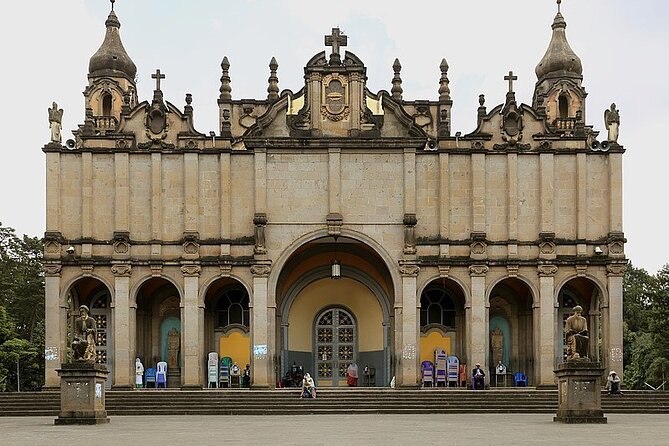
- Lucy at the National Museum: Meet one of the world’s most important early human fossils and see artifacts from Ethiopia’s pre-Axumite past.
- Imperial and religious Addis: Holy Trinity Cathedral includes the mausoleum of Haile Selassie and his wife, with religious ceremonies sometimes taking place.
- Views from Entoto: Ride uphill through eucalyptus trees to a panoramic outlook over Addis Ababa and the surrounding countryside.
- Mercato after lunch: Explore one of Africa’s largest open-air markets, where the city’s commerce is on full display.
- A coffee finish with local flavor: Tomoca Coffee serves Ethiopian beans in a historic setting, with the option to add old Leghar Train Station.
- Private, practical format: Your own group travels in an air-conditioned vehicle, with admission fees, lunch, and coffee or tea included.
Why This Addis Ababa Tour Works So Well
The best city tours give you a framework for a place. This one does that by linking several sides of Addis Ababa rather than focusing only on monuments.
You begin with Ethiopia’s place in human evolution, then move into imperial and religious history. From there, Mount Entoto shows you the city from above, Mercato lets you see its commercial energy at street level, and Tomoca brings you back to one of Ethiopia’s most famous daily rituals: coffee.
That range matters because Addis Ababa is not a city you understand from one viewpoint. The capital can feel modern, historic, commercial, religious, and intensely local within the same afternoon. A private guide helps connect those pieces while an air-conditioned vehicle saves time between them.
The tour starts at 8:30 am and lasts roughly five to six hours. Admission fees, lunch, coffee or tea, taxes, professional guiding, and transport are included. At $100 per person, the price is easiest to justify if you value a private experience and want several major sights handled in one outing.
A few more Addis Ababa trips to weigh up
- Day Trip From Addis Ababa See Historical Monastery,Stunning Nature,Animals,Birds
★ 5.0 · 303 reviews - Hidden Treasures of Addis Ababa – Food, Culture and History Tour
★ 5.0 · 57 reviews - Northern Ethiopia Historic Route
★ 5.0 · 12 reviews
Lucy and the National Museum of Ethiopia
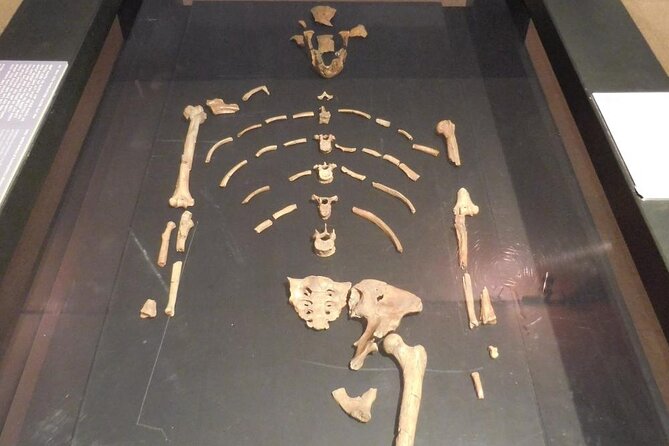
The National Museum is the strongest opening stop. Its central draw is Lucy, known in the local language as Dinkinesh, meaning thou art wonderful. The fossil is identified here as a 3.5-million-year-old Australopithecus Afarensis specimen discovered in 1974.
Lucy matters because she changed the way scientists viewed early human development. Her discovery showed that an early human ancestor was walking upright far earlier than many people had believed. You do not need a specialist background to appreciate the display. A good guide can turn the fossil from a famous name into a clear explanation of why it changed the study of human origins.
The museum also includes archaeological material from before the Axumite period. That gives the stop more range than a single fossil exhibit. You can connect early human development with later civilizations that grew in the Ethiopian highlands.
Plan on about an hour here. That is enough time for the main exhibits, though not enough for a slow reading of every display. If museums are your main interest, you may wish the schedule allowed longer. For a city tour, the timing is sensible and gives you room for the other stops.
I would pay close attention to the guide’s explanation rather than rushing straight to Lucy. The wider setting is the point: Ethiopia is not only important because of one famous fossil, but because its archaeological record reaches across enormous stretches of time.
Holy Trinity Cathedral and the Imperial Past
The Holy Trinity Cathedral offers a sharp change of mood. It is one of Ethiopia’s most important churches and contains the mausoleum of Emperor Haile Selassie and his wife.
That makes the cathedral more than a quick photo stop. The site connects religious life with the last imperial period of Ethiopian history. Depending on the timing, you may also have a chance to observe a religious ceremony. That possibility adds a living element, but it also means you should follow the guide’s instructions and behave quietly and respectfully.
The visit lasts about an hour and admission is included. The time allows you to take in the church and its historical significance without reducing the stop to a rushed exterior visit.
I like this part of the day because it gives you a better sense of how faith and government have shaped Ethiopia. The cathedral is not presented as an isolated building. Its connection to Haile Selassie gives the place political weight, while the ongoing religious activity keeps it tied to present-day life.
Be aware that a church visit can feel more structured than a market or coffee stop. Dress and conduct should suit a religious site, even though specific clothing rules are not provided in the tour details.
Mount Entoto and Addis Ababa from Above

After the central city sights, the vehicle heads uphill to Mount Entoto. The road passes through eucalyptus trees, and the change in altitude gives this part of the tour a cooler, more open feel than the city below.
Entoto was once the permanent camp of Emperor Menelik II. That detail gives the viewpoint a historical role, not just a scenic one. You are seeing the setting connected to the early development of Addis Ababa while also looking across the modern capital.
The stop lasts about 30 minutes. That is enough for the panoramic view and a short break, but not for an extended mountain visit. The experience is about orientation. From above, you can better understand the scale of Addis Ababa and the countryside around it.
I especially like this stop after the museum and cathedral because it changes the rhythm. You have been looking at objects and buildings; now you get space and distance. The view also helps explain why a city tour in Addis requires a vehicle. The capital spreads across a highland setting, and the route between districts is part of the experience.
The road uphill and the drop in altitude are noted as significant. If you are sensitive to changes in elevation or winding drives, it is sensible to keep that in mind. The tour information does not specify a high-altitude health policy, so ask the operator if you have a medical concern.
Same country, a very different kind of day:
- Full Day Tour of Addis Ababa with Hotel Pickup and Drop-off
★ 5.0 · 430 reviews - Taste of Ethiopia
★ 5.0 · 406 reviews - Addis Ababa: Debre Libanos, Blue Nile Gorge, and Cave Tour
★ 4.5 · 256 reviews - Addis Ababa Guided City Tour With Airport & Hotel Pick Up
★ 5.0 · 237 reviews
Lunch Before Mercato

Lunch comes before the Mercato visit, and it is included in the $100 price. The details do not name the restaurant or set out a menu, so you should not book this expecting a particular dish.
Still, including lunch is useful. A half-day tour that covers museums, churches, a hilltop, and a market can run long without a meal. Here, you do not need to break away from the group to arrange food during the middle of the day.
The lunch also marks a good transition. Mercato is a large commercial district, and visiting after you have eaten lets you focus on the market rather than searching for a meal while keeping track of the group.
If food is an important reason for booking, ask in advance what will be served and whether dietary requests can be accommodated. Those details are not specified, so it is better to confirm than assume.
Mercato, Addis Ababa’s Commercial Heart

Mercato is described as Africa’s largest open-air market, and the tour allows about 90 minutes there. Almost every type of commodity is sold in this sprawling commercial area, making it one of the clearest places to see the working side of Addis Ababa.
This is not a polished attraction with a neat route. The appeal is the movement, trade, and variety. You can expect an active setting where the market itself is the subject, not a single landmark.
A private guide is particularly helpful here. In a large market, you benefit from someone who can keep the visit focused and help explain what you are seeing. The tour details do not promise specific shopping stops or purchases, so think of Mercato as a cultural visit first and a shopping opportunity second.
The 90-minute time frame is a reasonable middle ground. It gives you enough time to get a feel for the place without allowing the market to consume the entire day. On the other hand, anyone who dislikes crowds, noise, or busy commercial areas may find this the hardest stop.
Keep your personal belongings secure and follow the guide’s advice. The tour information does not provide detailed safety instructions, but ordinary care makes sense in any large market. If you want to buy something, agree on timing and meeting arrangements before wandering.
Mercato is also where the tour feels least like a standard monument circuit. You are not simply looking at Addis Ababa’s past. You are seeing people buy, sell, move goods, and earn a living.
Tiglachin Memorial and a Complicated Chapter
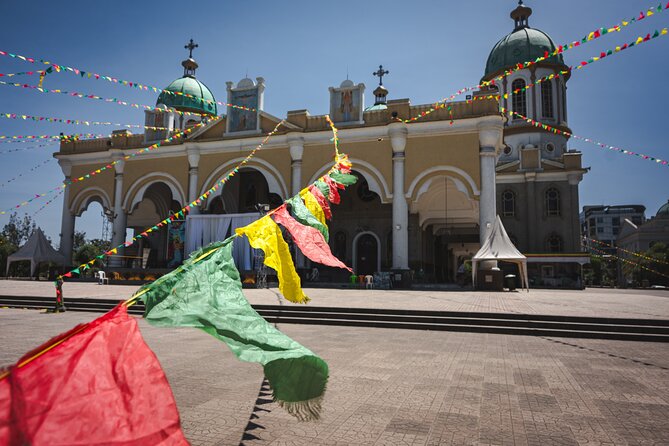
The Tiglachin Memorial sits on Churchill Avenue and honors Ethiopian and Cuban soldiers involved in the Ogaden War. It was built under Mengistu Haile Mariam.
The stop lasts about 30 minutes. That makes it a compact look at a difficult political period, rather than a long museum-style treatment of the war. The memorial gives your guide a chance to discuss Ethiopia’s modern military and political history, including the period associated with Mengistu.
This is one place where the quality of the guide matters greatly. A monument can be easy to photograph and easy to misunderstand. Someone who can explain the context without turning the visit into a lecture will make the stop far more useful.
The memorial may appeal most to visitors interested in twentieth-century Ethiopia and the country’s relations with Cuba. If your main goal is architecture, shopping, or food, it may feel less immediately engaging than the museum, Mercato, or Tomoca Coffee.
Tomoca Coffee and Ethiopia’s Everyday Ritual
Tomoca Coffee is a fitting final stop. Established in 1953, it is described as Ethiopia’s first coffee roaster, using highland beans from Kaffa, the birthplace of coffee.
The visit lasts around 30 minutes and includes coffee or tea. You can enjoy a brewed cup while sitting in a historic coffee shop with local activity around you. This is a small stop, but it gives the day a human scale after the larger subjects of fossils, emperors, war, and markets.
Coffee is not simply a drink in Ethiopia. The traditional coffee ceremony is an important social practice, and the tour specifically includes a coffee ceremony as part of its cultural focus. The exact format is not detailed, so you should ask whether the ceremony takes place at Tomoca or at another point during the day.
The wording also allows for an extension to Leghar Train Station, Addis Ababa’s oldest station. This is presented as an added visit rather than a guaranteed part of the core route, so confirm the arrangement when booking. Pairing the station with Tomoca would add another layer of old Addis to the coffee stop.
I like ending here because the tour finishes with participation rather than another viewing platform. You taste something associated with Ethiopia and watch city life carry on around you.
What the $100 Price Really Covers
At $100 per person, this is not the cheapest way to see Addis Ababa. The value comes from the private format and the number of services bundled into the day.
You receive:
- A professional guide
- Private participation for your group
- An air-conditioned vehicle
- Pickup offered
- Admission fees and taxes
- Lunch
- Coffee or tea
- A route covering six distinct stops
If you tried to arrange transport, admissions, lunch, and guiding separately, the convenience would shrink quickly. The price is strongest for solo visitors, couples, or small groups who want a planned introduction without joining strangers.
The tour is also useful if you have limited time in Ethiopia. One reported experience described it as a good way to see the highlights when time is short, and that is a fair assessment of the route. You get culture, history, shopping, views, food, and coffee in one morning and early afternoon.
The tradeoff is depth. You will not fully explore the National Museum, spend a whole afternoon in Mercato, or study every detail of the memorial. You are paying for range and organization, not a specialist visit to one site.
Guide Quality and the Private Format
The guide can make or break a city tour. Eyob is specifically associated with this experience, and the strongest praise centers on his ability to explain Addis Ababa and Ethiopia beyond the basic sights.
The useful qualities to look for are clear historical explanations, local context, travel advice, and flexibility. Eyob is described as covering history, people, development, geography, current affairs, and practical recommendations. He is also described as friendly and personable, which matters during a private day with many hours together.
Because the tour is private, you can ask questions and adjust the emphasis within the available time. The information does not promise unlimited customization, but private participation is a real advantage over a large scheduled group.
You should confirm the pickup details and whether Eyob will be your assigned guide. The tour starts at 8:30 am, and confirmation is provided at booking. It is near public transportation, though the experience itself includes an air-conditioned vehicle.
Who Should Book This Experience?
I would choose this tour if you are visiting Addis Ababa for the first time and want a broad introduction in one day. It suits solo visitors especially well because a private guide can provide company, context, and practical help without requiring you to build a full itinerary alone.
It also works for anyone with a short stay who wants more than a single museum or church. The route covers major cultural and historical subjects, then adds the everyday atmosphere of Mercato and coffee at Tomoca.
Families and mixed-interest groups may appreciate the variety. A person interested in archaeology gets Lucy, someone drawn to imperial history gets the cathedral and Entoto, and a shopper or food lover gets Mercato and lunch.
I would hesitate if you want a slow, highly specialized visit. The schedule is full, the market may feel intense, and each attraction receives a set amount of time. Visitors who dislike busy places may prefer to ask for more time at the museum and less at Mercato, if the operator can adjust the route.
Free cancellation is available when you cancel at least 24 hours before the 8:30 am start time. Cancellations or changes within 24 hours are not refunded or accepted.
Should You Book the Addis Ababa City Tour?
Book it if you want an efficient first look at Addis Ababa with your own guide, included transport, lunch, admission fees, and a proper coffee stop. The combination of Lucy, Holy Trinity Cathedral, Entoto, Mercato, Tiglachin, and Tomoca gives you a much fuller picture than a monument-only outing.
The best reason to choose it is the human guidance. If Eyob is available, his broad command of Ethiopian history, daily life, geography, and current affairs can turn a busy route into a coherent day.
Skip it if you prefer to explore one neighborhood slowly or dislike markets and tightly timed sightseeing. For everyone else, especially first-time visitors and people on a short Ethiopian itinerary, $100 buys a practical and unusually varied introduction to the capital.
FAQ
How long does the Addis Ababa tour last?
The experience lasts approximately five to six hours and begins at 8:30 am.
Is pickup included?
Pickup is offered. The tour also includes transport in an air-conditioned vehicle.
Is the tour private?
Yes. Only your group participates in this private tour or activity.
What is included in the price?
The price includes lunch, coffee or tea, admission fees, taxes, professional guiding, and an air-conditioned vehicle.
Does the tour visit Lucy?
Yes. The first stop is the National Museum of Ethiopia, where you can see the 3.5-million-year-old Lucy fossil, also known as Dinkinesh.
Can I cancel for a full refund?
Yes, if you cancel at least 24 hours before the experience start time. Cancellations made less than 24 hours before the start time are not refunded, and changes within that period are not accepted.
Just added around Addis Ababa
- Yod Abyssinia Cultural Night: Dinner, Music, and Dance★ 5.0 · 7 reviews
- Stunning Views Wonchi Crater Lake a Private Day Trip★ 5.0 · 3 reviews
- Locally crafted beer and wine tasting and nightlife in Addis tour★ 5.0 · 6 reviews
- Two days Lake Wenchi and Menagesha Forest★ 5.0 · 3 reviews
- 3-Day Cultural Tour in South Omo Valley★ 5.0 · 4 reviews
- Addis Ababa City Tours Full-Day Tours★ 5.0 · 5 reviews
- South Omo Valley Tribes 8 Days Tour Package★ 5.0 · 4 reviews
- Day Trip to Tiya UNESCO Site & Melka Kunture Archaeological Site★ 4.5 · 3 reviews
Historical Tours, compared.
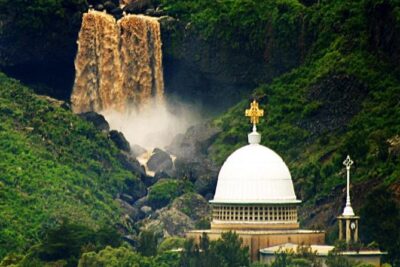
Day Trip From Addis Ababa See Historical Monastery,Stunning Nature,Animals,Birds
Read our review →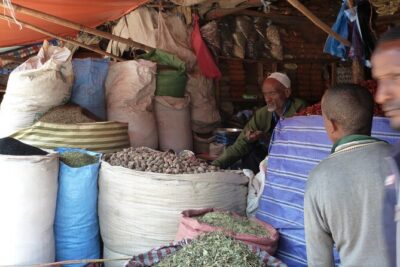
Hidden Treasures of Addis Ababa – Food, Culture and History Tour
Read our review →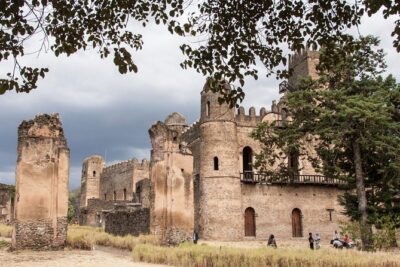
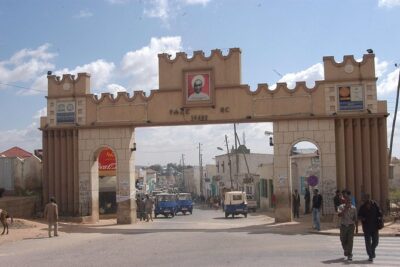
5 Days Tour to World Heritage–listed Harrar, Dire Dawa and Awash NATIONAL PARK
Read our review →
DAY TRIP TO THE UNESCO HERITAGE SITE TIYA & Melka Kunture
Read our review →
Historical tours – in five days, Addis Ababa, Axum, Laliebla and Gonder
Read our review →
city tour of Addis Ababa ( history ,culture , food and more)
Read our review →
Browse the lists this tour appears in