
Reviewed · DANAKIL DEPRESSION TOURS
2-Night 3-Day Danakil Depression Tour without Flights
The Danakil Depression is not a soft-edged sightseeing trip. It is a hard, hot journey into one of Ethiopia’s strangest corners, where salt miners cut blocks from the ground, camel caravans cross white flats, and volcanic heat has painted the earth in yellow, green, and red. The main prize is Erta Ale, reached by a night trek and followed by a night outdoors near the crater.
I like two things right away: the price includes the costly practical pieces, such as 4WD transport, food, water, camping equipment, permits, local guides, scouts, and police support; and the route shows real Afar life rather than only a famous viewpoint. The main drawback is just as clear: this is a physically demanding trip, with high heat, uneven ground, basic camping, and no regular bed, shower, or toilet during the outdoor sections.
Key points to know before booking
- Erta Ale requires a challenging trek: You walk up to the volcano while vehicles carry food and camping gear to the rim.
- The lava sight may not be guaranteed: A recent update says part of the volcano had collapsed, so visible lava was not certain.
- Lake Giulietti sits more than 100 meters below sea level: Its salt water feeds the salt flats used by Afar workers.
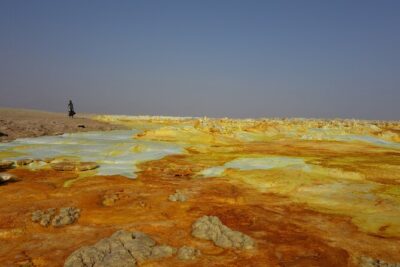
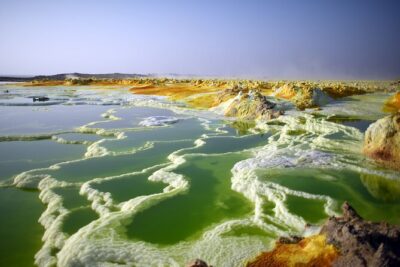
- Dallol offers extraordinary colors: Volcanic activity has created unusual yellow, green, and red mineral areas.
- Salt mining is a working trade: At Ragad, you can see blocks cut, shaped, and loaded onto camels.
- Flights are not included: The $300 price covers the ground program, but Addis Ababa to Semera and the return flight cost extra.
Why the Danakil Depression demands respect
The Danakil Depression is among the hottest and lowest places on Earth. This trip takes you into the Afar region, an area shaped by volcanoes, salt water, extreme heat, and long distances between settlements.
You are not signing up for a standard coach tour. Transport is by four-wheel-drive Land Cruiser, and several parts of the route are over rough terrain. The days begin early, the schedule involves long drives, and the walking can be tiring even before the heat reaches its strongest point.
I would rate the physical challenge as more important than the three-day label suggests. Three days sounds brief, but the experience packs hiking, desert driving, camping, and early-morning sightseeing into a tight schedule. You should be comfortable walking for extended periods on uneven ground and carrying your personal items.
The trip has a rating of 4.8 from 31 reviews, and the strongest praise centers on the unusual sights and the sheer sense of adventure. That enthusiasm makes sense, but you should read the practical details closely before paying.
More Danakil Depression Tours in Addis Ababa
- 12 Days SIMIEN MOUNTAIN-LALIBELA-DANAKIL-TIGRAY CHURCHES
★ 5.0 · 45 reviews - 3 Day Danakil Depression Ertale and Dallol Tours
★ 5.0 · 44 reviews - 5 DAYS Lalibela, Axum, Tigray churches and Danakil
★ 5.0 · 34 reviews
What the $300 price really covers
At $300 per person, this is a strong ground-tour price for a remote region, mainly because many expenses are included. The operator covers:
- Four-wheel-drive transport and fuel
- Driver allowances
- An English-speaking local guide
- Meals throughout the tour
- Bottled water
- Camping equipment and cooking
- Entrance fees and permits
- Scout and police support in Afar
- Accommodation during the three-day program
That list matters in the Danakil. You are not simply paying for a guide and a vehicle. The price also supports the logistics required for food, water, security, camping, and access in a remote part of Ethiopia.
Still, $300 is not your complete trip cost. Roundtrip flights are excluded, including the morning flight from Addis Ababa to Semera and the return flight to Addis Ababa. Personal expenses are also extra.
You should also understand what accommodation means here. The itinerary includes outdoor camping, and one review makes the conditions plain: you may spend three days outside without a bed, shower, or toilet. This is part of the experience, not a small inconvenience to discover later.
Free cancellation up to 24 hours before departure and a reserve-now, pay-later option make planning less rigid. Starting times depend on availability, so check the flight connection and pickup arrangements before you commit.
Day 1: Semera to Erta Ale and the night climb
Your first major task is getting to Semera. The planned morning flight from Addis Ababa departs at 6:45, flight ET110. Pickup is provided from Semera Airport, as well as from hotels, hostels, guesthouses, and the airport when arranged as part of the booking.
From Semera, you drive toward Erta Ale. The name means smoky mountain in the Afar language. The volcano has a base diameter of about 30 kilometers and a summit caldera measuring roughly one square kilometer.
The route by 4WD is part of the experience. You are crossing an arid region with very little conventional tourist infrastructure, so the vehicle, fuel, driver, food, water, and local support are central to the trip’s value. This is not the kind of place where you can easily find a replacement meal or a quick shop if something is forgotten.
After a break, you begin the trek toward Erta Ale. The vehicles carry camping supplies and food to the rim, which means you do not have to haul the full camp up the volcano. Even so, the walk is described as challenging. Comfortable shoes are essential, and light clothing helps with the heat.
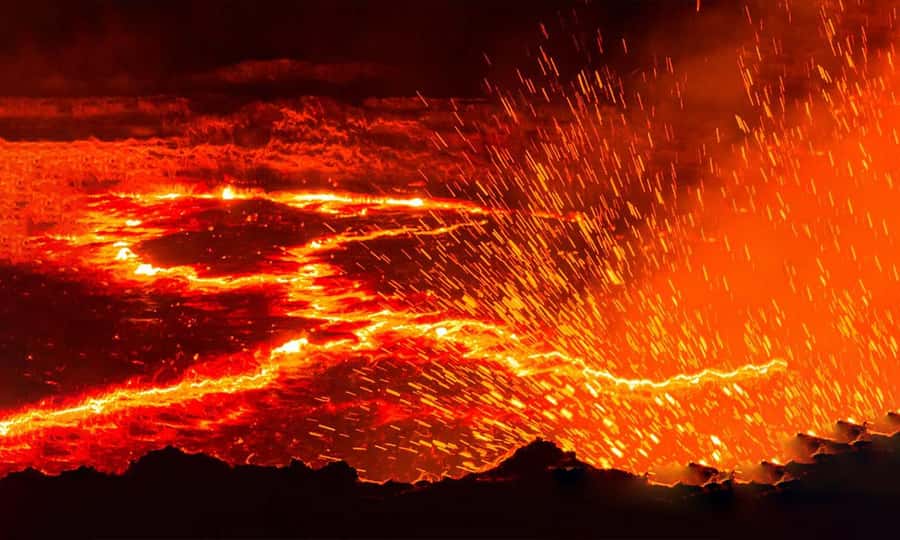
The big attraction is the volcanic crater, traditionally known for its permanent lava lake. You may see boiling activity from the rim, but you should not book this tour on the assumption that a glowing lava lake is guaranteed. A recent booking note says part of the volcano had collapsed and that visible lava was not present at that time.
That change is important. Erta Ale remains a remarkable volcanic site even when the famous lava view is missing, but your expectations should match current conditions. Volcanic areas change, and the tour cannot promise a particular crater display.
You spend the night near the rim, watching the crater area and sleeping outdoors. Bring a flashlight, warm clothing, and a practical attitude. The desert can be brutally hot in the day but cooler at night, and the lack of normal facilities will matter after a long walk.
Day 2: Crater views, Lake Giulietti, and Hamedela
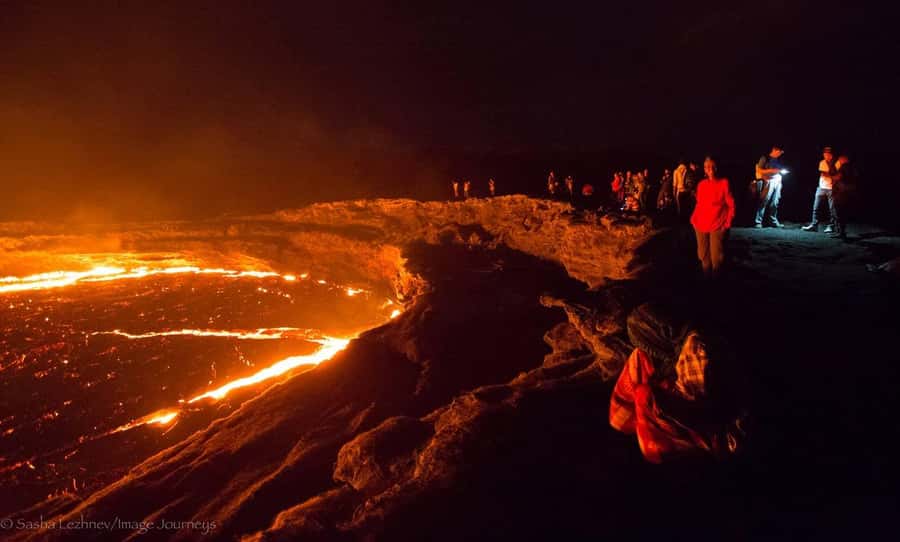
The second day begins early so you can see sunrise at the northern pit crater. The plan then takes you on a short walk of about five minutes to the southern and central pits.
The main pit crater is described as about 200 meters deep and 350 meters across. The smaller southern pit is about 65 meters wide and roughly 100 meters deep. These measurements give you a sense of scale, but the viewing conditions depend on heat, light, volcanic activity, and the exact state of the craters.
After an early breakfast, you descend from Erta Ale at about 9 a.m. You return to Dodom, reaching camp around 10:30, then take time to rest before the next drive. This pause is welcome because the first night and morning involve walking, heat, and limited sleep.
The route then continues toward Lake Giulietti, a saltwater lake more than 100 meters below sea level. This is one of the trip’s most unusual stops. The lake is not simply a scenic body of water. Its salt flats support a traditional local industry in which Afar workers evaporate water and collect salt.
You continue toward Erbiti and then Abaala or Hamedela, where you spend the night. By this point, the day combines volcanic terrain, a below-sea-level salt lake, a working salt economy, and another night in basic conditions.
I like this middle day because it puts the famous volcano into context. You see how geology affects daily life, not just how it creates dramatic photographs. The drawback is the amount of driving and the sparse facilities. You should expect heat, dust, and long periods on the road rather than a leisurely sequence of stops.
Same country, a very different kind of day:
- Full Day Tour of Addis Ababa with Hotel Pickup and Drop-off
★ 5.0 · 430 reviews - Taste of Ethiopia
★ 5.0 · 406 reviews - Day Trip From Addis Ababa See Historical Monastery,Stunning Nature,Animals,Birds
★ 5.0 · 303 reviews - Addis Ababa: Debre Libanos, Blue Nile Gorge, and Cave Tour
★ 4.5 · 256 reviews
Day 3: Ragad salt blocks, Dallol, and Lake Assal
The final day begins with a drive to Ragad, also called Asebo. This is where local workers mine salt from the ground.
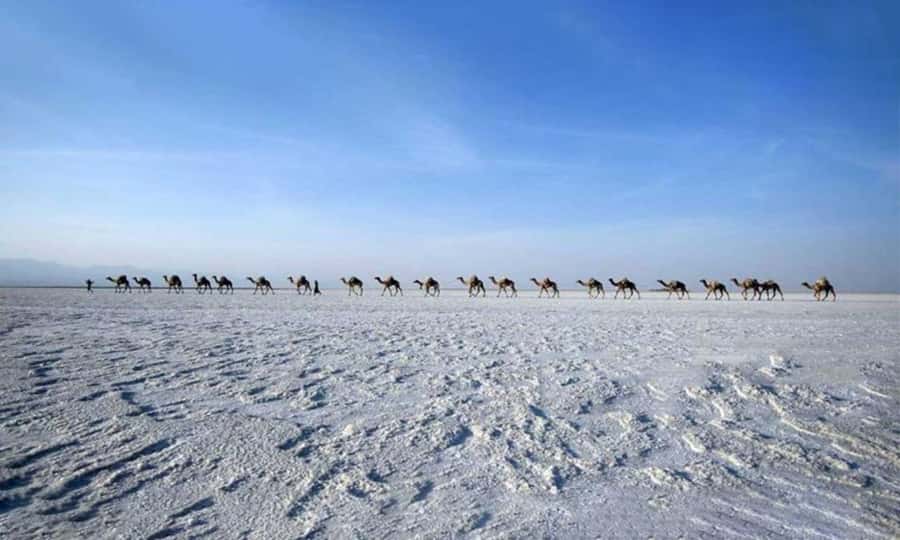
You can watch them break salt from the earth, cut it into rectangular pieces, and load the pieces onto camels. This is one of the most valuable parts of the route because it shows a living trade in practical detail. The salt is not presented as a museum display. It is being cut, prepared, and moved as part of local work.
The camel caravans also give the salt flats a human scale. You see why the region has mattered to the Afar people and why the terrain is more than an empty expanse of white ground.
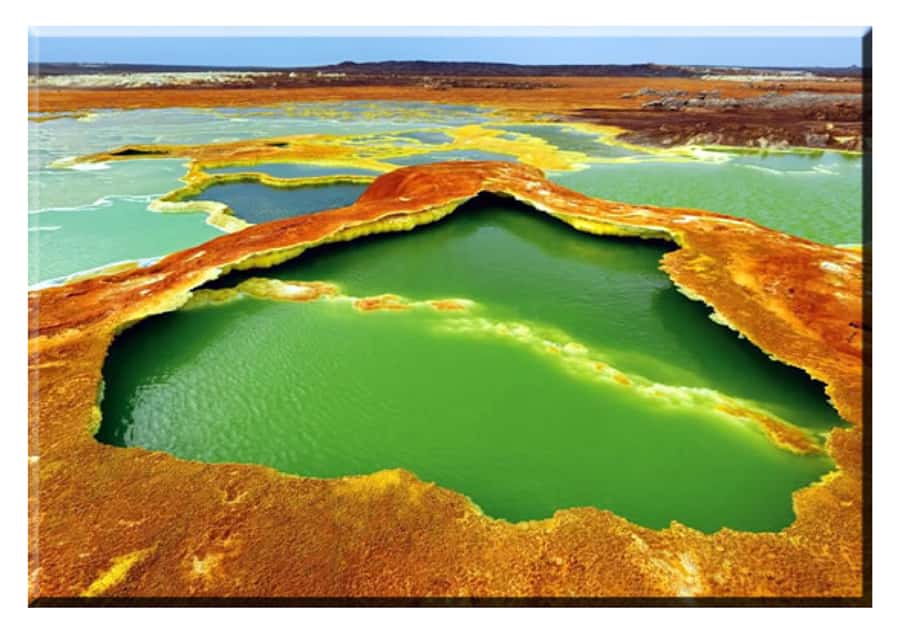
The drive continues to Dallol, one of the lowest places in the world. Volcanic activity has created mineral colors and unusual ground formations. The area is known for vivid salt deposits and striking textures, but you should follow your guide’s instructions carefully and avoid wandering away from the approved route.
Dallol is a place for looking closely. The colors come from the minerals and volcanic processes beneath the surface, so the ground can appear yellow, green, orange, or reddish in places. It is visually powerful, but the heat and exposed terrain can make even a short walk tiring.
You then visit Lake Assal and follow the camel caravans before driving back to Semera. The return flight to Addis Ababa is not included in the tour price, so make sure your flight timing works with the road schedule and airport arrival.
Camping, food, water, and comfort
The operator provides meals, bottled water, cooking equipment, and camping gear for the tour. That removes several major worries in a remote area, especially when you are spending nights outdoors.
Do not confuse included camping equipment with hotel comfort. You should be prepared for no shower, no ordinary toilet, and no proper bed during parts of the program. One booking review described the trip as three days in the open air under exactly those conditions.
Bring a flashlight even though camping supplies are provided. Pack sunscreen, sunglasses, a hat, light hiking clothes, comfortable shoes, and warm clothing for the night. A camera is useful, but protecting it from dust and heat matters more than bringing bulky equipment.
Hydration is not optional. The information for this trip specifically warns that temperatures can be very high. Drink the supplied water regularly and do not wait until you feel thirsty. Loose, light clothing gives you better protection than very short clothing, while a hat helps during walks across exposed salt and volcanic ground.
Guides, drivers, and communication
The tour includes an English-speaking guide and local Afar support. That is important because the guide can explain the volcanic sites, help manage the walking sections, and support communication during the salt-mining visits.
The drivers are not all described as fluent in English. A recent booking note says you may need to save detailed questions for the main English-speaking guide rather than expecting every driver to explain the route.
That is a useful practical point. Write down questions about Erta Ale, Dallol, salt cutting, or the day’s schedule so you can ask them when the guide is present. Communication may be less smooth during vehicle transfers, but the presence of a local guide and regional support team remains a major part of the tour’s value.
Scout and police service are included for the Afar portion of the program. You do not need to arrange that support separately, which simplifies a trip through such a remote area.
Fitness, safety, and accessibility
The trek to Erta Ale is challenging, and the tour requires a significant amount of walking over uneven ground. People with back problems, heart problems, or pregnancy should not book this activity. Children under 12 are also excluded.
The activity is listed as wheelchair accessible, but that needs careful interpretation. The road transport may be accessible in some parts, yet the Erta Ale trek, rough terrain, crater walks, salt flats, and outdoor camping create obvious limits. If you use a wheelchair or have reduced mobility, confirm the exact arrangements with the operator before booking.
You should also think about heat tolerance. This is not a cool-weather mountain walk. It is an exposed trip through one of the hottest regions on the planet, with physical effort added to the climate.
I would not choose this tour if you need predictable sleep, private washing facilities, or easy access to medical services. I would consider it if you are fit, flexible, and willing to accept basic conditions in return for access to places that are difficult to reach independently.
The biggest uncertainty: seeing lava at Erta Ale
The headline attraction is Erta Ale’s boiling lava. The volcano is famous for its active crater, and the itinerary is built around reaching the rim at night and returning at sunrise.
But volcanic activity is not a stage show. The current condition can change, and the latest available booking comment says the volcano had partly collapsed and no lava was visible. You should treat the lava as a possible highlight, not a firm promise.
This does not make the tour poor value. Dallol, Lake Giulietti, Lake Assal, the salt flats, camel caravans, and Ragad’s working salt mine remain substantial sights. It does mean you should book because you want the entire Afar experience, not only one glowing crater.
The most enthusiastic feedback focuses on the colorful sulfur and salt formations. That emphasis fits the route: Dallol can remain visually striking even when Erta Ale is not showing lava.
Who should book this three-day trip?
I would recommend it to fit hikers, photographers, geology fans, and people who prefer hard-to-reach places over polished attractions. It also suits anyone curious about how Afar communities use the salt flats and move salt by camel.
You will probably enjoy it if you can accept:
- Long 4WD drives
- Very high temperatures
- A challenging volcano trek
- Outdoor sleeping
- No shower or regular toilet
- Uneven ground
- A changing volcanic display
- Extra flight costs
I would choose a different type of trip if your priority is comfort, easy walking, family travel with young children, or a predictable schedule. The three-day duration saves time, but it also leaves little room for delays or recovery.
Should you book the Danakil Depression tour?
Book it if you want a demanding, unusual introduction to the Afar region and understand that the adventure is bigger than the lava crater. At $300, the included transport, food, water, permits, camping, guides, and security give the ground portion good value, but you must add flights and accept very basic conditions.
My strongest advice is to confirm the current Erta Ale situation before departure. If lava is not visible, the salt mines, Dallol colors, salt lakes, and camel caravans still make a powerful route, but the trip will feel different from the classic lava-lake image.
Go prepared, stay hydrated, wear proper shoes, and bring patience. For the right person, this is not a comfortable holiday. It is a demanding look at volcanoes, salt, work, and life in one of Ethiopia’s most extreme regions.
FAQ
Are flights included in the $300 price?
No. The roundtrip flight ticket is not included. The planned route uses a morning flight from Addis Ababa to Semera and a return flight from Semera to Addis Ababa.
How long is the Danakil Depression tour?
The tour lasts three days and two nights.
Is an English-speaking guide provided?
Yes. A live English-speaking guide is included, along with local guide service for the Afar region.
Is the trek to Erta Ale difficult?
Yes. The trek is described as challenging and involves walking on uneven terrain. Physical fitness is required.
Will I definitely see the lava at Erta Ale?
No. Lava visibility can change. A recent booking note says part of the volcano had collapsed and that lava was not visible at that time.
Where do I sleep during the tour?
Camping and accommodation are included, but the outdoor sections are basic. You should be prepared for nights without a regular bed, shower, or toilet.
What is included in the tour price?
The price includes entrance fees, permits, meals, bottled water, 4WD transport with fuel, drivers, an English-speaking guide, cooking and camping equipment, and scout and police support in the Afar region.
Who should not take this tour?
The activity is not suitable for children under 12, pregnant women, or people with back or heart problems. It also requires enough fitness for long walks over uneven ground.
More 3-Day Experiences in Addis Ababa
- 3 Days Dankile Depression group Tours
★ 5.0 · 40 reviews - Trekking at Bale Mountains 3 Days
★ 5.0 · 28 reviews - 3 Days Omo Valley Tour
★ 5.0 · 24 reviews - 3 Days Bale Mountains Trekking
★ 5.0 · 19 reviews
More Evening Experiences in Addis Ababa
- Lalibela One Night/two Days
★ 4.5 · 8 reviews - Lalibela One Night/two Days
★ 5.0 · 8 reviews - Yod Abyssinia Cultural Night: Dinner, Music, and Dance
★ 5.0 · 7 reviews - 2 Days and 1 Night in Lalibela from Addis Ababa
★ 5.0 · 5 reviews
Just added around Addis Ababa
- Yod Abyssinia Cultural Night: Dinner, Music, and Dance★ 5.0 · 7 reviews
- Stunning Views Wonchi Crater Lake a Private Day Trip★ 5.0 · 3 reviews
- Locally crafted beer and wine tasting and nightlife in Addis tour★ 5.0 · 6 reviews
- 3-Day Cultural Tour in South Omo Valley★ 5.0 · 4 reviews
- Addis Ababa City Tours Full-Day Tours★ 5.0 · 5 reviews
- Two days Lake Wenchi and Menagesha Forest★ 5.0 · 3 reviews
- South Omo Valley Tribes 8 Days Tour Package★ 5.0 · 4 reviews
- Day Trip to Tiya UNESCO Site & Melka Kunture Archaeological Site★ 4.5 · 3 reviews
Danakil Depression Tours, compared.
12 Days SIMIEN MOUNTAIN-LALIBELA-DANAKIL-TIGRAY CHURCHES
Read our review →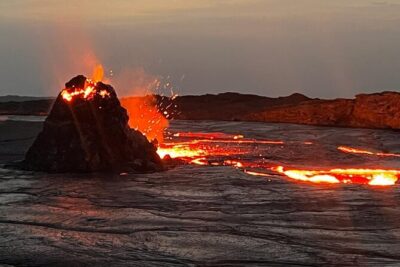
3 Day Danakil Depression Ertale and Dallol Tours
Read our review →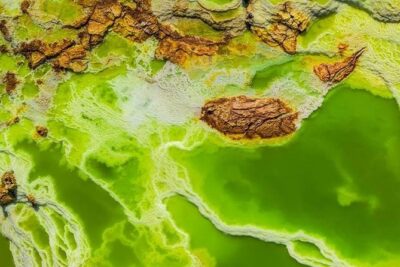
5 DAYS Lalibela, Axum, Tigray churches and Danakil
Read our review →
6 Days tour Package (Simien Mountains, Lalibela, and Danakil Depression)
Read our review →
Lalibela, Axum, Danakil and Omo Valley 8 DAYS
Read our review →
Browse the lists this tour appears in