
Reviewed · OMO VALLEY TRIBAL TOURS
Omo Valley 5 Days
The heart of this five-day trip is the chance to see several distinct communities in southern Ethiopia, from Karo body painting and Hamer dress to Mursi lip plates and Dorze weaving. You move through dry plains, mountain roads, small towns, and remote villages rather than staying in one tourist base.
I like the mix of cultural visits and wildlife. The route includes village access, local guides and scouts where needed, and a boat ride on Lake Chamo for crocodiles and possible hippos. I also like the small maximum group size of 12, which matters on rough roads and during village visits.
The main caution is organization. One past booking involving this company was described as chaotic, while several others praised the route, service, and local guiding. Domestic flights are also not included, even though the itinerary begins and ends with flights between Addis Ababa and Arba Minch.
Key points to know before booking
- Four distinct cultural encounters: Visit Karo, Hamer, Mursi, and Dorze communities, each known for different customs, clothing, homes, or crafts.
- Remote-road adventure: Much of the route uses a 4WD Toyota Land Cruiser, with driving days listed at about seven hours.
- Lake Chamo boat trip included: Look for large crocodiles and possibly hippos before your return flight.
- Small group limit: The tour accepts a maximum of 12 people, which should make vehicle travel and village visits more manageable.
- Flights cost extra: International and domestic flights are excluded, so confirm the Addis to Arba Minch and Arba Minch to Addis arrangements before paying.
- Guide details matter: A local guide named Euale has been singled out for praise. Ask if he will lead your departure.
Why the Omo Valley route is worth the long drives
The Omo Valley is not a quick sightseeing stop. It takes time to reach the villages, and the roads can make even a short distance feel like a full day. That is part of the point. The route takes you away from Addis Ababa and into southern Ethiopia, where village life, local materials, dress, farming, weaving, and ceremonies remain central to daily routines.
You should expect a busy five days, with early starts and long stretches in the vehicle. The reward is variety. In one trip, you can see body painting among the Karo, red-dyed hair and leather clothing among the Hamer, Mursi traditions near Mago National Park, and the tall beehive-shaped homes of the Dorze.
The route also combines culture with scenery. You pass dry sandy plains, rolling green hills, mountain roads, and the fertile area around Arba Minch. I like that the final day does not simply send you to the airport. It adds Chencha and Lake Chamo before your flight back to Addis.
More Omo Valley Tribal Tours in Addis Ababa
- 6 Days Omo Valley Tribes Tours From Addis Ababa
★ 5.0 · 33 reviews - 3 Days Omo Valley Tour
★ 5.0 · 24 reviews - Danakil Depression, Lalibela, Omo Valley and Simien Mountains
★ 5.0 · 23 reviews
Day 1: From Addis Ababa to Arba Minch and Konso

The journey begins with a flight from Addis Ababa to Arba Minch, followed by a road transfer to Konso. The flight saves considerable time compared with trying to travel the entire distance by road, but remember that this flight is not part of the listed tour price.
Konso is used as an overnight base and as a link between the northern part of the route and the Omo Valley. Accommodation is included on a bed-and-breakfast basis. The exact property is not specified in the tour details, although one past booking described Konso Hotel positively.
This first day is mainly about getting into position. Do not think of it as a relaxed arrival day with a long afternoon for sightseeing. Depending on flight timing and road conditions, the transfer to Konso may take much of the day.
Day 2: Karo body painting and a Hamer village

The second day reaches the Karo people at Kolcho village, set beside the Omo River. The Karo are especially known for traditional body painting, which can include striking patterns made for personal decoration and community occasions.
This is one of the strongest cultural parts of the route, but it requires the right attitude. You are entering living communities, not walking through a staged museum. Listen to your guide, follow instructions about photography, and treat village payments and elder payments as part of the visit rather than as an annoyance. Those payments are included in the tour cost.
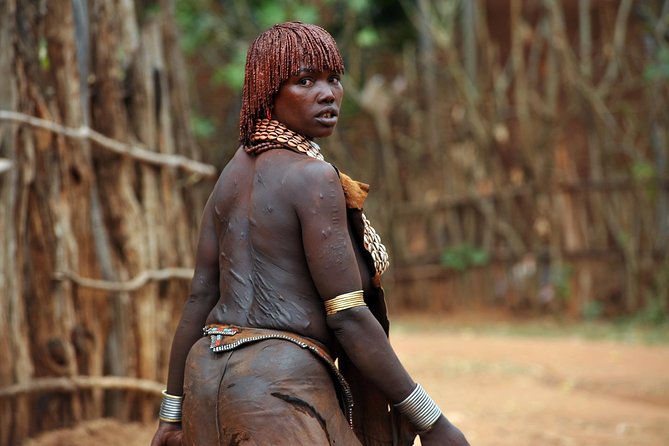
Later, the route visits a Hamer village near the accommodation. Hamer women are known for red-dyed, plaited hair and leather skirts decorated with shells. The homes are made from local mud, wood, and thatch, and a small village may contain roughly 10 to 15 huts belonging to an extended family group.
That family layout gives you a useful way to understand the visit. The village is not simply a collection of huts for display. Daily life takes place around the homes, and the buildings, clothing, and decoration all reflect local customs and available materials.
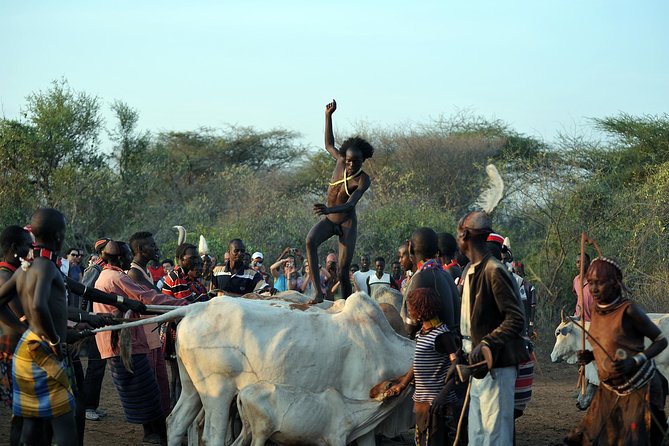
A past five-day family trip also included a Hamer bull-jumping ceremony. The schedule provided for this tour does not guarantee that event, so you should not book expecting to see it. If the timing happens to match a ceremony, ask your guide about the proper way to attend.
The day is listed at about seven hours. In practice, the time includes driving, stops, and village visits. Bring water, sun protection, and patience. The southern route can be hot and dusty, and the vehicle time is a major part of the experience.
Day 3: Key Afar, Jinka, and a small local museum
The road continues across sandy plains toward Key Afar, then into more fertile rolling hills on the way to Jinka. This change in scenery helps explain why the Omo Valley is not one single type of place. Conditions shift quickly between dry open ground and greener upland areas.
Jinka adds a town stop to the village visits. You visit a small museum that offers background on local customs. I consider this important because the village encounters make more sense when you have some basic context first. Without it, you may remember clothing or decoration but miss the meaning behind it.
There is also an optional walk through town to meet local people along the way before continuing to the accommodation. The word optional matters. If you are tired after the drive, you can preserve your energy for the next day. If you want a closer look at everyday town life, the walk gives you a change from the vehicle and the more formal village stops.
This is another approximately seven-hour day. The schedule labels this stop as Dasenech Village, but the written description focuses on the drive to Key Afar and Jinka. Ask for the final day-by-day route before departure so you know exactly which community visits are planned.
Same country, a very different kind of day:
- Full Day Tour of Addis Ababa with Hotel Pickup and Drop-off
★ 5.0 · 430 reviews - Taste of Ethiopia
★ 5.0 · 406 reviews - Day Trip From Addis Ababa See Historical Monastery,Stunning Nature,Animals,Birds
★ 5.0 · 303 reviews - Addis Ababa: Debre Libanos, Blue Nile Gorge, and Cave Tour
★ 4.5 · 256 reviews
Day 4: Mago National Park and a Mursi village
An early start takes you across mountain roads into Mago National Park. The drive is described as one of the most scenic parts of the trip, with a shift into drier country where you might see dik-dik and lesser kudu.
The wildlife element is a bonus, not the main reason to choose this tour. No sightings are guaranteed, and the vehicle is primarily being used to reach the Mursi area. Still, the chance to spot small antelope adds another layer to a day already focused on scenery and culture.
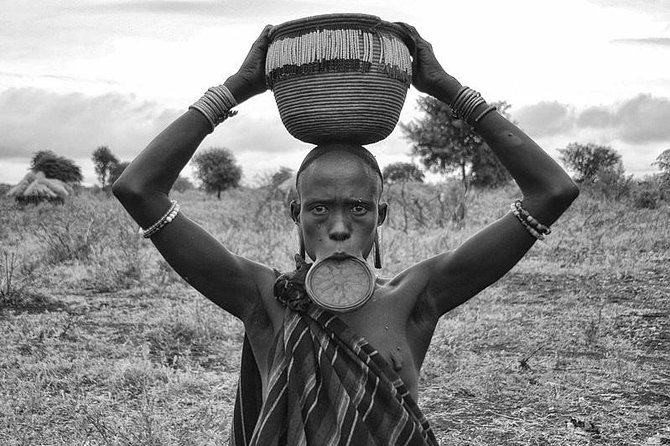
The main visit is to a Mursi village. Mursi women are widely associated with decorated clay plates worn in the lower lip. The custom begins in adolescence, and some older plates can reach the size of a bread-and-butter plate. The practice is changing, and some older women now have loose skin without wearing a plate.
This is a place where your manner matters. Avoid treating people as photographic objects. Ask before taking pictures, follow local instructions, and let your guide explain what is appropriate. The tour includes village and elder payments, but that does not replace courtesy.
After the Mursi visit, you drive to Konso. The return to Konso makes this a long day, again listed at about seven hours. You should be comfortable with rough-road travel and a schedule that may leave little free time.
Day 5: Dorze weaving and Lake Chamo crocodiles
The final day begins early with a drive toward Arba Minch. The route crosses dry plains before reaching the fertile valley known for ensete, often called false banana. The plant is important in local food and daily life, and the tour includes a demonstration of its many uses.
From Arba Minch, you continue into the Chencha mountains to visit a Dorze village. Dorze homes are tall and beehive-shaped, with thatched roofs that give them a distinctive profile. You can enter a home, see weaving, and learn about the production of wool and cotton textiles.
This is also the best shopping opportunity on the route. The tour specifically notes Dorze weaving, so allow room in your budget if you hope to buy textiles. Personal purchases are not included, and you should confirm prices and payment arrangements before buying.
After a picnic lunch, you drive to Lake Chamo for the included boat trip. The goal is to find very large crocodiles and possibly hippos. This gives the five-day route a welcome change of pace: after several days of road travel and village visits, you finish on the water.
The boat ride is included, as are entrance fees and the services listed in the program. Afterward, you return to Arba Minch Airport for the flight to Addis Ababa. Again, the domestic flight itself is excluded, so make sure your ticket schedule allows enough time for the road transfer and boat trip.
What the $1,153.85 price really covers

At $1,153.85 per person, this is not a low-cost independent trip. The value depends on how much help you want with transport, local access, guides, accommodation, and planning in a remote part of Ethiopia.
The price includes accommodation, transfers, 4WD ground transport, local guides, scouts where needed, the Lake Chamo boat ride, entrance fees, village and elder payments, and breakfast for four mornings. Those inclusions remove several costs that can be difficult to arrange separately.
The price does not include international or domestic flights. It also excludes alcoholic drinks, camera or videography fees where required, laundry, internet, telephone, fax, personal items, and services not listed. The most important point is the domestic airfare. Since the tour uses flights at the beginning and end, you need to budget for both.
The small maximum group of 12 improves the value. A private 4WD vehicle, local guiding, and remote-road logistics would cost more if arranged alone. On the other hand, you should confirm whether the departure is shared and how many people will actually be in your vehicle. One past booking expected a tailored trip but found the arrangement operated more like a group tour, which is a useful warning to clarify this before you go.
Guides, communication, and trip organization

A local guide named Euale has received particularly strong praise for work in the Omo Valley. Ask whether he is available for your dates. The company also provides scouts where needed, which is useful for access to remote areas and for handling village protocols.
Communication deserves attention before departure. Confirm the flight times, overnight towns, hotel names, planned village visits, group size, and whether camera fees apply at any stop. This is not needless fussiness. The route covers long distances, and a small change in timing can affect what you see.
The company has also received praise for its suggested route, family service, and smooth handling of a four-day Omo trip. At the same time, one booking was criticized for poor communication and disorganized handling. I would treat that mixed record as a reason to get the full plan in writing, not as an automatic reason to reject the tour.
Who should book this Omo Valley trip?
I would recommend it to you if you want a guided introduction to southern Ethiopia and prefer having transport and local access arranged for you. It suits people who can handle early mornings, long vehicle rides, basic accommodation, and changing road conditions.
Families can consider it too. A past trip included children aged 14 and 8, though the long drives and heat may test younger children. You should decide based on your family’s comfort with extended road days rather than the cultural stops alone.
This is less suitable if you want a slow holiday with plenty of free time. The itinerary is tightly packed, and the seven-hour days leave limited room for rest. It is also not the right choice if you expect a fully private, custom-built itinerary without first confirming that arrangement.
Most people can participate, and pickup is offered. The activity is near public transportation, although the main route itself depends heavily on the supplied 4WD vehicle. Good weather is required. If poor weather cancels the trip, you are offered another date or a full refund. Cancellation at least three full days before the start receives a full refund; cancellations within three days are not refunded.
Should you book it?
Book this tour if the chance to meet Karo, Hamer, Mursi, and Dorze communities matters more to you than comfort and free time. The route offers a lot in five days: remote villages, mountain scenery, local crafts, Mago National Park, and a Lake Chamo boat trip.
Before paying, confirm the domestic flights, group size, exact accommodation, guide assignment, camera fees, and whether any ceremony such as Hamer bull jumping is actually scheduled. If the answers are clear, the tour offers a practical way to reach a difficult region. If communication remains vague, you may want a different operator or a fully private arrangement.
FAQ
How long does the Omo Valley tour last?
The experience lasts approximately five days. It begins with a flight from Addis Ababa to Arba Minch and ends with a flight from Arba Minch back to Addis Ababa.
Are the domestic flights included?
No. International and domestic flights are excluded from the tour price. You need to arrange and pay for the Addis Ababa to Arba Minch and Arba Minch to Addis Ababa flights.
What type of vehicle is used?
Ground transport is provided in a 4WD Toyota Land Cruiser. Several driving days are listed at approximately seven hours.
Is the Lake Chamo boat trip included?
Yes. The boat trip on Lake Chamo is included, along with the search for large crocodiles and possible hippos.
How many people can join the tour?
The maximum group size is 12 people.
What happens if bad weather cancels the tour?
The experience requires good weather. If it is canceled because of poor weather, you are offered a different date or a full refund. A full refund is also available if you cancel at least three full days before the start time.
More 5-Day Experiences in Addis Ababa
- 5 DAYS Lalibela, Axum, Tigray churches and Danakil
★ 5.0 · 34 reviews - Danakil Depression and Lalibela 5 Days Tours
★ 5.0 · 28 reviews - 5 Days North Ethiopia Tours
★ 5.0 · 23 reviews - 5 DAYS Axum, Lalibela, Tigray churches and Danakil
★ 4.5 · 22 reviews
Just added around Addis Ababa
- Yod Abyssinia Cultural Night: Dinner, Music, and Dance★ 5.0 · 7 reviews
- Stunning Views Wonchi Crater Lake a Private Day Trip★ 5.0 · 3 reviews
- Locally crafted beer and wine tasting and nightlife in Addis tour★ 5.0 · 6 reviews
- Two days Lake Wenchi and Menagesha Forest★ 5.0 · 3 reviews
- 3-Day Cultural Tour in South Omo Valley★ 5.0 · 4 reviews
- Addis Ababa City Tours Full-Day Tours★ 5.0 · 5 reviews
- Tribes of the Ethiopian Omo Valley – 9 Day Tour★ 5.0 · 5 reviews
- South Omo Valley Tribes 8 Days Tour Package★ 5.0 · 4 reviews
Omo Valley Tribal Tours, compared.

6 Days Omo Valley Tribes Tours From Addis Ababa
Read our review →
Lalibela, Axum, Danakil and Omo Valley 8 DAYS
Read our review →

3 days around Arbaminch and Konso Adventure Tours Life Time
Read our review →Danakil Depression, Lalibela, Omo Valley and Simien Mountains
Read our review →


Browse the lists this tour appears in