
Reviewed · ROCK HEWN CHURCH TOURS
Full Day Tour To The 11 Rock Hewn Churches Of Lalibela
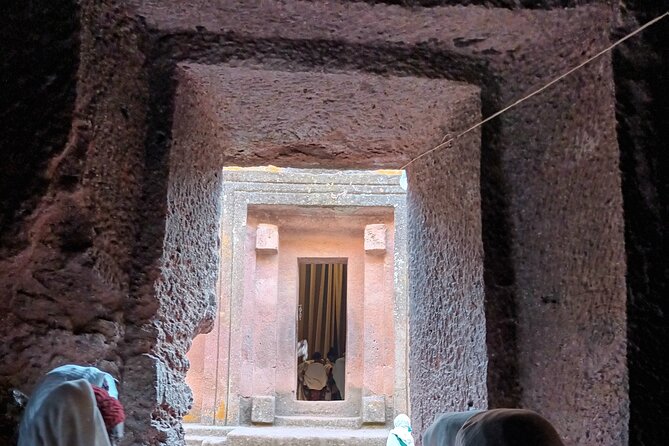
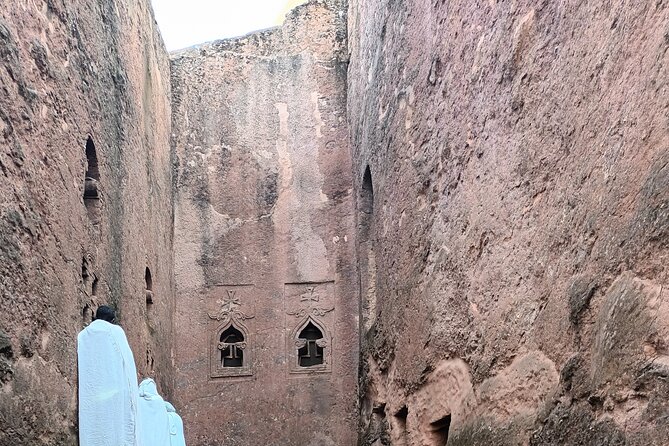
Lalibela’s churches are not built on the ground. They were cut down into the rock, one careful stroke at a time, leaving courtyards, tunnels, pillars, and sanctuaries below the surface. This full-day tour takes you through all 11 churches, including the famous Bet Giyorgis, with a guide to explain what you are seeing rather than leaving you to puzzle it out alone.
I like the airport pickup and city transfers, which remove some of the usual confusion after arriving in Lalibela. I also like the visit to a local family home and coffee ceremony, since these bring you closer to daily Ethiopian life. The main catch is cost: the tour is $82.05 per person, but the $100 entrance fee is extra, and lunch and accommodation are not listed as included.
Key points to know before booking
- All 11 churches in one day: The route covers five churches in the northwestern group, five in the southeastern group, and Bet Giyorgis.
- A useful midday pause: The first group closes from noon to 2 pm, giving you time for lunch before the afternoon visits.
- Guide Abeje may be your host: He is associated with warm, thoughtful guiding, strong English, and a clear grasp of Lalibela’s past and religious meaning.
- Local contact beyond the churches: A family visit and Ethiopian coffee ceremony are part of the experience.
- Small maximum group: No more than 12 people are scheduled, so you should not be lost in a large coach crowd.
- Budget for the admission fee: The $100 church entrance charge is not part of the tour price.
Why Lalibela’s churches deserve a full day
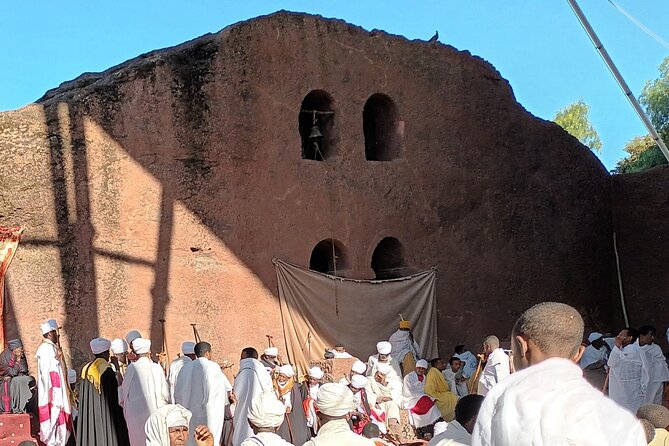
The main appeal here is scale. You are not visiting one church and moving on. You are walking through a connected set of sacred places, each cut from living rock and linked by paths, courtyards, and passages.
The churches belong to two main groups, followed by Bet Giyorgis. Seeing them together helps you understand Lalibela as a planned religious center rather than a collection of unrelated monuments. A guide can point out how the churches differ in shape, position, and decoration, while also explaining the devotion behind their construction.
You should expect a physically active day. The tour lasts about 10 hours, and the church areas involve walking between sites. Specific accessibility details are not provided, so ask the operator if you have mobility concerns or need a slower pace.
The religious setting also matters. These are active holy places, not simply old buildings. Dress and behavior should be respectful, and you may find that the atmosphere changes depending on worship, prayer, or local ceremonies taking place during your visit.
More Rock Hewn Church Tours in Lalibela
- Visiting Lalibela churches
★ 5.0 · 40 reviews - Visit the rock hewn churches
★ 5.0 · 39 reviews - Lalibela churches , church museum & Yemrehan kirstose ( cave church)
★ 5.0 · 19 reviews
Arrival in Lalibela and the shared transfer
The day begins with arrival at Lalibela airport, where a guide meets you and takes you to your hotel in a shared car. This is a practical start, especially if you are arriving without local contacts or want someone to help you get oriented quickly.
After check-in, the church visit begins. The published meeting point is Highland Ethiopia Tours in Shimberema, Lalibela, and the activity ends back at that meeting point. Since airport transfers are included but the listed start and end point is in town, confirm the exact pickup plan before arrival, especially if your hotel is outside the central area.
The shared vehicle is worth noting. It can keep the price lower than a private car, but you may have less control over the timing. The group limit is 12 people, which is still fairly small for a major heritage site, but it is not the same as having a private guide.
The northwestern cluster before lunch
The first church circuit includes five churches in Lalibela’s northwestern cluster. This is a strong opening because you see several sites before lunch, building a sense of how the town’s sacred center fits together.
The churches are approached as a group, so the value comes from comparison. One may feel enclosed and shadowed, while another opens into a broader court or reveals more carved detail. You will spend much of the time looking down into excavated spaces, moving along rock-cut paths, and entering interiors where the stone itself forms walls, columns, and doorways.
This is where a good guide matters most. The physical work of cutting a church from rock is easy to admire, but the larger questions are harder: why the churches were made in this form, how they functioned as places of worship, and how their design connects to Lalibela’s religious identity.
Abeje is the guide name most closely associated with this experience. He is described as courteous, caring, and comfortable speaking English, with the ability to discuss both the churches and wider Ethiopian history. If he is leading your visit, ask him to explain the links between the church groups, local traditions, and the town’s spiritual importance.
The morning schedule is not a race from doorway to doorway. Still, five churches before noon means the pace may feel full, particularly if you stop often for photographs or detailed questions. Tell your guide early if you would rather spend longer inside fewer churches, although the plan is designed to cover the full set.
The noon closure and lunch break
From noon until 2 pm, the northwestern churches close for lunch. This is not dead time. The tour uses the pause to take you to a restaurant in town.
Lunch is not clearly included in the price, so budget for it separately. That small point can affect the real cost of the day, especially because the entrance fee already adds a significant charge.
The break should also help you manage the long schedule. Ten hours around historic sites can become tiring, and a proper pause gives you time to eat, sit down, and reset before the afternoon circuit. If you are sensitive to heat or prefer a slower day, use this time as a genuine rest rather than adding extra sightseeing.
The fixed closure is also a useful reminder that Lalibela is a living religious center. The schedule follows local practice, rather than treating the churches as a museum open purely for visitor convenience.
Same country, a very different kind of day:
- Tour 11 monolithic rock churches & museum in Lalibela & cave church with mummies
★ 5.0 · 37 reviews - Lalibela, Axum, Danakil and Omo Valley 8 DAYS
★ 5.0 · 29 reviews - Rock Churches of Lalibela Guided Tour
★ 5.0 · 27 reviews - Day Trip to Rock Hewn Churches of Lalibela
★ 5.0 · 16 reviews
Five churches in the southeastern cluster
After lunch, the tour continues with the southeastern cluster, which contains five more churches. This second group gives you another chance to compare different forms of rock-cut construction and religious space.
By this point, you will have a better eye for the details. You may notice how a church is reached, where its entrances sit, how the surrounding rock has been shaped, and how the interior feels compared with the morning sites. The guide’s explanations can turn those differences into a coherent story.
The afternoon timing has both benefits and limits. You have already seen five churches, so the second circuit may feel easier to understand. On the other hand, fatigue can set in. Comfortable walking shoes, water, and modest clothing are sensible choices, though the tour information does not specify a dress code or equipment list.
Because the churches are sacred places, the pace may sometimes depend on local worship. The available details do not promise private access, special entry, or a particular religious ceremony. You should book this for the churches and guiding first, treating any extra moment of local activity as a bonus rather than a guarantee.
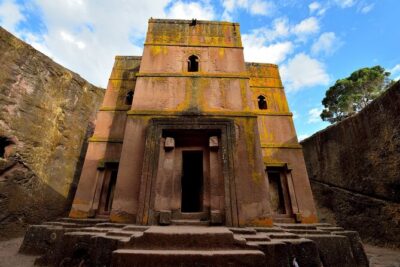
Bet Giyorgis, Lalibela’s famous final stop
The last church is Bet Giyorgis, built as a tribute to Saint George. It is often the image people carry in their minds before arriving in Lalibela, and placing it at the end gives the day a natural finish.
Its location and form make it especially memorable. Rather than simply rising above the town, the church is cut into the rock, creating a striking relationship between the building and the earth around it. The final visit lets you look back on the day’s other churches with a better understanding of the engineering and faith involved.
This is also the point where the tour’s full-day design pays off. A short visit might give you one famous photograph. This route gives you the wider setting first, then brings you to Bet Giyorgis after you have seen the range of Lalibela’s church groups.
Allow yourself time to look carefully rather than rushing toward the end. The tour must fit all 11 churches into one day, so your guide will manage the clock, but Bet Giyorgis is worth more than a quick stop if the schedule allows.
A family visit and the Ethiopian coffee ceremony
The most personal part of the day comes outside the church compounds. You are invited to visit a local family house and take part in a coffee ceremony.
This is valuable because it shifts your attention from monumental stonework to ordinary Ethiopian hospitality. The ceremony gives you a chance to sit, talk, and see a social custom in a local setting rather than only moving between major sights.
The details provided do not specify how long the visit lasts or whether the family speaks English. Your guide can help with conversation and explain what is happening. If you enjoy cultural contact, this may be one of the most rewarding parts of the experience, since it adds a human scale to a day otherwise focused on grand religious buildings.
It is also a good place to keep your expectations sensible. This is a hosted visit, not a cooking class or a formal village tour. The appeal is the welcome and the chance to share coffee in a family home.
How good is the value at $82.05?
At $82.05 per person, the tour offers reasonable value if you want transport, a guide, and a carefully arranged day. Airport transfer, city transfers, guiding in English and Amharic, the family visit, and coffee ceremony are included.
The entrance fee changes the calculation. You must add $100 for admission, bringing the known cost to $182.05 before lunch, accommodation, or any other personal spending. That is a major extra, so compare the total rather than judging the tour by its advertised base price alone.
The value is strongest for solo visitors and first-time visitors to Lalibela. A guide and shared transfers can be cheaper and simpler than arranging separate transport and explanations yourself. If you already have a car, a local contact, or a multi-day private guide, the package may be less compelling.
The group cap of 12 also helps. You are unlikely to be part of a very large group, though the tour may still feel less flexible than a private arrangement. Ask about the final group size if personal attention is important to you.
What the guide can add to your day
The guide is the difference between seeing stone structures and understanding a sacred town. Abeje is associated with clear English, patience, kindness, and wide knowledge of Lalibela and Ethiopia.
That combination matters in a place where visual details do not explain themselves. You can ask about the purpose of a passage, the meaning of a carved feature, or how the church groups relate to one another. A guide who welcomes questions can also adjust the conversation to your interests, whether those are architecture, faith, local life, or Ethiopian culture.
Abeje is also described as friendly to solo visitors. If you are arriving alone, the airport greeting and city transfers can make the first hours less awkward. The personal connection may continue during the family visit and coffee ceremony, where a local guide can help you participate with proper respect.
No guide can remove every limit of a 10-hour itinerary. If you want long quiet periods at each church, a private two-day plan may suit you better. For a single day, however, the guide’s role is central to making the schedule useful rather than merely busy.
Who should book this Lalibela tour?
I would recommend it to you if you have one full day in Lalibela and want to see all 11 churches with local context. It is particularly suitable if you need airport pickup, prefer a planned route, or are traveling alone.
It also suits people who want more than monuments. The family house and coffee ceremony add a local encounter, while the guide can discuss the town and Ethiopia beyond the church walls.
You may want another option if you dislike fixed schedules, do not want a shared car, or hope to spend a very long time at each individual church. The entrance fee is also a serious consideration. Check the total budget before booking, not only the $82.05 tour price.
The free cancellation policy gives you some flexibility: you can receive a full refund if you cancel at least 24 hours before the start time. Changes or cancellations within 24 hours are not accepted for a refund.
Should you book it?
Book this tour if your priority is efficient coverage of all 11 Lalibela churches, airport help, and a guide who can make the architecture and religious setting easier to understand. The local family visit and coffee ceremony give the day more warmth than a simple monument checklist.
Think twice if the additional $100 admission fee makes the total too high, or if you want a slow private visit spread over two days. For a first visit with limited time, though, this is a practical and culturally thoughtful way to see Lalibela, provided you confirm the pickup details and budget separately for lunch and admission.
FAQ
How long does the tour last?
The tour lasts approximately 10 hours.
How many churches are included?
The route covers 11 rock-hewn churches: five in the northwestern cluster, five in the southeastern cluster, and Bet Giyorgis.
Is the church entrance fee included?
No. The entrance fee is listed as $100 USD and must be paid separately.
Are airport transfers included?
Yes. Airport transfers and city transfers are included. The arrival transfer uses a shared car to take you to your hotel after the guide meets you at the airport.
Is lunch included?
Lunch is not listed among the included services. The schedule takes you to a restaurant during the church closure from noon to 2 pm, so plan to pay for your meal separately.
What language does the guide speak?
The tour includes an English and Amharic-speaking local guide. Abeje is the guide associated with the experience in the available information.
More Full-Day in Lalibela
- Lalibela Full Day Guided Tours With Hotel & Airport Pickup
★ 5.0 · 8 reviews - Full Day lalībela church’s tour
★ 3.8 · 6 reviews - Lalibela: Churches Full-Day Private Tour w/Coffee Ceremony
★ 4.7 · 5 reviews - Full Day Tour in Lalibela
★ 5.0 · 3 reviews
Just added around Lalibela
- Trekking in Ethiopia’s Lalibela Wollo Highland 4 Days / 3 Nights★ 5.0 · 6 reviews
- Lalibela Backpacker tours★ 5.0 · 6 reviews
- The Rock-Hewn Churches of Lalibela: 3 Days / 2 Nights★ 5.0 · 6 reviews
- Lalibela churches Guided Tour★ 5.0 · 6 reviews
- Lalibela 2-Day Eco Trekking Tour★ 5.0 · 3 reviews
- Lasta Mountains: Highland Eco Trekking Tour in Lalibela★ 5.0 · 4 reviews
- Lalibela Churches Day Tour★ 5.0 · 7 reviews
- Day Hike Around Lalibela★ 5.0 · 5 reviews
Rock Hewn Church Tours, compared.
Ethiopia Tigray Tours: Guided tour of Tigray rock hewn churches
Read our review →
Lalibela churches , church museum & Yemrehan kirstose ( cave church)
Read our review →
2 Days 1 night tour to Lalibela Rock-hewn churches
Read our review →
3-days Scheduled Lalibela Churches & Abune Yosef Trekking
Read our review →
Browse the lists this tour appears in