

Reviewed · OMO VALLEY TRIBAL TOURS
3 Days Omo Valley Tours From Jinka
The Omo Valley is one of Ethiopia’s most remote corners, where a rough road can lead from Mago National Park to a Mursi village, then on to markets and communities shaped by the Great Rift Valley. This three-day trip gives you a practical way to see several distinct cultures without arranging every vehicle, hotel, entrance fee, and local scout yourself.
I like two things right away: the route covers a lot of southern Ethiopia in a short time, and the small-group limit of 15 people keeps the experience more manageable than a large coach tour. I also like that the tour includes a driver, English-speaking guide, accommodation, breakfasts, and entrance fees. The main drawback is the pace. Long drives, early starts, rough roads, and several cultural visits leave little room for an unplanned pause.
Key points before you book

- Mursi visit in Mago National Park: See the distinctive architecture, clothing, and daily life of one of the best-known peoples of the lower Omo region.
- Several communities in three days: The route includes Mursi, Dassanech, Hamer, Tsemay, Ari, and Kara cultural areas, though the exact time at each stop can vary.
- Dimeka Market adds context: This is not just a shopping stop. It is a meeting place for people from several nearby communities.
- Transport and park fees are covered: You still pay separately for domestic flights, lunches, dinners, drinks, gratuities, and personal purchases.
- The trip finishes at the airport: The stated route begins in Jinka and ends with transfer for a flight to Addis Ababa.
- Expect a basic, active trip: You need moderate fitness, patience with road travel, and clothing suited to changing weather and formal dress expectations.
Why this Omo Valley route is worth your time

The lower Omo Valley is not a quick city excursion. It is a remote region of dry savannah, river country, scattered settlements, and long stretches of road. The value of this tour is that it links places that would be awkward to reach independently, especially if you have only a few days.
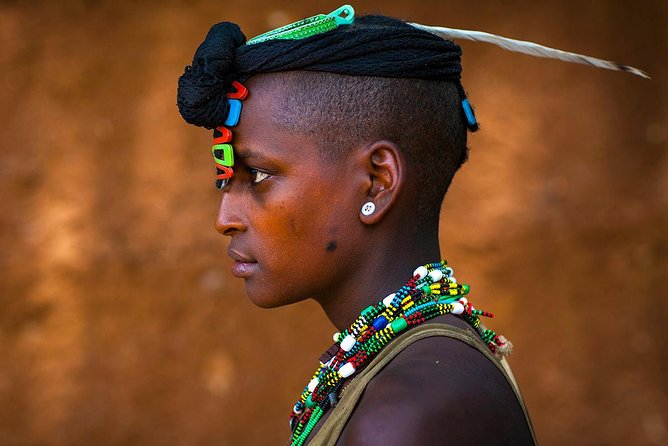
You are not simply checking off villages. The route gives you a chance to compare how different communities live in the same broad region. Mursi traditions, Dassanech life near the Omo River and Lake Turkana, Hamer market culture, Tsemay villages, and Ari farming communities each add a different piece.
The schedule is also useful for a first visit because it combines nature and culture. Mago National Park supplies the setting, while the village and market stops put people and local trade at the center of the trip. The guide matters here. You will get more from each visit if the guide explains what you are seeing instead of treating the stops as photo opportunities.
A previous trip with the same operator identified Tesfaye as an engaging guide who explained local tribal history clearly. Aman, also referred to as Amanuel, is described as responsive when arranging complicated travel and able to handle last-minute transport problems. Those details suggest an operator used to tailoring Ethiopia trips, but you should still confirm who your assigned guide and driver will be before departure.
More Omo Valley Tribal Tours in Addis Ababa
- 6 Days Omo Valley Tribes Tours From Addis Ababa
★ 5.0 · 33 reviews - 3 Days Omo Valley Tour
★ 5.0 · 24 reviews - Danakil Depression, Lalibela, Omo Valley and Simien Mountains
★ 5.0 · 23 reviews
Day 1: Mago National Park and the Mursi village
After arriving at Jinka Airport, you drive toward Mago National Park. The stated sightseeing time is about three hours, including the visit and admission. This is your first close look at the dry southern scenery, and the park gives the cultural visit a strong sense of place.
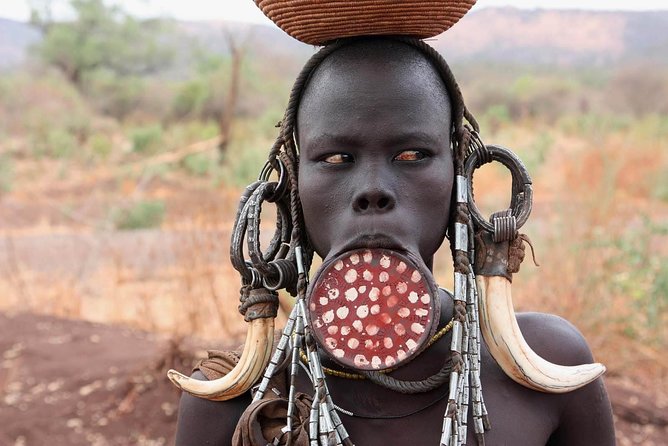
The Mursi are widely recognized for their traditional body adornment, including large lower-lip and ear ornaments worn by some women. Their homes are described as low huts made from straw and leaves. These details are memorable, but they deserve respectful attention. You are entering a living community, not an open-air museum.
Your guide and local scout should help with introductions and explain where photography is appropriate. Ask before taking pictures, give people space, and remember that a respectful visit is more valuable than collecting a large number of images. The supplied tour details include entrance and scout fees, which is important because local access often depends on this arrangement.
After returning to Jinka, the road continues to Turmi for the night. The drive makes Day 1 a full day, even though the listed sightseeing time is not especially long. You spend the night at Turmi Lodge or a similar property. The word similar matters: the exact lodging may change, so ask for the confirmed hotel before you set expectations.
The Hamer area is also part of the Day 1 plan. The description places a later visit to Hamer communities after the drive to Turmi, but it does not give a separate duration or exact activity. Treat this as a flexible cultural stop rather than a guaranteed formal performance or ceremony. You may find the most useful part is simply seeing village life and learning from your guide.
Day 2: Omorate, Dassanech country, and Dimeka Market
Day 2 begins with an early breakfast. That early start is necessary because the route links Turmi, Omorate, Dimeka, and Jinka in one day. The listed excursion time is about four hours for the Dassanech portion, followed by a market stop of about 55 minutes.
Omorate takes you toward the Dassanech people, described here as the people of the Delta. Their communities are located near the northern shore of Lake Turkana, in the far southwestern part of Ethiopia. This setting helps explain why river access, dry-country travel, and local trade are so important to life in the area.
The Dassanech visit is one of the strongest reasons to choose this itinerary. You see a part of the Omo region that feels different from the Mursi area, both in location and culture. The journey itself is part of the experience, but it can also be tiring. Keep water with you, protect yourself from the sun, and expect the road to take time.
The itinerary then returns toward Jinka, stopping at Dimeka Market. Dimeka is associated with Hamer, Tsemay, Ari, and Kara people. A market stop gives you a broader view than a single village visit because people gather for trade, conversation, and practical errands.
You should not expect Dimeka to feel like a polished tourist attraction. Its appeal is precisely that it is a working market. You might see local goods, clothing, food, and people arriving from surrounding communities, but the details will depend on the day and season. The available schedule allows about 55 minutes, so you will need to stay aware of the meeting time.
The return route includes another stop in Tsemay villages before continuing to Jinka. This creates a long day on the road, yet it also gives you more than one type of cultural encounter. The overnight stay is listed as Jinka Nassa or a similar property.
Day 2 is probably the most demanding day physically. You cover considerable ground, start early, and stop several times. If you prefer slow travel with long meals and extended time in one village, this schedule may feel rushed. If your priority is seeing a wide range of the lower Omo region in three days, the route makes good use of limited time.
Day 3: Ari communities and the South Omo Research Centre Museum

After breakfast, the final day focuses on Jinka and the Ari people. The itinerary gives about one hour to the South Omo Research Centre Museum, though the wording places the museum stop within the wider Day 3 movement rather than providing a precise timetable.
A museum visit can be useful after two days of road travel and village stops. It gives you a chance to place the region’s many communities within a broader cultural and geographic setting. The museum is especially helpful if you want more explanation than a quick roadside introduction can provide.
After lunch, you drive to Ari communities. The Ari are described as the largest population in the lower Omo Valley. The itinerary highlights women’s skirts made from enset, a banana-like plant, and Ari skill in pottery.
This stop offers a different view of local life. Enset is an important Ethiopian crop in many areas, and here it also appears in clothing. Pottery provides another practical link between craft and daily life. Rather than focusing only on unusual visual details, listen for how your guide explains food production, household work, and the role of craft in the community.
The tour then transfers you to Jinka Airport for the flight to Addis Ababa. The program also includes an evening folkloric dinner, with several national dishes, dances representing various Ethiopian ethnic groups, and a traditional coffee ceremony. The wording says the dinner takes place in the evening and that you are later transferred to the airport, so confirm the exact timing against your flight schedule.
This is one of the itinerary’s unclear points. The domestic flight is not included, and the final airport transfer must fit your departure time. If your flight leaves before the evening dinner, you may not be able to attend the full program. Ask the operator to confirm whether the dinner is before or after your flight, and whether it is part of this three-day schedule or a separate Addis Ababa arrangement.
Same country, a very different kind of day:
- Full Day Tour of Addis Ababa with Hotel Pickup and Drop-off
★ 5.0 · 430 reviews - Taste of Ethiopia
★ 5.0 · 406 reviews - Day Trip From Addis Ababa See Historical Monastery,Stunning Nature,Animals,Birds
★ 5.0 · 303 reviews - Addis Ababa: Debre Libanos, Blue Nile Gorge, and Cave Tour
★ 4.5 · 256 reviews
What the $845 price really covers
At $845 per person, this is not a cheap add-on. The price makes more sense when you consider the distance, the private road transport, the driver, the guide, accommodation, park access, and local scout fees. The remote setting means transport is not a minor detail. A reliable vehicle and someone who knows the route are central to the trip.
Two nights of accommodation and two breakfasts are included. The included meals are limited, however. Lunches and dinners are excluded, aside from the separately described folkloric dinner arrangement. Alcohol, gratuities, and personal expenses are also outside the price.
Domestic flights are specifically excluded, so budget for the flight between Jinka and Addis Ababa. You should also allow money for meals during long driving days. Since no lunch allowance is included, ask the operator how and where meal stops are handled.
For a solo visitor, the cost may buy welcome simplicity. You do not need to find separate transport to Mago, Omorate, Dimeka, and the Ari area. You also avoid arranging park entry and local scout access on your own.
For two or more people, ask about the advertised group discounts. The final price can change depending on room sharing and group size. A child rate is available only when the child shares with two paying adults, and the minimum age is 11.
Transport, pace, and group size
The tour uses a car with a professional driver, and the listed experience has a maximum of 15 people. That is small enough to make communication easier and reduce the feeling of being part of a large procession. Still, 15 people can be a sizable group at a village or market, so ask whether your departure is expected to be a smaller private group.
The roads and distances are the practical challenge. The itinerary includes several drives between Jinka, Mago, Turmi, Omorate, Dimeka, and Ari communities. The listed activity times of three hours, four hours, 55 minutes, and one hour do not represent the full amount of time spent traveling. You should treat the schedule as approximate.
The operator has arranged four-wheel-drive and off-road travel on other Ethiopia itineraries, but the supplied details for this exact experience only promise a car with a professional driver. Confirm the vehicle type if road conditions are a concern.
The tour operates in all weather. Pack clothing that can handle dust, sun, and changing conditions. The stated dress code is formal, which is unusual for a rough rural route, so ask the operator what formal means in practice. At minimum, choose modest clothing that respects the communities you visit.
Cultural visits require patience and respect
The Omo Valley is often presented through striking images, but the people you meet are not part of a staged display. The best approach is to watch, listen, and let your guide explain the local context.
Ask permission before photographing people. This is particularly important in villages and markets, where a camera can change the mood of the encounter. Your guide can help you understand local expectations and handle introductions.
You might find that a village visit feels brief, especially when the group has a fixed road schedule. That is a limitation of the three-day format, not necessarily a problem with the destination. Use the available time well by asking clear questions and paying attention to ordinary details such as homes, clothing, food preparation, pottery, and market trade.
The operator’s strongest reported qualities are organization, communication, and flexibility. Aman or Amanuel is described as answering questions promptly and stepping in when another driver cancelled at the last minute. Those are useful qualities in southern Ethiopia, where a missed vehicle can disrupt an entire route. Confirm all arrangements in writing, including airport transfers, lodging, flight timing, and the name of your guide.
Who should book this three-day tour?

I would choose this experience if you want a structured introduction to the Omo Valley and have only three days. It suits you if you value broad coverage, straightforward transport, and a guide who can explain the cultural differences between communities.
It is also a good fit if you are comfortable with basic accommodation, early breakfasts, long drives, and an active schedule. A moderate fitness level is required, and the minimum age is 11.
I would hesitate if you want a relaxed holiday, luxury hotels, or long periods in one place. The trip covers a lot of ground, and the included meals are limited. You also need to arrange and pay for the domestic flight separately.
Free cancellation is available if you cancel at least 24 hours before the local start time. Within 24 hours, the payment is not refunded, and changes are not accepted. The stated meeting time is 9:00 pm, which does not clearly match the arrival-based Day 1 schedule, so confirm the actual pickup time before booking.
Should you book the Omo Valley from Jinka?
Book it if your main goal is to see several lower Omo communities in a short, organized trip. Mago National Park, the Mursi village, Omorate, Dimeka Market, Tsemay villages, Ari communities, and the final coffee ceremony create a strong three-day overview.
Before paying, ask four direct questions: Who is the assigned guide? What is the exact pickup time? Which lodging is confirmed? How does the evening dinner fit with the Jinka to Addis Ababa flight? If the answers are clear, the $845 price can be reasonable for the amount of remote transport and coordination involved.
If you want a slower and more personal visit, ask about a private or extended version. For a first look at the Omo Valley, however, this route offers a practical balance of cultural stops, national park scenery, and logistical support.
FAQ
Where does the tour start?
The tour starts in Jinka, with the first day beginning after arrival at Jinka Airport. The stated meeting time is 9:00 pm, so confirm the exact pickup details before departure.
Where does the tour end?
The tour ends with transfer to Jinka Airport for a flight to Addis Ababa.
Is the domestic flight to Addis Ababa included?
No. Domestic flights are not included in the tour price.
What accommodation is included?
The tour includes two nights of accommodation. The listed properties are Turmi Lodge in Turmi, or a similar property, and Jinka Nassa, or a similar property.
Which meals are included?
Two breakfasts are included. Lunches and dinners are not included, although the program describes an evening folkloric dinner with Ethiopian dishes, dancing, and a coffee ceremony.
How many people can join the tour?
The maximum group size is 15 people.
What is the minimum age?
The minimum age is 11. A child rate applies only when the child shares with two paying adults.
Can I cancel for a full refund?
Yes. You can receive a full refund if you cancel at least 24 hours before the experience start time. Cancellations or changes made within 24 hours are not refunded or accepted.
More 3-Day Experiences in Addis Ababa
- 3 Day Danakil Depression Ertale and Dallol Tours
★ 5.0 · 44 reviews - 3 Days Dankile Depression group Tours
★ 5.0 · 40 reviews - 2-Night 3-Day Danakil Depression Tour without Flights
★ 4.8 · 31 reviews - Trekking at Bale Mountains 3 Days
★ 5.0 · 28 reviews
Just added around Addis Ababa
- Yod Abyssinia Cultural Night: Dinner, Music, and Dance★ 5.0 · 7 reviews
- Stunning Views Wonchi Crater Lake a Private Day Trip★ 5.0 · 3 reviews
- Locally crafted beer and wine tasting and nightlife in Addis tour★ 5.0 · 6 reviews
- Two days Lake Wenchi and Menagesha Forest★ 5.0 · 3 reviews
- 3-Day Cultural Tour in South Omo Valley★ 5.0 · 4 reviews
- Addis Ababa City Tours Full-Day Tours★ 5.0 · 5 reviews
- Day Trip to Tiya UNESCO Site & Melka Kunture Archaeological Site★ 4.5 · 3 reviews
- Tribes of the Ethiopian Omo Valley – 9 Day Tour★ 5.0 · 5 reviews
Omo Valley Tribal Tours, compared.

6 Days Omo Valley Tribes Tours From Addis Ababa
Read our review →
Lalibela, Axum, Danakil and Omo Valley 8 DAYS
Read our review →

3 days around Arbaminch and Konso Adventure Tours Life Time
Read our review →Danakil Depression, Lalibela, Omo Valley and Simien Mountains
Read our review →


Browse the lists this tour appears in