
Reviewed · ETHIOPIAN COFFEE CEREMONIES
Market Tour and Cooking Class with a Coffee Ceremony at a Home in Addis Ababa
Ethiopian food is best understood at the table, and this experience puts you at one. You begin with a private market visit, then join Daniel and Tigist in their Addis Ababa home to prepare traditional food, including injera, the tangy fermented flatbread that anchors many Ethiopian meals. The visit ends with freshly roasted coffee and a full coffee ceremony.
I like the small, personal setting and the chance to meet a local family rather than sit in a standard cooking school. I also like the flexible lunch or dinner timing, plus the option to request vegetarian food or discuss allergies and cooking preferences in advance. The main drawback is practical: hotel pickup and drop-off are not included, and one past guest needed about 40 minutes to reach the home from a hotel outside Addis Ababa.
Key points to know before booking
- Daniel and Tigist host you in their own home, making this a cultural visit as much as a cooking lesson.
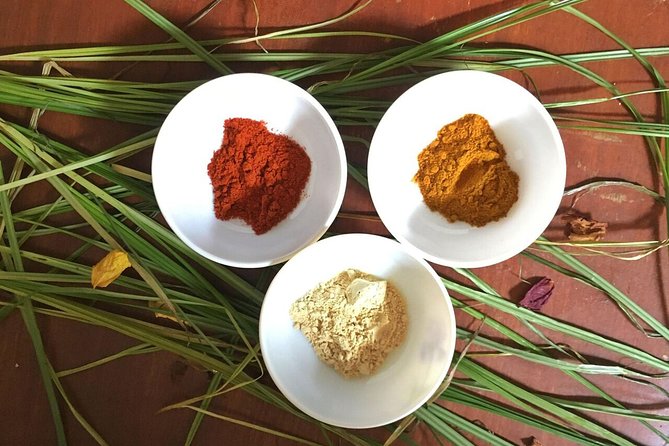
- The market visit comes before the cooking, so you see the setting where ingredients for the meal are found.
- Injera is part of the lesson, giving you a useful introduction to Ethiopia’s most important staple.
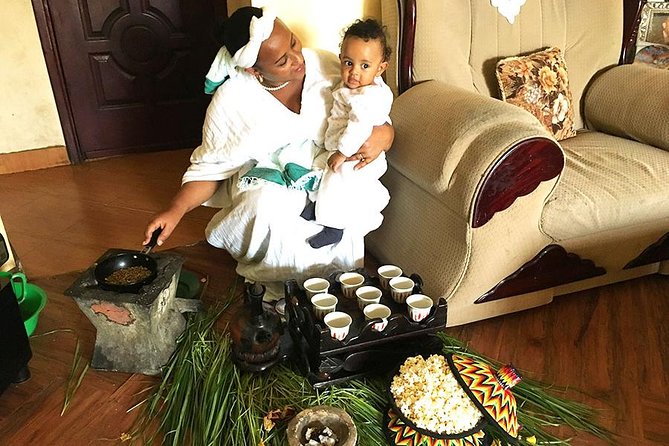
- Coffee is roasted by hand, then served in a traditional ceremony at the end.
- The 3.5-hour private format suits couples, families, and small groups seeking direct time with local hosts.
- Lunch or dinner is available, with vegetarian requests and dietary needs to be shared when booking.
A market visit that gives the meal some context
The experience begins in Addis Ababa with a private market tour. This is more useful than simply arriving at a kitchen with ingredients already laid out. You get a look at the food-buying side of daily life first, then see how those ingredients become a shared meal.
The exact menu can change with the season. That is a plus, not a flaw. Seasonal cooking gives the lesson a local feel, though it also means you should not book expecting a fixed restaurant menu. If there is a particular dish or ingredient you hope to learn about, ask about it when you arrange the experience.
The market portion is also a good fit if you want more than a recipe. Food markets offer clues about what people cook, buy, and eat at home, even when the visit itself is fairly short. Since this is a private activity, you have a better chance to ask questions than you would in a large group.
The meeting point is in Addis Ababa, and the activity ends back there. Hotel transportation is not included, so check the route from your accommodation before booking. One guest found the home about 40 minutes outside Addis Ababa, which can make this a longer outing once city traffic and local transport are added.
More ethiopian coffee ceremonies in Addis Ababa:
- Ethiopian Culinary Tour – Market, Food, Coffee Ceremony & more
★ 5.0 · 65 reviews - Ethiopian Cooking Class and Coffee Ceremony with a Local in Addis with transfers
★ 5.0 · 14 reviews - Ethiopian Culinary Tour – Market, Coffee Ceremony and More
★ 5.0 · 10 reviews
Entering Daniel and Tigist’s home kitchen
After the market, you move into the cooking part of the visit at Daniel and Tigist’s home. This is not a commercial cooking school with rows of workstations and a formal classroom feel. It is a visit with a family who cooks in their own home and shares food and culture directly with you.
That distinction matters. I would choose this experience if I wanted conversation, family contact, and a sense of daily life alongside the cooking. I would choose a standard cooking school instead if I wanted professional equipment, a tightly fixed menu, or a polished demonstration designed mainly for technique.
Daniel and Tigist are joined by family members, including their children, according to the experience details shared by past participants. The family setting can make the visit feel warm and informal, but it also means you should allow some flexibility. Home visits rarely run with the exact rhythm of a restaurant kitchen.
The hosts are also a useful source of information about Ethiopia beyond the plate. Daniel and Tigist share local background as they cook, and one guest described Daniel and his family as helpful from the moment of arrival in Addis Ababa. Another praised the family for sharing information about Ethiopia along with the recipes.
That wider conversation is one of the strongest reasons to book. You are not just learning what to mix or cook. You are spending time with people who can help connect the meal to Ethiopian culture and ordinary home life.
Learning to make injera, Ethiopia’s essential flatbread
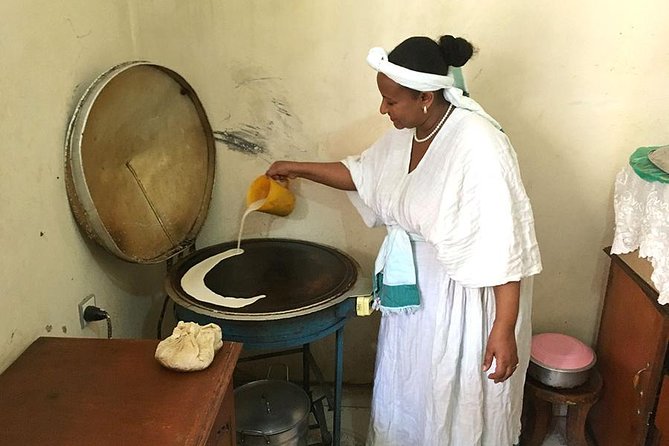
The centerpiece of the lesson is injera, a fermented flatbread with a soft, spongy texture. It is not simply a side dish. Injera is used to hold and scoop up food, so learning about it helps you understand how an Ethiopian meal is eaten as well as how it is prepared.
The fermentation is important because it gives injera its familiar sour flavor. The lesson offers a direct way to see why the bread tastes different from ordinary flatbread and why it plays such a central role at the table.
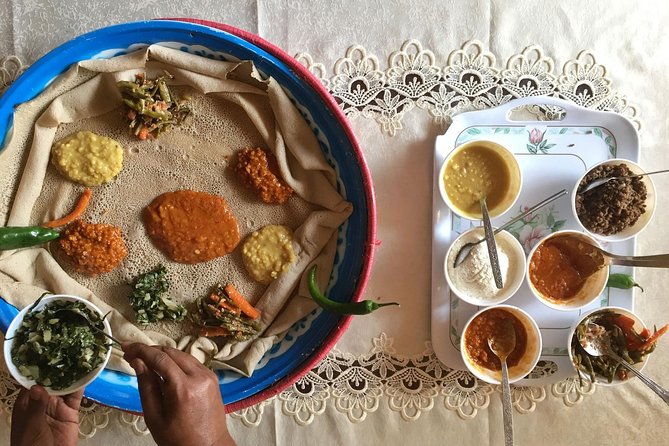
The information provided does not promise a fixed list of other dishes. It does state that you will prepare traditional Ethiopian dishes and that the menu may vary with the season. That means you should think of the class as a window into home cooking rather than a guaranteed lesson in a specific set of recipes.
You can request a vegetarian option, but make that request when booking. The same applies to allergies, dietary restrictions, and cooking preferences. This is especially important in a home kitchen, where advance notice gives the hosts time to plan the meal.
The class is likely most rewarding if you are willing to take part rather than watch silently. The point is to cook together, ask questions, and then eat what you helped prepare. One guest specifically praised Tigist as a patient teacher, which is reassuring if you have little experience with Ethiopian cooking.
Sharing the finished meal at home
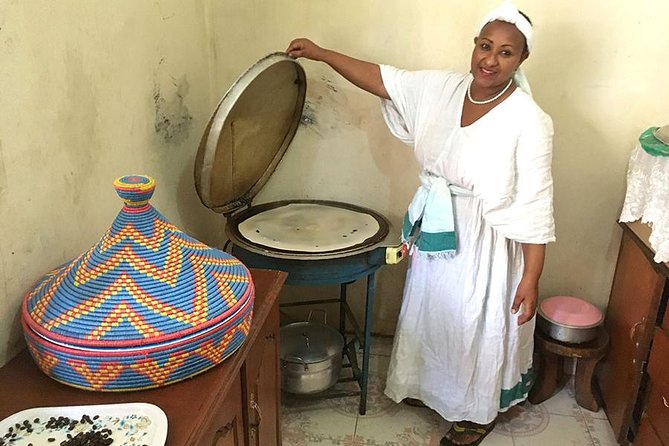
The meal follows the cooking lesson, turning the class into a full social visit. You are not handed a tasting plate and sent on your way. You sit down with the hosts and eat the food prepared during the session.
That shared meal is where the home setting earns its keep. Ethiopian food is often communal, and the format lets you experience that side of the cuisine in a personal way. I like that the meal is part of the event rather than an optional extra.
The hosts’ warmth is a repeated strength of this experience. Daniel, Tigist, and their family are described as kind, welcoming, and accommodating. One guest spent a first day in Addis Ababa with the family and felt comfortable and safe from the start. Another described an afternoon with Daniel, Tigist, Yadessa, and the wider family as a chance to share recipes and learn about Ethiopia.
Those details suggest a visit with plenty of human contact. Still, you should book it for that reason, not because you want a fast, highly structured class. The pace and conversation are part of the experience. If you prefer to finish a recipe within a strict timetable, the home format may feel less controlled.
The activity lasts about three hours and 30 minutes. That gives enough time for the market, preparation, food, and coffee, but it is not an all-day cultural program. You can select a lunch or dinner version, which makes it easier to fit around museum visits, city sightseeing, or an evening in Addis Ababa.
More ethiopian cooking classes in Addis Ababa:
- Addis Ababa City Tours With Cocking Class of Ethiopian Food
★ 5.0 · 20 reviews - Ethiopia coffee cupping class/Ethiopian food injera making
★ 5.0 · 10 reviews - Local Ethiopian Food Tour
★ 4.0 · 7 reviews - Unique Ethiopian Cooking Class and Coffee Ceremony with a Local in Addis Ababa
★ 4.5 · 7 reviews
Coffee roasted and served in the traditional way
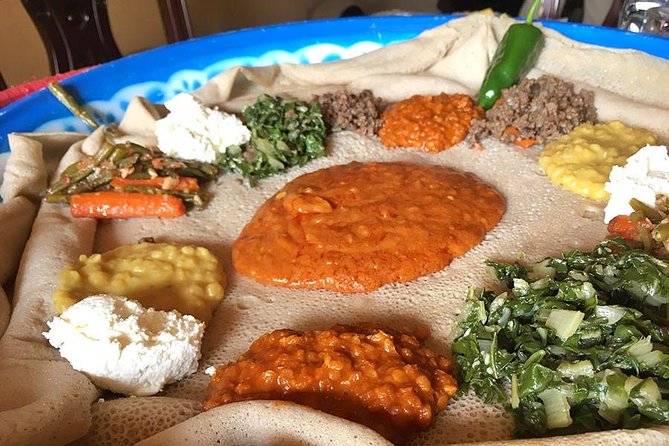
The final major element is the coffee ceremony. Coffee beans are freshly roasted by hand, and the ceremony follows the meal. This is a fitting end because coffee is not treated as a quick drink to take away. It is prepared, shared, and enjoyed as a social ritual.
For many people, this will be the most memorable part of the visit. The roasting adds a sensory link to the beans, while the ceremony gives you time to sit with the family after cooking. It also shows how food culture includes hospitality and conversation, not just ingredients.
The experience includes beverages, and the coffee ceremony is specifically part of the private visit. You do not need to arrange an extra coffee stop afterward. The activity brings its own ending, with the hosts sharing a long-standing Ethiopian tradition in their home.
I would not book this only for coffee if you have limited time. The market and cooking are central parts of the three-and-a-half-hour program. But if you want to understand how an Ethiopian meal moves from shopping to preparation to hospitality, the coffee ceremony completes that story neatly.
What the $168 price means
At $168 per person, this is not a budget meal or a quick cooking demonstration. The price needs to be judged against what it includes: a private market tour, a personal cooking class, food and beverages, a home visit, the coffee ceremony, taxes, fees, and gratuities.
You are paying for access and time as much as for the food. A restaurant meal can show you what Ethiopian cooking tastes like. This experience adds a private family setting, hands-on preparation, local conversation, and a market visit. For someone who values cultural contact, that can justify the higher cost.
The private format matters most for couples, families, and small groups. Your group is the only group taking part, so you can ask questions and move at a pace that suits your interests. Group discounts may also be available, which can improve the value for larger parties.
The price is harder to justify if you mainly want to learn a few recipes as cheaply as possible. You can find less expensive food activities in many cities. Here, the extra cost pays for a personal connection and a full experience rather than just instruction.
The average booking lead time is about 89 days. That does not guarantee every date will sell out, but it is a clear reason to plan ahead, especially if you have a short stay in Addis Ababa or need a particular lunch or dinner time.
Who will enjoy this Addis Ababa experience most

I would recommend this experience to you if you want to meet local people in a setting that feels personal and relaxed. It works especially well for first-time visitors who want an introduction to Ethiopian food and everyday life at the same time.
It is also a strong choice for food-focused travelers who want to understand injera rather than simply order it in a restaurant. The combination of market, cooking, meal, and coffee gives you a useful four-part look at Ethiopian food culture.
Families and couples may appreciate the private arrangement. Most people can participate, and service animals are allowed. The activity is near public transportation, though you remain responsible for getting to the meeting point because hotel pickup and drop-off are not included.
I would be more cautious if you have a very tight schedule. The city transfer may take time, and the home setting calls for flexibility. I would also contact the provider early if you have dietary needs, since the menu changes by season and vegetarian food must be requested ahead of time.
Practical details that affect your day
The experience lasts approximately three hours and 30 minutes. You can choose lunch or dinner, which is helpful when arranging the rest of your Addis Ababa plans.
Confirmation is provided when you book. The activity is private, and it ends back at the meeting point in Addis Ababa. Since transportation to and from your hotel is not included, plan that part yourself and allow extra time for the journey.
The menu may vary according to the season. Vegetarian food is available with advance notice. You should also state any allergies, dietary restrictions, or cooking preferences at booking rather than waiting until you arrive.
Cancellation is flexible up to two full days before the start time, when you can receive a full refund. Cancellations or changes made within two days are not accepted for a refund, with cut-off times based on local time.
Should you book it?
Book this experience if you want a genuine home visit, not a polished cooking-school production. Daniel and Tigist offer more than recipes: you get a market outing, a lesson in injera, a shared meal, and hand-roasted coffee served through a traditional ceremony.
The strongest reasons to go are the family atmosphere, the patient teaching, and the chance to ask questions in a private setting. The main cautions are the $168 price, the lack of hotel transportation, and the need to allow time for travel outside the city center.
If you have room in your Addis Ababa schedule and care about food as a way to meet people, I think this is a worthwhile splurge. If you need a low-cost, tightly timed class, choose another option. Reserve early, share your food needs in advance, and treat the visit as a cultural meal with cooking included.
FAQ
How long does the market and cooking experience last?
The activity lasts approximately three hours and 30 minutes.
Where does the experience take place?
It takes place in Addis Ababa, beginning with a private market visit and continuing at the home of hosts Daniel and Tigist.
Is hotel pickup and drop-off included?
No. Hotel pickup and drop-off are not included. The activity starts and ends at the stated meeting point in Addis Ababa.
What food will I learn to cook?
You will learn to prepare traditional Ethiopian dishes, including injera. The menu may change with the season.
Is a vegetarian option available?
Yes. Vegetarian food is available, but you should request it when booking.
Can I share allergies or dietary preferences?
Yes. You should advise the provider of allergies, dietary restrictions, or cooking preferences at the time of booking.
Can I cancel for a full refund?
Yes, if you cancel at least two full days before the experience start time. Cancellations or changes made within two days are not refundable.
More Coffee Experiences in Addis Ababa
- Vintage Coffee Shops, Restaurants, Sightseeing in Addis Ababa
★ 5.0 · 17 reviews - Coffee Cupping Tour in Addis Ababa
★ 5.0 · 5 reviews - Addis Ababa City Experience : Markets, Coffee & Local Life
★ 4.8 · 5 reviews - Lalibela: Churches Full-Day Private Tour w/Coffee Ceremony
★ 4.7 · 5 reviews
More Cooking Classes in Addis Ababa
- Addis abeba Full Cooking class.
★ 5.0 · 6 reviews - Private Ethiopian Home Cooking Class in Addis Ababa with Transfer
★ 5.0 · 5 reviews
Just added around Addis Ababa
- Yod Abyssinia Cultural Night: Dinner, Music, and Dance★ 5.0 · 7 reviews
- Stunning Views Wonchi Crater Lake a Private Day Trip★ 5.0 · 3 reviews
- Locally crafted beer and wine tasting and nightlife in Addis tour★ 5.0 · 6 reviews
- Two days Lake Wenchi and Menagesha Forest★ 5.0 · 3 reviews
- 3-Day Cultural Tour in South Omo Valley★ 5.0 · 4 reviews
- Addis Ababa City Tours Full-Day Tours★ 5.0 · 5 reviews
- Tribes of the Ethiopian Omo Valley – 9 Day Tour★ 5.0 · 5 reviews
- South Omo Valley Tribes 8 Days Tour Package★ 5.0 · 4 reviews
Ethiopian Coffee Ceremonies, compared.

Ethiopian Culinary Tour – Market, Food, Coffee Ceremony & more
Read our review →
Ethiopian Cooking Class and Coffee Ceremony with a Local in Addis with transfers
Read our review →
Ethiopian Culinary Tour – Market, Coffee Ceremony and More
Read our review →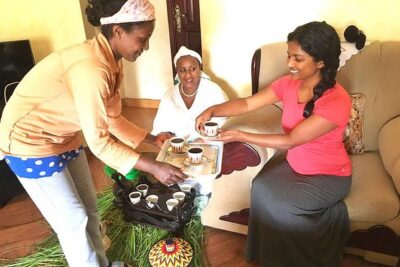
Unique Ethiopian Cooking Class and Coffee Ceremony with a Local in Addis Ababa
Read our review →
Churches Full-Day Private Tour w/Coffee Ceremony
Read our review →Browse the lists this tour appears in