
Reviewed · OMO VALLEY TRIBAL TOURS
Photography Expeditions to Omo Valley
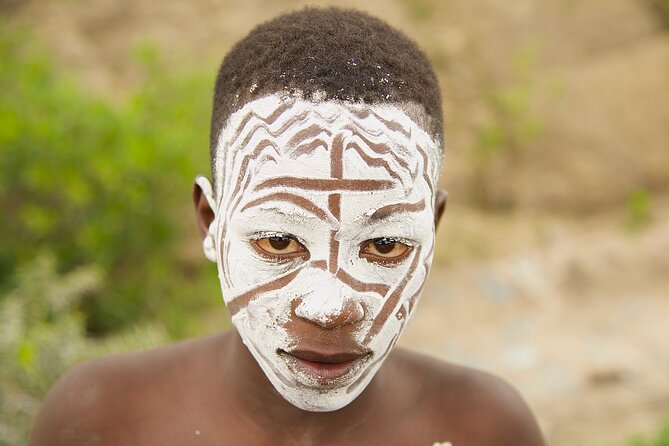
The most striking part of this six-day trip is the sheer variety packed into southern Ethiopia. In a small part of the Omo Valley, you meet Mursi, Hamer, Karo, Dassanech, and Dorze communities, each with their own dress, customs, and visual style. It is a photographer’s route, but it is also a close look at cultures facing fast change.
I like the private format for up to seven people, since a small group is far easier to manage with cameras, village visits, and long road sections. I also like the practical support from Mulugeta and Captain, whose planning covers airport transfers, meals, vehicles, and changes when logistics get difficult. The main drawback is the pace: six days includes several flights and long drives, so you should expect early starts, rough roads, and limited time to rest.
Key points to know before booking
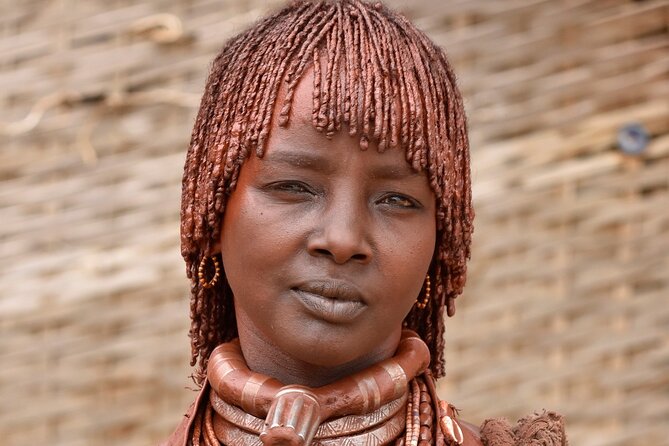
- Mursi villages near Mago National Park: See one of Ethiopia’s most recognizable cultural traditions, including the lip plates worn by some Mursi women.
- Karo body painting at Korcho: Photograph clay and plant-pigment designs, along with unusual ochre hair decorations and ostrich feathers.
- A canoe crossing to Dassanech country: Reach villages on the far side of the Omo River by canoe, an experience that adds real movement to the day.
- Lake Chamo wildlife: Take an afternoon boat trip for crocodiles, hippos, and birds such as African fish eagles, flamingos, herons, storks, and kingfishers.
- Dorze mountain homes: Visit beehive-shaped houses, cotton weaving, gardens, and villages near the Guge Mountains.
- A compact private trip: The quoted price is $3,312.83 per group of up to seven, not per person, which can make the cost attractive for a full group.
Why the Omo Valley makes such a strong photography trip
The Omo Valley is not a single attraction. It is a wide cultural region where at least 30 distinct ethnolinguistic groups live within a relatively small area. That helps explain why this route feels so varied even though it remains within southern Ethiopia.
You will see visual traditions that are instantly recognizable in photographs: lip plates, painted faces, feathered hair, clay ornaments, woven cloth, and unusual houses. Yet the value of the trip is not only in collecting dramatic images. You also get a sense of how people farm, trade, travel, decorate themselves, and maintain local customs as outside influence reaches remote communities.
The photography focus matters. The package includes village entrance and photography fees, so the cost is not built around simply driving past communities. You have scheduled time for village visits and cultural photography. Still, you should remember that people are not props. Ask your guide how photography works at each stop, follow local rules, and keep your approach respectful.
This is a private activity, with only your group taking part. That gives you more control than a large coach tour. A group of two or three photographers will have much more room for gear and pauses than seven people, so ask about the final group size before you book if that matters to you.
More Omo Valley Tribal Tours in Addis Ababa
- 6 Days Omo Valley Tribes Tours From Addis Ababa
★ 5.0 · 33 reviews - 3 Days Omo Valley Tour
★ 5.0 · 24 reviews - Danakil Depression, Lalibela, Omo Valley and Simien Mountains
★ 5.0 · 23 reviews
Day 1: Addis Ababa, Jinka, and an Ari village
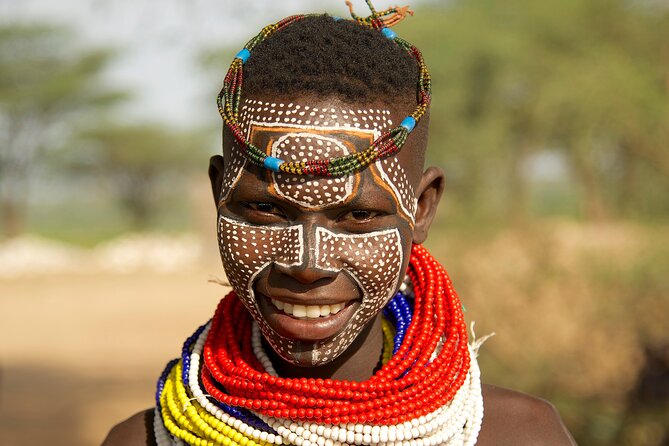
Your trip begins in Addis Ababa, with pickup from the Bole area and a flight south to Jinka later in the day. Before the flight, you may have time for the National Museum or the open market at Merkato. The exact choice will depend on your arrival time and the day’s flight schedule.
The National Museum gives you a useful introduction to Ethiopia before you head into the south. Merkato offers a very different first look, with shopping and street activity. Neither visit is the main purpose of this trip, so think of it as a bonus rather than a full Addis Ababa sightseeing day.
After reaching Jinka, you meet the driver at the airport and continue to an Ari village. The Ari are one of the local groups around Jinka, and this first village visit eases you into the pace of the Omo Valley. Expect about four hours of activity on the day, though flight timing and transfers can shape the schedule.
This opening day is useful because it avoids wasting a full day in Addis Ababa. The tradeoff is that you begin with a flight and a village visit, so the day may feel busy if you arrive in Ethiopia after a long international journey.
Day 2: Mago National Park and the Mursi highlands
The second day begins early with a drive toward Mago National Park and the Mursi highlands. The Mursi are known worldwide for the decorative lip plates worn by some women. The plates form part of a broader set of body decoration and cultural identity, and they are the visual feature most people associate with the Omo Valley.
This is one of the strongest cultural photography days on the route. You have time to photograph local dress and tradition, rather than simply stopping for a quick roadside picture. That said, the subject matter can be intense. Keep your camera ready, but let your guide set the tone for respectful interaction.
The route returns to Jinka for lunch, then continues toward Turmi through Dimeka. If timing allows, you stop at Alduba market before visiting Hamer communities. Markets can provide a different kind of photograph from village portraits, with movement, goods, and everyday trade.
The full day is listed at about seven hours. That is a good warning about the pace. You are not spending the whole day in one village. You are covering a large area by road, and conditions may make the journey feel longer. Pack water, keep camera batteries ready, and use the early start to your advantage.
Day 3: Karo painting at Korcho
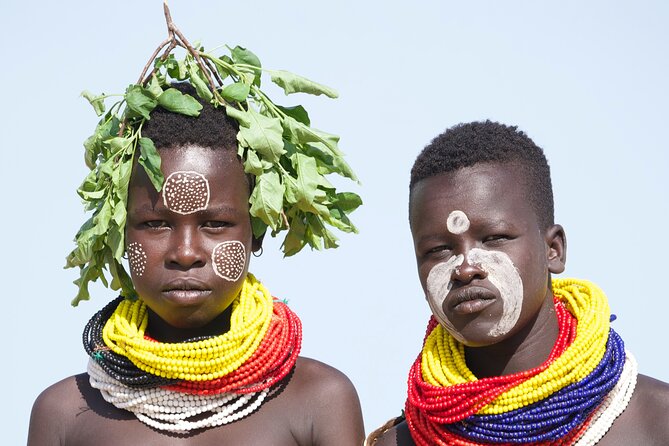
The drive to Karo Korcho is shorter on paper, at about four hours, and the focus is highly visual. The Karo are known for body painting made with clay and locally available vegetable pigments. Designs may cover the face, chest, arms, and legs, with each person creating patterns for appearance and enjoyment.
Karo men may also shape and shave their hair into striking forms. Some use ochre caps of hair decorated with ostrich feathers. For a photographer, this stop offers detail at several distances: full portraits, painted patterns, hair decoration, and the surrounding village setting.
The schedule allows you to return to Turmi, where you may have a chance to photograph a bull-jumping rehearsal or ceremony. This part is not guaranteed, so treat it as a possible extra rather than the central reason to book the day.
I like the balance here. You get a focused cultural visit without another very long road day, then a chance to use the afternoon for a local event or more photography in Turmi. The caution is that ceremonies and rehearsals depend on local timing. Your day will not have the same fixed certainty as a museum visit.
Same country, a very different kind of day:
- Full Day Tour of Addis Ababa with Hotel Pickup and Drop-off
★ 5.0 · 430 reviews - Taste of Ethiopia
★ 5.0 · 406 reviews - Day Trip From Addis Ababa See Historical Monastery,Stunning Nature,Animals,Birds
★ 5.0 · 303 reviews - Addis Ababa: Debre Libanos, Blue Nile Gorge, and Cave Tour
★ 4.5 · 256 reviews
Day 4: Canoe crossing to Dassanech villages
The fourth morning starts early again, this time with a drive to the edge of the Omo River. You cross by canoe to reach a Dassanech village. The crossing itself makes this day different from the others. It is not just another road transfer followed by a village stop.
The Dassanech are a semi-nomadic people numbering about 40,000, with clans extending across southern Ethiopia, Kenya, and Sudan. Their ornate hair buns are a key visual feature, and the village visit gives you another distinct cultural setting after the Mursi, Hamer, and Karo.
After photographing the village, you return to Turmi for a quieter afternoon. You can rest or photograph around town. That pause matters because the route has already included early starts, rough travel, and several cultural visits. If you have been carrying two camera bodies or long lenses, this is a good time to check equipment and back up images.
The canoe crossing and remote setting are strong reasons to include this day. The drawback is that the details of the crossing, including duration and conditions, are not specified. If you have mobility concerns or large amounts of gear, ask the operator how the canoe transfer is handled before departure.
Day 5: Arba Minch and Lake Chamo after 3 p.m.
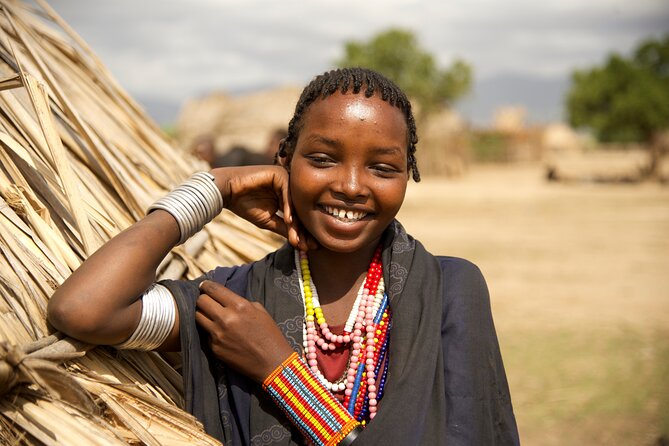
Day five shifts the subject from cultural photography to wildlife and water. You drive to Arba Minch in the morning, then take a boat on Lake Chamo after 3 p.m.
Lake Chamo is known for large crocodiles along its northern shores. From the boat, you may also photograph hippos and many bird species, including African fish eagles, flamingos, herons, storks, and kingfishers. The afternoon timing should provide better light than a harsh midday outing, though actual sightings are never guaranteed.
This change of subject is one of the trip’s best features. After several days of portraits, body decoration, and village scenes, you get a different kind of photographic challenge. Wildlife requires patience, quick reactions, and a lens suited to subjects at a distance.
The day is listed at about four hours, giving you a less punishing schedule than the Mago and Hamer day. Still, you should not treat Arba Minch as only a transit point. The boat trip is a separate highlight, and the combination of crocodiles, hippos, and birds gives nature photographers a useful range of subjects.
Day 6: Dorze homes, weaving, and the return to Addis Ababa
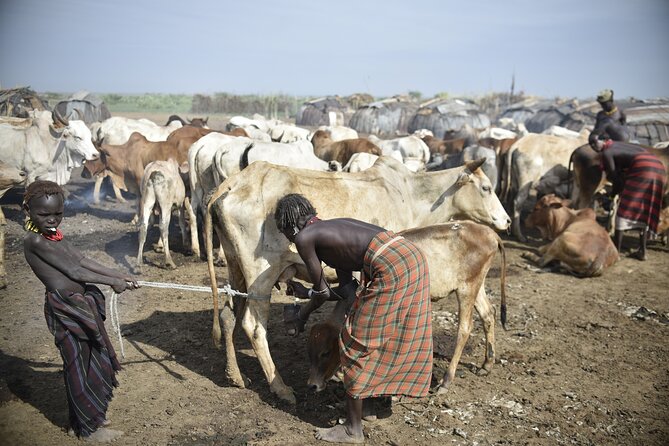
The final morning takes you about 40 kilometers northwest of Arba Minch to the Guge Mountains. You visit Dorze and Chencha villages, where the focus turns to farming, weaving, architecture, and mountain life.
The Dorze are known for woven cotton cloth and for beehive-shaped homes built from organic materials. Each house has a small garden, with beds of spices, cabbage, and tobacco around it. These details make the visit worthwhile even if you are more interested in people and places than formal portraits.
The houses are especially photogenic because their shape and materials differ so sharply from the built settings you may have seen earlier. Look beyond the main structure. Gardens, tools, woven cloth, and household details help explain how the homes function.
After lunch, you transfer to Arba Minch Airport and fly back to Addis Ababa. You arrive in the late afternoon and receive a hotel room for day use, allowing time to wash and change before departure or an onward stay. This is a thoughtful practical touch after six demanding days.
The final day is long, listed at about eight hours. Do not schedule a tight international connection without confirming the flight timing. The itinerary says the Addis arrival is in the late afternoon, but the exact flight schedule is not provided.
What the $3,312.83 group price really buys
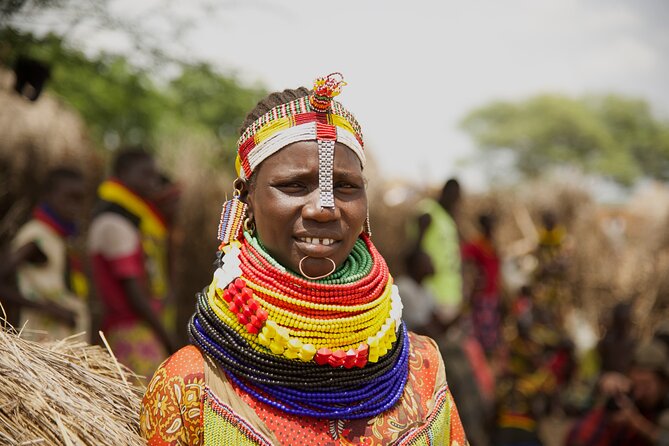
The quoted price is per group of up to seven, not per person. For a full group, that works out to roughly $473 per person before any extra personal costs. For two people, the effective per-person price is much higher, so this trip makes the most financial sense for a family, photo club, or small group of friends.
The package includes an air-conditioned vehicle, village entrance fees, photography fees, five breakfasts, five lunches, and five dinners. Those inclusions cover much of the daily structure, especially in a region where arranging meals and access independently can be difficult.
The price does not include visa costs, international flights, personal expenses, tips, or alcohol. There is also an important point to clarify: the schedule includes domestic flights between Addis Ababa, Jinka, and Arba Minch, but the listed inclusions do not clearly state that airfare is included. Ask for a written breakdown before paying.
The strongest value comes from combining private transport, local access, meals, airport transfers, and a route that would be hard to arrange on your own. You are paying for logistics as much as for sightseeing. If you want a slow, relaxed holiday, this may feel expensive and rushed. If you want a focused photography route through several remote areas, the group pricing can work well.
Who will enjoy this route most
I would choose this experience if you are serious about cultural photography, wildlife photography, or both. The itinerary gives you repeated chances to work with people, clothing, body decoration, architecture, markets, crocodiles, hippos, and birds.
It also suits people who want a private trip instead of a fixed large-group schedule. Mulugeta helped organize one visitor’s trip over the months before arrival, and the company’s team includes Captain in the guiding operation. That level of contact can be useful when you have special camera needs or want to discuss timing before you go.
You should be comfortable with long drives and early mornings. The route covers Jinka, Turmi, Omorate, Arba Minch, and Addis Ababa in six days, so it is not a gentle introduction to Ethiopia. Most travelers can participate, but the remote roads, canoe transfer, and full-day schedule deserve honest consideration.
Practical booking advice for photographers
Bring enough storage and battery capacity for several days of photography. The schedule moves often, and you may not want to depend on finding supplies in remote areas.
A small group is best for this trip. Seven people can still fit the stated group limit, but camera bags, long lenses, and personal luggage will take space in the vehicle. Ask how much room is available if everyone is carrying substantial equipment.
Clarify three points before departure: the exact domestic flight arrangements, the number of people in your group, and how photography fees and local permissions work at each village. These questions will help prevent surprises.
The operator offers free cancellation up to 24 hours before the start time for a full refund. Cancellations inside that period are not refundable, and changes are not accepted inside 24 hours. The experience also requires a minimum number of participants, so a cancellation for that reason would lead to another date or a full refund.
FAQ
How long is the Photography Expeditions to Omo Valley tour?
The experience lasts approximately six days, beginning and ending in Addis Ababa.
How many people can join the private tour?
The price covers one private group of up to seven people. Only your group participates in the activity.
What meals are included?
The package includes five breakfasts, five lunches, and five dinners.
Are domestic flights included?
The schedule includes flights from Addis Ababa to Jinka and from Arba Minch back to Addis Ababa, but the inclusions do not clearly confirm that the airfare is covered. Confirm this with Ethiopian Photography Tours before booking.
What wildlife can I see on Lake Chamo?
The boat trip may provide views of crocodiles, hippos, and birds including African fish eagles, flamingos, herons, storks, and kingfishers.
What is the cancellation policy?
You can cancel at least 24 hours before the start time for a full refund. Cancellations or changes made less than 24 hours in advance are not accepted for a refund.
Should you book this Omo Valley photography tour?
Book it if you want a concentrated six-day route through southern Ethiopia and your priority is photography rather than a leisurely holiday. The mix of Mursi, Hamer, Karo, Dassanech, Dorze, Lake Chamo wildlife, private transport, and local photography access is unusually broad.
Think twice if you dislike early starts, long road journeys, uncertain ceremony timing, or a tightly packed schedule. I would also confirm the domestic airfare question and ask about the final group size before committing. For a small photography group that values careful planning and wants to see several of the Omo Valley’s distinctive communities in one trip, this is a strong, practical choice.
More Photography Sessions in Addis Ababa
- 9 days Omo Valley Tribes and Photography Tour
★ 5.0 · 4 reviews
Just added around Addis Ababa
- Yod Abyssinia Cultural Night: Dinner, Music, and Dance★ 5.0 · 7 reviews
- Stunning Views Wonchi Crater Lake a Private Day Trip★ 5.0 · 3 reviews
- Locally crafted beer and wine tasting and nightlife in Addis tour★ 5.0 · 6 reviews
- 3-Day Cultural Tour in South Omo Valley★ 5.0 · 4 reviews
- Addis Ababa City Tours Full-Day Tours★ 5.0 · 5 reviews
- Two days Lake Wenchi and Menagesha Forest★ 5.0 · 3 reviews
- South Omo Valley Tribes 8 Days Tour Package★ 5.0 · 4 reviews
- Day Trip to Tiya UNESCO Site & Melka Kunture Archaeological Site★ 4.5 · 3 reviews
Omo Valley Tribal Tours, compared.

6 Days Omo Valley Tribes Tours From Addis Ababa
Read our review →
Lalibela, Axum, Danakil and Omo Valley 8 DAYS
Read our review →

3 days around Arbaminch and Konso Adventure Tours Life Time
Read our review →Danakil Depression, Lalibela, Omo Valley and Simien Mountains
Read our review →


Browse the lists this tour appears in