
Reviewed · OMO VALLEY TRIBAL TOURS
6 Days Omo valley Tribal Tour (Starts Arba Minch End Jinka)
The most striking feature here is the route itself. In six days, you move from the highland Dorze villages above Arba Minch to remote communities along the Omo River, finishing with the Mursi near Jinka. I like the small group limit of four and the air-conditioned 4 x 4, which matter on long, rough roads. The main drawback is the pace: several days involve five or six hours of driving, and taxes and fees are not included in the $1,600 price.
Guide Debebe, also called Debe or Debaba, is named in the tour feedback as a friendly, flexible host who can adjust plans and arrange local contacts. I would confirm that he will lead your departure, and I would also clarify the unusual listed start time of 6:30 pm before booking, since the first day begins with an airport pickup and a drive to Chencha.
Key points to know before you book

- Dorze highlands on day one: Climb from Arba Minch at about 1,400 meters to Chencha at roughly 2,900 meters for beehive-shaped homes, lake views, and false-banana food.
- A serious road trip: Expect long transfers in a 4 x 4, including about 277 kilometers from Arba Minch to Turmi and rougher tracks to Kara villages.
- Several distinct communities: The route includes Dorze, Konso-area communities, Tsamay, Arbore, Hamar, Kara, Nyangatom, Dassanech, and Mursi areas.
- Market days matter: Dimeka is visited on Tuesday and Saturday, while Keyafer is highlighted for Thursday, so dates can shape the trip.
- Local contact is a strong feature: Debebe is described as using local guides or contacts to explain customs inside villages.
- Jinka airport finish: The final Mursi visit happens before lunch, followed by a return to Jinka and airport drop-off.
From Arba Minch to the Dorze highlands
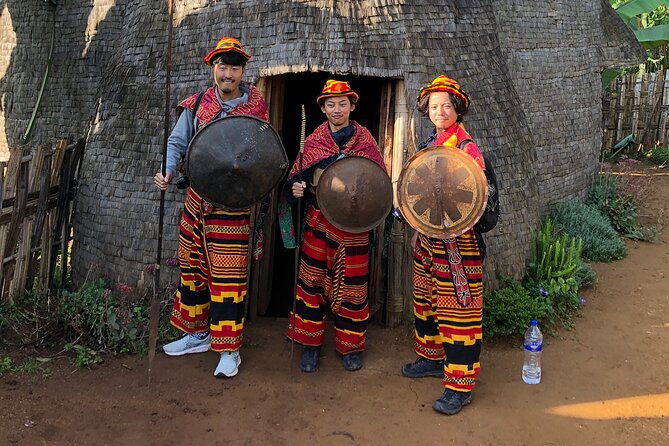
The tour begins in Arba Minch, a useful base for reaching the southern highlands. The first outing heads toward Chencha, about 36 kilometers away, but the short distance is misleading. The drive takes around an hour and a half because the road climbs from about 1,400 meters to 2,900 meters.
That climb is the reward. You get broad views toward Lake Abaya and Lake Chamo, then reach the Dorze area, known for its tall, beehive-like huts. These homes are one of the most recognizable sights in southern Ethiopia, and the visit gives the tour a strong opening before the more remote road work begins.
You also see how false banana, a staple crop, is prepared. The tour includes a chance to try the food, which I consider more valuable than simply taking photographs of a house or village. Food gives you a direct way to understand daily life, and this is one of the few clearly stated tasting experiences on the route.
You return to Arba Minch for the night. That makes day one less punishing than it might appear, since you are not yet sleeping far down the Omo Valley road. Still, the change in altitude is notable, so you should be ready for a full day of driving, walking, and village visits.
More Omo Valley Tribal Tours in Arba Minch
- 3 days around Arbaminch and Konso Adventure Tours Life Time
★ 5.0 · 24 reviews - 5 Day Private tour to the Omo Valley Tribes and Adventure Tour
★ 5.0 · 11 reviews - Omo Valley Tribes 6 Days Tours
★ 4.9 · 10 reviews
The long road south to Turmi
Day two covers about 277 kilometers to Turmi, with an estimated driving time of five and a half hours. You pass through areas associated with Konso, Tsamay, Arbore, and Hamar communities. The road is not just a way to get somewhere else. It is the connective tissue of the trip, carrying you from the Arba Minch region into the Omo Valley.
This is also the day when timing can make a real difference. Dimeka market is listed for Tuesday and Saturday. If your schedule matches one of those days, you may visit during a market period connected with local communities. If it does not, you should not assume the same market experience will be available.
Turmi becomes your base for two nights. That is practical because the next excursions head out from here in different directions. It also means you avoid packing and unpacking every night during the most remote part of the trip.
The compromise is simple: you spend much of the day in the vehicle. The air conditioning is an important comfort, and the small group makes it easier to stop or adjust the day than on a large coach tour. Even so, this is not a gentle sightseeing holiday. You are paying for access to distant places, and access takes time.
Kara country and the rough road to Duse
Day three heads about 80 kilometers off-road to a Kara village called Duse or Labuck. The distance and the road conditions mean the excursion takes most of the day, even though the destination is not far on a map.
The Kara communities described here live along the eastern bank of the Omo River. Their farming depends on flood retreat cultivation, with sorghum, maize, and beans among the crops. That detail gives the visit useful context. You are not only seeing painted faces or traditional homes. You are also seeing how farming responds to the river and its seasonal pattern.
Kara people are especially known for body painting, which is likely to be one of the visual highlights of this stop. You should approach the visit with respect and listen to the local explanation rather than treating people as scenery. The itinerary indicates that local contacts or guides may help explain customs, which is one reason guide quality matters here.
After the village visit, you return to Turmi. The same base keeps the day manageable, but the road can still be tiring. If you have a sensitive back or dislike long rides over rough tracks, ask about current road conditions before paying.
Nyangatom villages and the Kara visit

The fourth day adds another community, the Nyangatom, before continuing to a Kara village. The listed route covers about 101 kilometers and takes roughly six hours. That estimate tells you what kind of day this is: a full road excursion rather than a quick morning stop.
The order of visits may depend on local conditions and access. This is where Debebe’s reported flexibility could be useful. His arrangements are described as adjustable when visitors wanted to change plans, and local contacts were used to provide explanations of customs. You should still treat any change as dependent on conditions rather than guaranteed.
Accommodation for this part of the trip is listed as a Turmi hotel with a portable shower and toilet. That is a practical warning, not a complaint. Facilities are basic, and you should pack with that in mind. The same day is described as full board, but do not assume that every meal on all six days is included without checking the booking details.
The Kara visit repeats a central theme of the tour: reaching a community takes patience. You get more time with one area than you would on a rushed, one-day sampler, but the price is long hours in the vehicle and simple accommodation.
More omo valley tribal tours in Ethiopia:
- 6 Days Omo Valley Tribes Tours From Addis Ababa
★ 5.0 · 33 reviews - Lalibela, Axum, Danakil and Omo Valley 8 DAYS
★ 5.0 · 29 reviews - 3 Days Omo Valley Tour
★ 5.0 · 24 reviews - Danakil Depression, Lalibela, Omo Valley and Simien Mountains
★ 5.0 · 23 reviews
Crossing the Omo River to meet the Dassanech

Day five begins with a drive of about 72 kilometers to Omerate, estimated at one and a half hours. Omerate lies on the eastern bank of the Omo River, in the area of the Dassanech people.
The river crossing is by local canoe. That is a particularly memorable part of the itinerary because the crossing is not just a scenic pause. It is the route to a Dassanech village, giving the visit a clear connection to place and community. You should expect the crossing to be basic, and you may want to keep cameras and other valuables secure.
The day also includes Keyafer market, highlighted for Thursday. It is described as one of the area’s most colorful markets, with Hamer, Benna, and Kara people among those who come there. Market timing is therefore worth planning around. If your dates do not include Thursday, this part of the schedule may not line up as described.
Afterward, you drive to Jinka for the night. Jinka is the final base of the tour and the departure point for the Mursi visit the next morning. This overnight stop is important because it avoids trying to reach the airport immediately after the Mago National Park excursion.
Mago National Park and the Mursi visit

The last morning takes you into Mago National Park toward Mursi villages. The drive to the village takes about two hours. The description is refreshingly clear that you should not expect much wildlife on this short park visit. The point is reaching the Mursi community, not taking a dedicated safari.
The Mursi are among the best-known people of the Omo Valley, and this is likely to be the tour’s most anticipated cultural stop. As with the other village visits, the quality of the introduction matters. A local contact who can explain customs and help you behave appropriately is more useful than simply arriving with a camera.
You return to Jinka for lunch and airport drop-off. That schedule makes the final day efficient, but you should confirm your flight time carefully. The available information says you are dropped at Jinka airport after lunch, while the meeting details call it Jinka International Airport. Confirm the exact airport name, departure time, and how much buffer the driver allows.
What the $1,600 price really covers

At $1,600 per person, this is a major expense. The price makes more sense if you value private or very small-group transport, an air-conditioned 4 x 4, airport transfers, and access to remote villages over six days.
The group is limited to four people. That is a real advantage in the Omo Valley. A small vehicle is easier on rough roads, and you can ask questions without competing with a busload of people. It may also make schedule changes more practical, especially if Debebe is the guide handling your trip.
The price is less attractive if you expect a fully inclusive package. All fees and taxes are excluded, and the supplied information does not spell out every meal, entrance fee, local payment, or overnight cost. One day specifically lists full board, while the general inclusion section names only the air-conditioned vehicle. Ask for an itemized list before booking.
The tour also has value because it starts in Arba Minch and ends in Jinka. You do not need to backtrack to your starting point, which saves time and avoids repeating the same long road. That one-way design is especially useful if you are continuing by air from Jinka.
The guide can shape the whole experience
The strongest personal praise connected with this tour centers on Debebe, also called Debe or Debaba. He is described as warm, funny, helpful, and willing to adjust the schedule when new interests came up. Another named companion is China, praised for professionalism and kindness on Arba Minch outings.
I would not treat those names as an automatic guarantee. Confirm who will guide your dates, who will drive, and whether a local guide joins each village visit. The useful detail is that Debebe is said to know people in the communities and arrange local contacts who explain customs. That can make a major difference in a place where a short introduction may otherwise feel thin or awkward.
The trip is also described as feeling more like being shown around by a friend than being processed through a fixed program. That suggests a relaxed style, but you should still agree on the essentials: market days, meal coverage, village fees, hotel standards, and airport timing.
Who should book this Omo Valley route
I would recommend this tour to you if you want a concentrated introduction to several southern Ethiopian communities and do not mind long road days. It suits people who prefer a small vehicle and a personal guide to a large organized group.
It is also a good match if you are building a one-way itinerary from Arba Minch to Jinka. The final airport transfer saves backtracking, and the six-day schedule covers more ground than a short Arba Minch side trip.
You may want a different plan if your main goal is wildlife. The Mago National Park section is brief, and the description specifically warns against expecting much game. You may also hesitate if you need modern hotel facilities every night or dislike rough off-road travel.
This experience is best approached as a cultural road journey. The village visits, food preparation, market timing, river canoe crossing, and local explanations are the heart of it. The vehicle is a means to reach those places, not the setting for a luxury holiday.
Booking details worth confirming first
Pickup is offered from Arba Minch Airport, and the tour ends with a drop-off at Jinka airport. A mobile ticket is available, and booking confirmation is provided at the time of reservation.
The listed start time is 6:30 pm, which does not fit neatly with the stated first-day visit to Dorze and the airport pickup. Ask the operator to confirm the correct arrival time and first departure before you book.
Most people can participate, according to the supplied information, but the program includes highland roads, long drives, off-road travel, village walking, and a local canoe crossing. If any of those could be difficult for you, ask for a practical description of the current conditions.
Free cancellation is available if you cancel at least 24 hours before the local start time. A cancellation inside that window is not refundable, and the operator may reschedule or refund the tour if bad weather or insufficient numbers prevent departure.
Should you book the six-day Omo Valley tour?
Book it if you want a small-group route with strong cultural variety, an air-conditioned 4 x 4, and a useful Arba Minch to Jinka finish. The Dorze food experience, Kara body painting, Dassanech canoe crossing, Keyafer market, and Mursi visit give the six days a clear sense of purpose.
Before paying, confirm the guide, the 6:30 pm start time, all excluded fees, meal coverage, hotel facilities, and market-day dates. If you accept basic accommodation and long drives, this is a focused way to reach several Omo Valley communities. If you want wildlife, luxury, or a relaxed pace, it is probably not the right choice.
FAQ
Where does the tour start?
The tour starts at Arba Minch Airport in Arba Minch, Ethiopia.
Where does the tour end?
The tour ends with a drop-off at Jinka airport after the Mursi visit and lunch.
How long is the tour?
The tour lasts approximately six days.
What vehicle is used?
Ground transportation is provided in an air-conditioned 4 x 4 vehicle.
How many people can join the tour?
The maximum group size is four people.
Which communities are included?
The route includes visits connected with the Dorze, Hamar, Kara, Nyangatom, Dassanech, and Mursi, and passes through areas associated with Konso, Tsamay, and Arbore communities.
Which markets may be visited?
Dimeka market is listed for Tuesday and Saturday. Keyafer market is highlighted for Thursday.
Is the Omo River crossed during the tour?
Yes. On day five, you cross the Omo River by local canoe to visit a Dassanech village near Omerate.
Are all fees and taxes included?
No. All fees and taxes are listed as excluded, so you should ask the operator for the full additional-cost details.
Can I cancel for a full refund?
Yes, if you cancel at least 24 hours before the experience start time. Cancellations made less than 24 hours in advance are not refunded.
More 6-Day Experiences in Ethiopia
- 6 Days tour Package (Simien Mountains, Lalibela, and Danakil Depression)
★ 5.0 · 32 reviews - 6 Days Lalibela, Omo Valley and Harar
★ 5.0 · 15 reviews - 6 Days Bale Mountains Trekking
★ 5.0 · 10 reviews - 6-Day Omo Valley Cultural Private Tour
★ 5.0 · 6 reviews
Just added around Ethiopia
- Yod Abyssinia Cultural Night: Dinner, Music, and Dance★ 5.0 · 7 reviews
- 2 days Tigray Church★ 5.0 · 3 reviews
- 3 days tour Danakil Depression (Dallol & Erta Ale)★ 4.0 · 5 reviews
- 2 Days Dallol Trip★ 5.0 · 4 reviews
- Trekking in Ethiopia’s Lalibela Wollo Highland 4 Days / 3 Nights★ 5.0 · 6 reviews
- The Rock-Hewn Churches of Lalibela: 3 Days / 2 Nights★ 5.0 · 6 reviews
- Lalibela Backpacker tours★ 5.0 · 6 reviews
- Lalibela churches Guided Tour★ 5.0 · 6 reviews
Omo Valley Tribal Tours, compared.

6 Days Omo Valley Tribes Tours From Addis Ababa
Read our review →
Lalibela, Axum, Danakil and Omo Valley 8 DAYS
Read our review →

3 days around Arbaminch and Konso Adventure Tours Life Time
Read our review →Danakil Depression, Lalibela, Omo Valley and Simien Mountains
Read our review →


Browse the lists this tour appears in