
Reviewed · OMO VALLEY TRIBAL TOURS
6 Days Omo Valley Tribes Tours From Addis Ababa
The best part of this six-day Omo Valley trip is its range. In one carefully packed journey, you move from Addis Ababa’s museums and markets to Lake Chamo’s crocodiles and hippos, then onward to Dorze, Konso, Hamer, Dassanech, Mursi, Bana, and Ari communities. It is a fast, road-heavy introduction to southern Ethiopia, not a slow village stay.
I like the useful mix of nature and culture, especially the boat ride on Lake Chamo and the visit to Dorze’s beehive-shaped homes. I also like having an English-speaking guide, private transport, hotel pickup, entrance fees, and five nights of lodging handled in one package. The main catch is the pace: several days involve six to nine hours on the road, and domestic flights, lunch, and dinner are not included.
Key points to know before booking

- Lake Chamo adds wildlife to a culture-focused trip, with crocodiles, hippos, and birds seen from a boat.
- The road route reaches several distinct communities, including Dorze, Konso, Bana, Hamer, Dassanech, Mursi, and Ari areas.
- The tour begins and ends around Addis Ababa, with airport pickup at Bole Airport and a final transfer to Jinka Airport.
- Mago National Park is a major highlight, with a day trip to a Mursi village and a return to Jinka.
- The private format gives your group flexibility, but the long drives still make this a demanding schedule.
- The $1,399.98 price covers core touring services, but you must budget separately for domestic flights, lunch, dinner, and drinks.
Addis Ababa, Lucy, and the road south

Your first day starts with arrival at Bole Airport, where you are met and taken to your hotel. After time to refresh, the city tour heads up Mount Entoto for broad views over Addis Ababa.
You then visit the National Museum, home to the famous Lucy fossil, one of the oldest known hominid specimens. The museum gives useful context before the journey turns toward living cultures in the south. The Holy Trinity Cathedral follows, then Merkato, one of the largest markets in East Africa.
This opening day works well if you want more than a simple airport transfer. You get a quick look at Ethiopia’s capital, its religious traditions, archaeological importance, and commercial life before leaving the city. The trade-off is that the day can feel full after an international flight.
The next stage heads south toward Arba Minch, with a stop at Tiya. The UNESCO-listed site is known for its carved stone stelae, and entrance is included. This is a worthwhile pause because it breaks up the drive and gives you a glimpse of Ethiopia’s ancient past before the trip shifts toward village visits and wildlife.
Expect long stretches in the vehicle. The listed driving time for this section is about nine hours, so you should be comfortable with a full day on the road. A private car and professional driver matter here, since the route is not simply a series of short transfers between nearby sights.
More Omo Valley Tribal Tours in Addis Ababa
- 3 Days Omo Valley Tour
★ 5.0 · 24 reviews - Danakil Depression, Lalibela, Omo Valley and Simien Mountains
★ 5.0 · 23 reviews - 5 Days Omo Valley Tours
★ 5.0 · 15 reviews
Lake Chamo by boat and Dorze’s unusual homes
Arba Minch is the base for one of the trip’s most appealing mornings: a boat ride on Lake Chamo. The area called the crocodile market is not a place where crocodiles are bought or sold. It is a local name for a spot where large crocodiles leave the water to rest.
From the boat, you may also see hippos and a range of birds. The ride changes the rhythm of the tour. After the previous day’s long drive, you are on the water, watching wildlife rather than sitting in a vehicle or moving from one community visit to another.
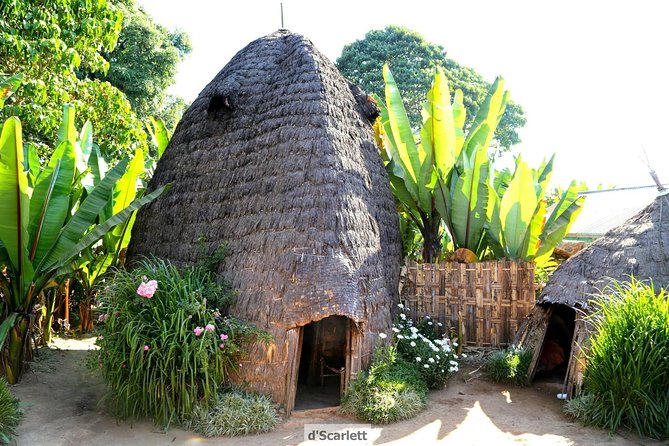
After lunch in Arba Minch, the route climbs toward the Gughe Mountains and Dorze country. Dorze homes are famous for their tall, beehive-like shape. The architecture is not just attractive to photograph. It reflects local building skill and the need to make practical use of available materials.
The schedule then continues toward Konso for the night. This day is listed at about eight hours, including the boat visit, village stop, lunch, and road travel. It is another busy day, but the combination of wildlife and architecture gives it good variety.
I would keep expectations realistic around village visits. This is a guided introduction, not a private invitation into everyday family life. Your local guide helps explain customs and individual communities, and respectful behavior is important. Ask before taking photographs, listen to the explanation, and avoid treating people as scenery.
Konso terraces and the lower Omo route

Konso is one of the trip’s strongest cultural stops. The area is recognized by UNESCO for its carefully built terraces, which show how communities have farmed difficult ground over generations. The visit also connects the region with Ethiopian coffee, including one of the country’s well-known coffee-growing traditions.
From Konso, the route continues toward Bana territory. The Bana are described as pastoral and semi-nomadic people living in the lower Omo Valley. You may see men wearing distinctive clay hair caps decorated with feathers, a detail that makes the stop visually memorable but also calls for sensitivity.
The drive then goes to Turmi, home of the Hamer people. This is a seven-hour day, so the cultural stops are set between considerable road time. Turmi gives you a base for the next day’s excursion to Omorate.
The appeal of this section is the change in setting and community from one stop to the next. Dorze, Konso, Bana, and Hamer traditions are not interchangeable, and the route gives you a chance to see that the Omo Valley is not one single culture.
The limitation is depth. You see several communities in a short span, but you will not have long periods in each place. If your priority is photography and a broad first look at southern Ethiopia, the pace makes sense. If you want extended conversations, village walks, or several nights in one community, a longer custom trip would be a better fit.
Omorate and the Dassanech community

From Turmi, you travel about 75 kilometers to Omorate, a drive listed at roughly two hours. The destination is home to the Dassanech, described here as people of the Delta who live along the northern shore of Lake Turkana.
You visit the community, return to Turmi for lunch, and then continue to Jinka. The route covers about eight hours in total, so the short stated drive to Omorate is only part of the day.
This stop matters because it takes you farther into the lower Omo region and adds another cultural group to the route. The surrounding area is shaped by the river and lake system, and the Dassanech way of life differs from the highland traditions you saw around Addis Ababa, Tiya, Dorze, and Konso.
This is also a good day to watch your energy. The heat, road conditions, and repeated vehicle transfers can add up. Wear light clothing, carry water, and keep your camera accessible without making every interaction about taking a picture.
You spend the night in Jinka, which becomes the base for the next day’s visit to Mago National Park.
Same country, a very different kind of day:
- Full Day Tour of Addis Ababa with Hotel Pickup and Drop-off
★ 5.0 · 430 reviews - Taste of Ethiopia
★ 5.0 · 406 reviews - Day Trip From Addis Ababa See Historical Monastery,Stunning Nature,Animals,Birds
★ 5.0 · 303 reviews - Addis Ababa: Debre Libanos, Blue Nile Gorge, and Cave Tour
★ 4.5 · 256 reviews
Mago National Park and a Mursi village
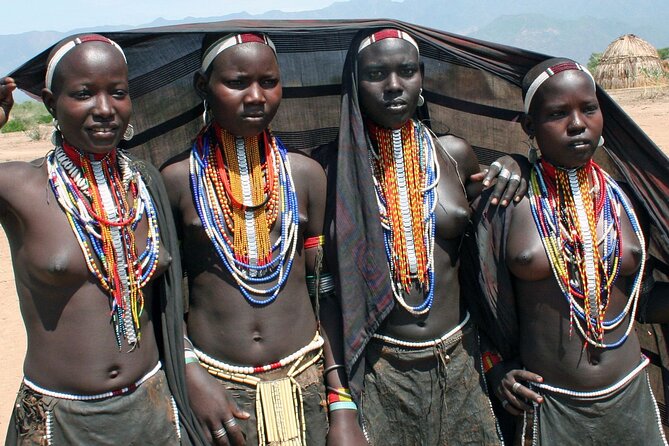
The fifth day is a round trip from Jinka into Mago National Park. The main purpose is a visit to a Mursi village. Mursi homes are described as low structures made from straw and leaves, and Mursi women are known for large lip and ear ornaments made from terra cotta.
These details are often what first draw people to the Omo Valley, but they should not be treated as costume displays. Your guide and local guides help explain the meaning and context behind clothing, body adornment, housing, and daily life. You will get more from the visit if you remain curious and polite rather than rushing from one photograph to the next.
The drive back to Jinka takes place in time for lunch. Later, you visit the Ari people, the largest population in the lower Omo Valley according to the tour description. Ari women wear skirts made from enset, a banana-like plant, and the community is associated with pottery work.
The day is listed at about six hours, with admission to Mago National Park included. That makes it one of the less punishing driving days, although roads inside and around the park may still make the trip feel longer than the clock suggests.
The pairing of Mursi and Ari visits is useful. You see two different communities in the same broad region, rather than leaving with the impression that the Omo Valley has one shared way of life. The visit also gives your guide a chance to compare food, clothing, craft, and settlement patterns.
Flying out of Jinka and the final Addis evening

On the final day, you are transferred to Jinka Airport for your flight to Addis Ababa. The domestic flight is not included, so confirm the timetable and cost before you commit to the tour dates.
The listed final stop also includes an evening folkloric dinner in Addis Ababa. You can taste several Ethiopian national dishes, watch dances from different ethnic groups, and take part in a traditional coffee ceremony before your airport transfer.
This is a fitting finish because the dinner gathers together some of the country’s cultural variety in one place. It is not a substitute for visiting communities in southern Ethiopia, but it gives you a final cultural event after the long road portion of the tour.
There is an important scheduling point here. The program is described as six days, but the supplied timing combines an Addis arrival day, a road journey to Arba Minch, several southern Ethiopia days, and a return flight. Confirm exactly which day your Addis departure occurs and whether the domestic flight is booked separately or simply arranged around the itinerary.
What the $1,399.98 price really covers

At $1,399.98 per person, this is not a bare transport package. The cost includes five nights of accommodation with breakfast, entrance fees, hotel pickup and drop-off, an English-speaking guide, a car, and professional drivers.
That package has real value in southern Ethiopia, where arranging the vehicle, driver, park access, local guiding, village visits, and lodging yourself can be tiring. The private format is especially useful if you are traveling as a couple, family, or small group and want your own vehicle rather than joining a large coach.
Still, the headline price does not cover everything. You need to pay separately for:
- Domestic flights
- Lunch and dinner
- Alcoholic drinks
The overview refers to complimentary meals, but the detailed inclusions specify breakfast only and clearly exclude lunch and dinner. I would ask the operator to confirm the meal arrangement in writing before booking.
Group discounts may reduce the per-person cost, but no discount amount is supplied. Children receive a child rate only when sharing with two paying adults. The tour accepts service animals and is near public transportation, though the main route itself is conducted by private car.
Comfort, pace, and practical preparation

The tour calls for a moderate level of physical fitness. You do not need an expedition background, but you should be ready for long drives, uneven village surfaces, warm conditions, and several early starts.
Hotel pickup is offered, with the stated starting point at Bole Airport in Addis Ababa. Pickup and drop-off remove one layer of airport planning, which is useful after a long flight and at the end of a complicated southern route.
Accommodation is included for five nights, but specific hotel names and room standards are not provided. Past trip feedback singled out the hotels and lodges as good, but I would still ask for the planned properties if room comfort matters to you.
Guides and drivers are central to the experience. English-speaking team members named in trip feedback include Dagi, Sisay, Sasha or Shasha, Yihun, and Niko. You are not guaranteed one particular person, but these names give you an idea of the staff members associated with the company’s Omo Valley and wider Ethiopia trips.
Communication and flexibility also appear to be important strengths. The company has helped rearrange plans after flight delays, and several accounts praise the drivers for safe long-distance driving and the guides for making solo visitors feel supported. That does not remove the need to check current conditions, but responsive local help is valuable on a route where plans can change.
Responsible visits to Omo Valley communities
The cultural visits are the heart of the trip, and your behavior affects their quality. Ask permission before photographs, follow your guide’s advice, and pay attention when local guides explain what is appropriate.
Do not assume that a distinctive hairstyle, necklace, lip ornament, hut, or skirt exists for tourist entertainment. These are parts of community identity and daily life. A good visit gives you context and leaves room for people to carry on with their day.
The private format can help here because your group is not being moved as part of a large crowd. It also lets your guide spend more time explaining what you are seeing. Still, privacy is not the same as access to every part of village life. The best approach is interested, patient, and restrained.
Who should book this six-day route?
I would recommend this tour to someone visiting Ethiopia for the first time who wants a broad introduction to Addis Ababa and the Omo Valley without arranging every transfer independently. It suits people who value a private vehicle, a local English-speaking guide, and a packed route with many different stops.
It is also a strong choice if you want both wildlife and culture. Lake Chamo gives you crocodiles, hippos, and birds, while Tiya, Konso, and the National Museum provide archaeological and historical context.
I would hesitate if you dislike long road days or need a slow schedule. The trip covers a lot of ground in six days, and the sequence from Arba Minch to Konso, Turmi, Omorate, and Jinka leaves limited spare time.
Free cancellation is available if you cancel at least 24 hours before the start time. Changes or cancellations inside that window are not accepted for a refund, so keep your flight plans in mind.
Should you book it?
Book this tour if you want an efficient, private introduction to southern Ethiopia and are comfortable paying extra for domestic flights, lunches, and dinners. The route is ambitious, but it covers an impressive spread of places: Tiya, Lake Chamo, Dorze, Konso, Bana, Hamer, Dassanech, Mursi, Ari, and Addis Ababa.
Before paying, confirm the flight schedule, exact hotels, meal details, group size, and which guide will lead your departure. If those points suit you, the $1,399.98 package offers a practical way to reach remote communities with local support and a driver who knows the long road south.
FAQ
How long is the Omo Valley tour?
The experience is described as a six-day tour. Individual touring days are listed at approximately six to nine hours, while the general duration field gives an approximate range of eight to 12 hours.
Where does the tour start?
The stated meeting point is Bole Airport in Addis Ababa, Ethiopia. Hotel pickup is also offered.
Is the tour private?
Yes. Only your group participates in the private tour or activity.
What accommodation is included?
The price includes five nights of accommodation with breakfast.
Are domestic flights included?
No. Domestic flights are specifically excluded. The final route includes a transfer to Jinka Airport for a flight to Addis Ababa.
Are lunch and dinner included?
The detailed inclusions exclude lunch and dinner. Alcoholic drinks are also not included.
Which communities are included in the route?
The itinerary includes visits connected with Dorze, Konso, Bana, Hamer, Dassanech, Mursi, and Ari communities.
What wildlife might I see?
The Lake Chamo boat trip may include sightings of crocodiles, hippos, and different kinds of birds.
What level of fitness is required?
A moderate physical fitness level is recommended. The tour includes long drives and visits to villages, parks, lakes, and mountain areas.
More 6-Day Experiences in Addis Ababa
- 6 Days Lalibela, Omo Valley and Harar
★ 5.0 · 15 reviews - 6-Day Omo Valley Cultural Private Tour
★ 5.0 · 6 reviews - 6 day Omo ValleyTours
★ 5.0 · 5 reviews - 6 days Omo valley cultural Tour
★ 5.0 · 3 reviews
Just added around Addis Ababa
- Yod Abyssinia Cultural Night: Dinner, Music, and Dance★ 5.0 · 7 reviews
- Stunning Views Wonchi Crater Lake a Private Day Trip★ 5.0 · 3 reviews
- Locally crafted beer and wine tasting and nightlife in Addis tour★ 5.0 · 6 reviews
- Two days Lake Wenchi and Menagesha Forest★ 5.0 · 3 reviews
- 3-Day Cultural Tour in South Omo Valley★ 5.0 · 4 reviews
- Addis Ababa City Tours Full-Day Tours★ 5.0 · 5 reviews
- South Omo Valley Tribes 8 Days Tour Package★ 5.0 · 4 reviews
- Day Trip to Tiya UNESCO Site & Melka Kunture Archaeological Site★ 4.5 · 3 reviews
Omo Valley Tribal Tours, compared.

Lalibela, Axum, Danakil and Omo Valley 8 DAYS
Read our review →

3 days around Arbaminch and Konso Adventure Tours Life Time
Read our review →Danakil Depression, Lalibela, Omo Valley and Simien Mountains
Read our review →



9 Days Tours To Danakil Depression, Simen MNP, Lalibela With Omo Valley Tribes
Read our review →Browse the lists this tour appears in